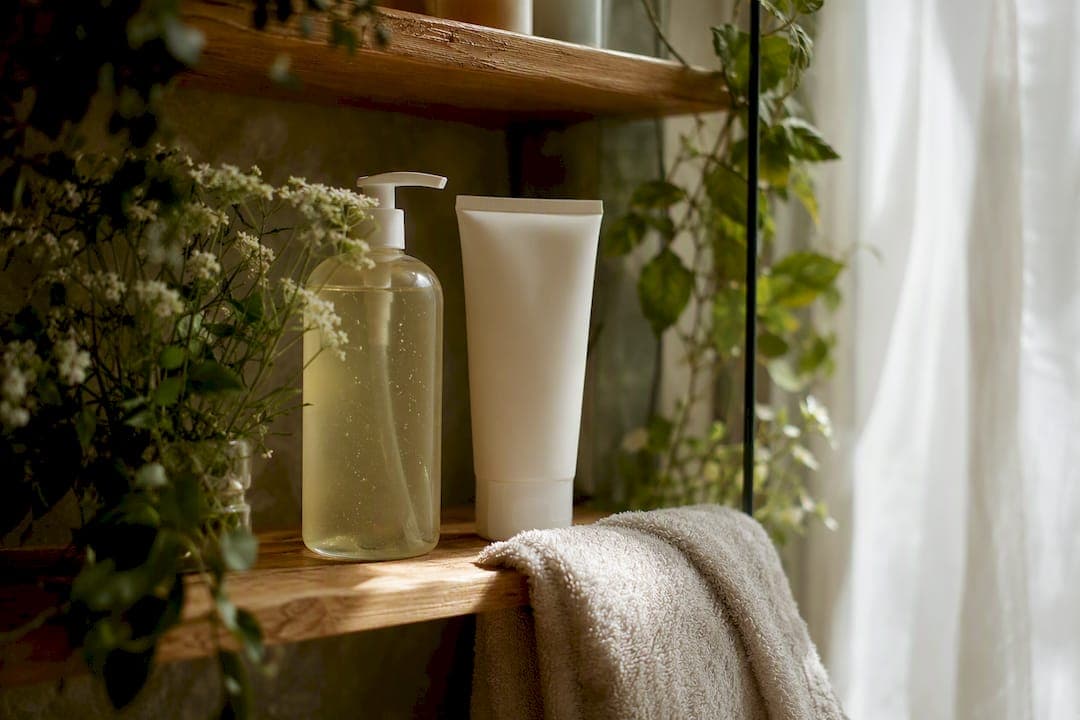
Pick a gel cleanser if your skin runs oily, congested, or acne-prone, and you need thorough evening cleansing. Pick a cream cleanser if your skin leans dry, sensitive, or barrier-compromised. Hybrids and personal preference matter too, and plenty of people end up keeping both on the shelf and switching by season.
TL;DR:
- Gel cleansers are ideal for oily or acne-prone skin because they effectively remove excess sebum without stripping the skin if formulated gently.
- Cream cleansers suit dry, sensitive, or barrier-compromised skin by depositing moisturizing emollients and reducing the risk of irritation or tightness after washing.
- Newer gel formulas with low foam and soothing ingredients blur the line between gel and cream, making texture less of a definitive indicator of suitability.
- Incorporating a double cleanse with an oil-based product followed by a gel or cream enhances cleaning, especially when removing heavy makeup or SPF.
- Choosing a product with glycerin, ceramides, or hyaluronic acid and avoiding high sulfates or alcohol supports long-term skin barrier health.
Table of Contents
- Gel Cleanser vs Cream Cleanser: The Quick Comparison
- What Is a Gel Cleanser, and How Does It Work on Skin?
- What Is a Cream Cleanser, and Where Does It Fit?
- Comparing Ingredients: Surfactants, Humectants, Emollients, and Acids
- Which Cleanser Fits Your Skin Type? A Practical Framework
- How to Use Gel and Cream Cleansers in Your Routine
- How to Test a New Cleanser Safely
- Why The Infinite Bath's Gel-Forward Regimen Makes This Easier
- What Actually Determines Long-Term Skin Barrier Health
- Try The Infinite Bath's Gel Cleanser for a Routine You'll Actually Keep
- Sources
Gel Cleanser vs Cream Cleanser: The Quick Comparison
Before you read another word about surfactants or emollients, here's the shorthand version. You can usually tell a gel from a cream just by looking at it, and that texture tells you most of what you need to know before you even check the ingredient list.
- Texture and foam: gel cleansers are clear or jelly-like and often lather; cream cleansers are opaque, lotion-like, and produce little to no foam.
- After-feel: gels can leave skin feeling clean and tight, sometimes squeaky; creams tend to leave a soft, slightly cushioned finish.
- Pick cue for oily or acne-prone skin: a gel usually wins because it cuts through sebum without adding oil back.
- Pick cue for dry or sensitive skin: a cream usually wins because it cleans without stripping what little moisture barrier you have left.
- The hybrid wrinkle: modern low-foam gels now blur this line, so texture alone isn't the whole story anymore.
If your after-wash skin feels tight within five minutes, that's data. Keep reading, because that single observation matters more than any product review.
What Is a Gel Cleanser, and How Does It Work on Skin?
A gel cleanser is a water-based formula built around surfactants, the ingredients that grab oil and debris and let water carry them away. Think of your skin's surface as a wall with a layer of paint on top made of sebum, sweat, and whatever sunscreen or makeup you applied that morning. Surfactants act like a solvent that lifts that paint layer without dissolving the wall underneath, at least when the formula is balanced correctly.
Foam level depends entirely on which surfactants a brand chose. Older gel formulas leaned on aggressive sulfates that produced a thick lather and, often, that infamous squeaky-clean feeling. Gel cleansers are typically water-based and effective at removing excess sebum and pore-clogging debris, but the newer generation of formulas buffers that strength with humectants so cleansing doesn't come at the cost of comfort.
You'll commonly see salicylic acid or other BHAs in gel cleansers aimed at oily and acne-prone skin, since these actives can slip into pores while the surfactant base is already working on surface oil. Niacinamide shows up often too, calming redness while the formula does its job. Glycerin is the ingredient worth hunting for on the label if you want a gel that won't leave you feeling stripped. Cocamidopropyl betaine is a gentler co-surfactant that softens the harshness of stronger detergents, and hyaluronic acid adds a thin layer of water-binding support right where the cleansing action happens. The gap between a 2016 gel and a 2026 gel is really the gap between "clean at any cost" and "clean without collateral damage."
What Is a Cream Cleanser, and Where Does It Fit?
A cream cleanser is an emulsion, meaning it blends oil and water into one stable mixture, weighted heavily toward the emollient side. Where a gel is built to lift and rinse away oil, a cream is built to clean while leaving a portion of that oil-like cushion behind. That's why creams produce low or no foam. There's less detergent doing the work and more emollient doing the depositing.
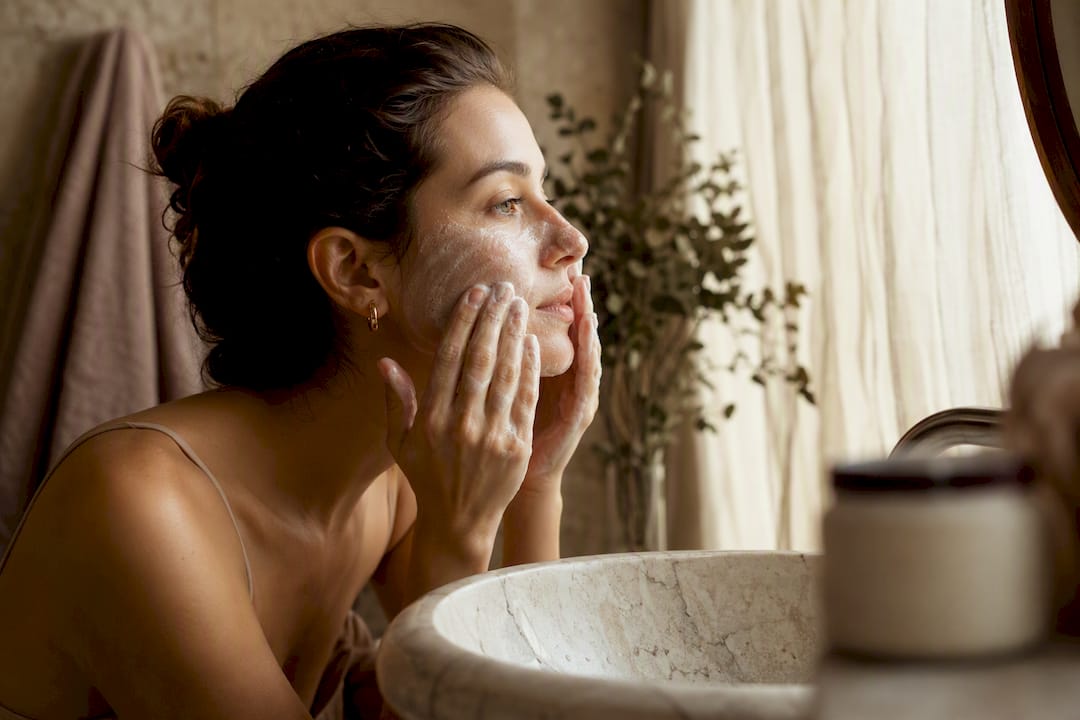
Cream cleansers are emulsion-based and deposit emollients, making them well suited to dry, sensitive, or barrier-compromised skin. Look for ceramides on the label if barrier repair is your goal. Squalane, glycerin, and calming agents like oat extract or panthenol also show up often in well-formulated creams, and each one adds a small deposit of comfort that a stripped-down gel simply can't replicate.
This is why dermatology guidance tends to favor cream formulas for anyone dealing with eczema, rosacea flares, or skin recovering from a procedure like microneedling or a chemical peel. The dermatology consensus points to matching cleanser type to actual barrier status, not to whatever category a brand slaps on the bottle.
The trade-off shows up with heavy makeup or mineral sunscreen. A rich cream that's gentle enough for reactive skin often isn't aggressive enough to fully break down a full face of foundation or a thick zinc-oxide SPF in one pass, which is why very rich creams may need a pre-cleanse step for heavy makeup removal.
Comparing Ingredients: Surfactants, Humectants, Emollients, and Acids
The ingredient list tells you more than the product name ever will. A "cleansing gel" loaded with ceramides behaves differently than one built around sulfates, and that difference lives entirely in the fine print.
- Surfactant strength: sodium lauryl sulfate signals a stronger, more stripping formula; cocamidopropyl betaine or decyl glucoside signal a gentler approach.
- Humectants vs. emollients: humectants like glycerin and hyaluronic acid pull water into the skin's surface, while emollients like squalane and plant oils sit on top and seal moisture in. Gels lean on the former; creams lean on both.
- pH and acids: healthy skin sits around pH 4.5 to 5.5, and cleansers that stray far from that range, especially high-alcohol or heavily sulfated ones, can leave the barrier more reactive than it needs to be.
- Short-contact acid gels: salicylic or glycolic acid cleansers work best with brief contact time rather than long, daily use, since exfoliating acids need a controlled window to work without over-irritating.
- Hybrid labeling cues: watch for terms like "milky gel" or "low-foam gel." These formulas are trying to give you gel texture with cream-level gentleness.
The general rule holds across both categories: favor formulas with glycerin or hyaluronic acid in gels and ceramides in creams, and steer clear of strong sulfates or high-alcohol content if your skin reacts easily.
Which Cleanser Fits Your Skin Type? A Practical Framework
Skin type isn't a fixed label, it's a moving target that shifts with weather, hormones, and whatever new retinoid you started last month. Here's how to sort it by what your skin is actually doing right now.
- Oily or acne-prone skin: start with a gel, ideally one with a mild BHA and a humectant backup like glycerin so you're not trading breakouts for a stripped, angry barrier.
- Combination skin: consider a two-zone approach, using a gel on the T-zone and a gentler cream or hybrid on the cheeks, or switch seasonally as your oil production shifts with weather.
- Dehydrated or dry skin: a cream cleanser with ceramides and squalane is the safer default, since gels can accelerate the tight, flaky cycle that dry skin is already fighting.
- Sensitive or rosacea-prone skin: stick with fragrance-free creams and avoid anything foaming heavily, since lather often correlates with the surfactant strength that triggers flare-ups.
- Mature skin: creams tend to support the slower barrier turnover that comes with age, though a gentle humectant-rich gel at night can still work if oil production hasn't fully declined.
Your label checklist should favor glycerin, ceramides, hyaluronic acid, and squalane, while flagging sodium lauryl sulfate, denatured alcohol high on the ingredient list, and fragrance if your skin reacts to it. Stop and consult a dermatologist if you notice persistent stinging, visible redness that doesn't fade within an hour, or flaking that gets worse rather than better after a week of consistent use.
Pro Tip: If you can't decide between the two, buy travel sizes of one gel and one cream before committing to full-size bottles. A week of alternating them will tell you more than any ingredient list.
How to Use Gel and Cream Cleansers in Your Routine
The right cleanser also depends on when you're using it and what you're washing off. A gel that's perfect at night might feel like overkill first thing in the morning when your skin has produced far less oil overnight.
- Double cleanse when needed: an oil or balm first step followed by a gel or cream second step removes SPF and makeup more thoroughly than either step alone.
- Morning routine: a lighter touch usually works, so a cream or a gentle low-foam gel is often enough since you're removing overnight oil buildup, not a full face of product.
- Evening routine: this is where a gel earns its place, especially if you wore sunscreen, makeup, or spent the day somewhere polluted or sweaty.
- Heavy waterproof makeup or mineral SPF: lead with an oil-based cleanser or balm, then follow with your gel or cream to finish the job without scrubbing.
- Post-procedure or highly reactive skin: default to a fragrance-free cream and skip double cleansing until your barrier has visibly calmed down.
How to Test a New Cleanser Safely
Switching cleansers cold turkey is how people end up blaming the wrong product for a breakout that was actually caused by something else entirely. A short, structured test protects you from that mix-up.
- Run a half-face test for three to seven days, using your new cleanser on one side and your current one on the other, so you can compare directly rather than relying on memory.
- Do the dry-down check: wash, wait five minutes, and pay attention to whether your skin feels tight, flaky, or comfortable once it's fully dry, since this five-minute window reveals more about barrier impact than the wash itself.
- If testing an acid gel, limit contact to 20 to 40 seconds and use it every other day at first rather than nightly.
- Track redness, flaking, rebound oiliness, and any stinging in a note on your phone. Patterns show up faster in writing than in memory.
Why The Infinite Bath's Gel-Forward Regimen Makes This Easier
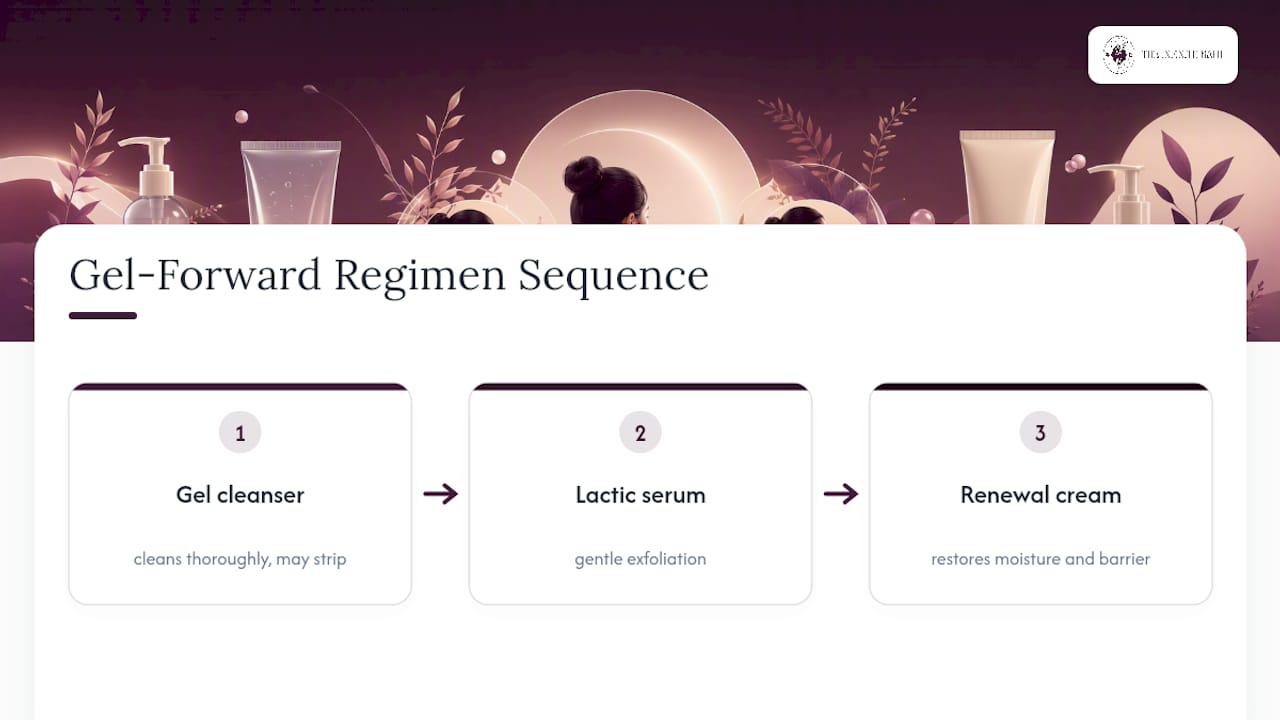
The Infinite Bath built its three-step regimen around exactly the trade-off this article has been walking through: gels clean thoroughly, but they can strip if the formula isn't built with support in mind. The gel cleanser leads the routine, followed by a lactic acid serum for gentle exfoliation, and finished with a renewal cream that replaces what a lighter formula might otherwise take away.
That sequence matters more than any single product does. A gel cleanser paired immediately with a barrier-supporting follow-up avoids the classic gel trade-off of surface clarity at the expense of comfort. The lactic serum handles exfoliation at a pace the skin can actually tolerate, and the renewal cream closes the routine with the humectants and emollients a stripped-feeling gel user usually goes hunting for separately.
[brand_signal]
For readers who've read this far and are still torn between gel and cream, a gel-forward regimen with hydration built into the next two steps solves the dilemma without asking you to choose a side.
What Actually Determines Long-Term Skin Barrier Health
The debate over gel versus cream misses the more important question: will you actually use the product every day, twice a day, for months? A slightly-less-than-perfect cleanser you use consistently beats a theoretically ideal one that sits in the shower unused because it feels wrong on your skin.
I'd push back on the idea that skin type alone should decide this. Skin changes with seasons, stress, and hormones, so the smarter long-term move is often owning both a gel and a cream and switching based on how your face feels that week, not what a quiz result told you in January. Rigid rules ("oily skin always needs gel") ignore how much comfort drives compliance, and compliance is what actually protects a barrier over months and years.
Track your after-feel for two weeks before judging any cleanser. Tight skin ten minutes after washing is a signal worth acting on, not a badge of "getting clean."
— Stella
Try The Infinite Bath's Gel Cleanser for a Routine You'll Actually Keep
If you've decided a gel is the right lane for your skin but you're wary of the tight, stripped feeling older gels are known for, The Gel Cleanser from The Infinite Bath is built specifically to avoid that trade-off. It uses gentle actives instead of harsh sulfates, so it clears oil and congestion without leaving your skin feeling like it needs an immediate moisture rescue.

The gel cleanser is designed to pair with the lactic acid serum for controlled, barrier-safe exfoliation, and the renewal cream to replace hydration the gel step removes. Together, the three products remove the guesswork this whole comparison is built around: you don't need to pick one texture and live with its downside, you need a sequence that covers for each step's weakness. Browse the full skincare shop to build your three-step routine today.
Sources
- Gel vs Cream Cleanser: The 2026 Guide to Choosing Based on Your Skin Barrier
- Cream, Gel or Oil Cleanser: Which Suits Your Skin? – Institute of Dermatologists
- The essential guide to gel, cream, milk, and oil cleansers - Talking Pretty
- Gel Cleanser vs Foam Cleanser: Which Is Better? - GlamGeek