
Your skin has one job in the morning and a completely different one at night, and using the same products for both wastes half your effort. Mornings call for protection: antioxidants and sunscreen that shield skin from the day ahead. Nights call for repair: retinoids, acids, and richer moisture that work while you sleep. Both routines share the same backbone of cleanse, treat, and moisturize, but the one step you can never skip is morning sunscreen.
TL;DR:
- Exfoliating acids and retinoids should be limited to two or three nights per week at night to avoid increased irritation and photosensitivity.
- Using heavy creams in the morning can trap oil and sweat, so lightweight gels or oil-free formulas are preferable for daily protection.
- Sunscreen must be applied every morning regardless of weather or indoor activity to effectively block UV rays that penetrate clouds and glass.
- Incorporating antioxidants like vitamin C and niacinamide in the morning enhances defense against free radicals, complementing sunscreen's protection.
- Gradually introducing new products and adjusting routines seasonally help prevent skin barrier damage and optimize results.
Table of Contents
- Morning vs Night Skincare: What Your AM Routine Should Actually Do
- Night Skincare Routine Steps: Where the Real Repair Happens
- When Should You Exfoliate, and How Often?
- How to Layer Products Without Canceling Their Benefits
- The 3-Step AM and PM Routines That Actually Work
- The Infinite Bath's Three Steps, Mapped to Morning and Night
- Your Morning and Night Skincare Checklist
- Does Your Skin Type Change This Rule?
- The Most Common Morning vs Night Skincare Mistakes
- How Sleep and Diet Show Up on Your Skin
- Adjusting Your Routine for Seasons and Climate
- Switching Products Without Wrecking Your Skin Barrier
- Why Fewer Steps Beat a Crowded Routine
- Make the AM/PM Rule Effortless With The Infinite Bath
- Sources
Morning vs Night Skincare: What Your AM Routine Should Actually Do
Think of your skin in the morning like a house before a storm. You're not renovating anything, you're boarding up the windows. That's the entire job of a morning routine: shield skin from UV rays, pollution, and the free radicals that both generate before they cause damage you'll notice later.
That defensive posture shapes every product choice you make. Morning skincare is built around protection and prevention, not correction. You're not trying to fix fine lines or fade dark spots at 7 a.m. You're trying to make sure today doesn't add new damage to fix later.
A simple AM order looks like this:
- Cleanse only if your skin feels oily overnight (a splash of water often does the job)
- Apply an antioxidant serum, like one with vitamin C, if you use one
- Moisturize with something lightweight
- Finish with broad-spectrum sunscreen, no exceptions
Texture matters more in the morning than most people realize. A heavy, occlusive cream that feels wonderful at night will sit under makeup like a film and can trap sweat and oil throughout the day. Look for gel or lotion textures, oil-free formulas, and serums with a thinner consistency.
Vitamin C earns its spot in AM routines because it works as a second line of defense your sunscreen can't provide alone. Paired with vitamin E and ferulic acid, it neutralizes free radicals that slip past sunscreen and cause the kind of oxidative stress linked to premature aging. Niacinamide is another solid AM pick, since it's stable in daylight and plays well with sunscreen without causing irritation.
What you want to avoid in the morning: retinoids, strong acid exfoliants, and anything that makes skin more light-sensitive. Save those for nighttime, when they won't be fighting against UV exposure.
Night Skincare Routine Steps: Where the Real Repair Happens
Your skin's permeability actually increases at night, and cell turnover and repair processes peak while you sleep. That's not a coincidence. It's why the same active ingredient can behave completely differently depending on when you apply it, and why nighttime is when your skincare should be doing its heaviest lifting.

The goal shifts entirely after sundown. Instead of defending, your skin is rebuilding: repairing UV damage from the day, replacing cells, and restoring the barrier that took a beating from wind, pollution, or dry indoor heat. That means night products can be richer, more active, and more targeted than anything you'd wear during the day.
A solid evening skincare routine follows this order:
- Remove makeup and sunscreen first, ideally with an oil-based cleanser
- Follow with a gentle water-based cleanser (this is the double-cleanse step)
- Apply your treatment or active serum
- Seal everything in with a moisturizer or richer occlusive cream
Double cleansing isn't a luxury step reserved for skincare enthusiasts. It's necessary whenever you've worn makeup or sunscreen, because residue left behind can clog pores and block your treatment products from actually reaching your skin. If you didn't wear either that day, a single gentle cleanse is fine.
Retinoids and strong acids belong at night for a specific reason beyond convenience. They increase photosensitivity, and UV exposure can actually destabilize retinoids, reducing their effectiveness while raising your risk of irritation. Nighttime is when these ingredients can do their job without competing against sunlight.
When Should You Exfoliate, and How Often?
Exfoliation frequency isn't one-size-fits-all, and dermatologists generally land in a range rather than a fixed number. For most people, 1 to 3 times per week is the guideline, with dry or sensitive skin sticking closer to once or twice, and oilier, more resilient skin tolerating the higher end.
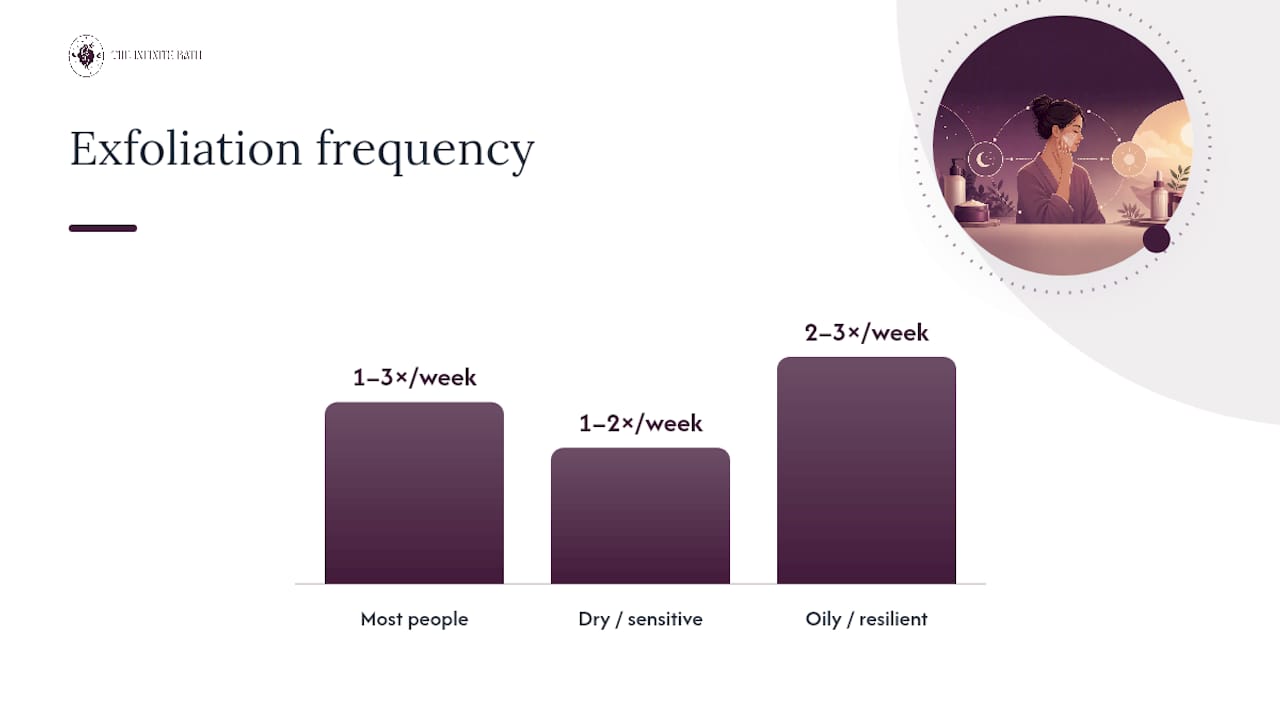
Timing matters as much as frequency. Exfoliating at night lines up with when your skin is naturally shedding cells anyway, and it means any temporary sensitivity from acids won't be exposed to direct sunlight hours later.
Pro Tip: If you're new to exfoliating acids, start with once a week at night and watch how your skin responds over two weeks before increasing frequency. Redness or tightness the next morning means you've gone too far, too fast.
A few rules keep active ingredients working with each other instead of against each other:
- Introduce retinoids slowly, starting two to three nights a week, and always at night only
- Don't pair retinoids with strong acid exfoliants on the same night, since both increase irritation risk
- Use vitamin C in the morning, where it pairs naturally with sunscreen
- Avoid layering vitamin C directly after certain acid exfoliants, since the pH mismatch can reduce effectiveness for both
Staggering exfoliants and retinoids across different nights, rather than piling them into one routine, preserves the benefits of both while cutting down on redness and flaking.
How to Layer Products Without Canceling Their Benefits
Order isn't a formality. Apply products from thinnest to thickest, because a heavy cream applied first creates a barrier that blocks everything layered on top of it.
Here's the practical sequence for most routines:
- Start with any water-based, thin serums first
- Follow with thicker treatment serums or spot treatments
- Layer on moisturizer
- Seal with an occlusive or facial oil if your skin needs extra barrier support
- In the morning, sunscreen always goes last
Some pH-sensitive actives need a buffer window rather than immediate layering. Vitamin C and certain acids, for example, work best with a short wait between applications rather than stacking them back to back. When in doubt about whether two actives play well together, alternate them on different nights instead of forcing them into the same routine.
The 3-Step AM and PM Routines That Actually Work
Most of the complexity in skincare comes from products, not principles. Both your morning and evening routines share the same three-step backbone: cleanse, treat, moisturize. The only thing that changes is which active fills the treatment slot and how rich your moisturizer gets.
Morning (3 steps):
- Gentle cleanse (or just water)
- Antioxidant serum
- Moisturizer with SPF, or moisturizer plus separate sunscreen
Night (3 steps):
- Cleanse (double cleanse if wearing makeup or sunscreen)
- Treatment serum (retinoid, exfoliant, or hydrating serum, rotated through the week)
- Richer moisturizer or occlusive
Dry skin can lean into a heavier night cream and skip exfoliating nights if flaking shows up. Oily or acne-prone skin often does better with a gel moisturizer and can handle exfoliating up to three nights a week. Sensitive skin should stretch actives to once or twice weekly and prioritize barrier-support ingredients over anything exfoliating.
Pro Tip: Traveling or short on time? Pack the treatment serum and skip everything else if you have to. Consistency with one active step beats an abandoned five-step routine every time.
The Infinite Bath's Three Steps, Mapped to Morning and Night
The Infinite Bath built its gel cleanser, lactic serum, and renewal cream around this exact protect-by-day, repair-by-night logic. The gel cleanser works both ends of the day. The lactic serum, a gentle chemical exfoliant, is designed for night use to support turnover without the harshness of stronger acids, though sensitive-skin users often start with it a few times weekly rather than nightly. The renewal cream follows as the richer, barrier-supporting step your skin wants while it repairs overnight.

Your Morning and Night Skincare Checklist
Protect in the morning, repair at night. That's the whole rule.
- Wear sunscreen every single morning, rain or shine
- Schedule exfoliants or retinoids for two to three nights a week, never both together
- Keep a simple cleanse, treat, moisturize backbone at both ends of the day
Does Your Skin Type Change This Rule?
The AM/PM framework holds for everyone, but how aggressively you exfoliate or which moisturizer texture you reach for shifts based on skin type.
Oily and acne-prone skin can usually tolerate more frequent nighttime exfoliation, often toward the upper end of that 1 to 3 times weekly range, and benefits from gel or lotion moisturizers both morning and night rather than anything occlusive. Dry skin needs the opposite approach: fewer exfoliating nights, richer creams after dark, and a hydrating serum layered underneath sunscreen in the morning rather than something purely antioxidant-focused.
Sensitive and reactive skin benefits most from stretching the whole system out. Instead of retinoids two or three nights a week, start with one. Instead of a lactic or glycolic acid, a gentler option like a mild lactic serum tends to cause less redness while still supporting texture over time. Combination skin often needs to treat different zones differently, using a lighter moisturizer on an oily T-zone and something richer on drier cheeks, even within the same nighttime routine.
Mature skin tends to need both more barrier support at night, since natural repair slows with age, and more diligent morning protection, since UV damage compounds over decades. None of this changes the underlying rule. It just changes the dial you turn on frequency and richness within each half of the day.
The Most Common Morning vs Night Skincare Mistakes
The single biggest mistake is skipping sunscreen on cloudy days or when staying indoors near windows, since UV rays penetrate clouds and glass more than people assume. A close second is applying retinoids or strong exfoliants in the morning, which increases photosensitivity and undoes much of the benefit those ingredients are supposed to provide.
Layering too many actives into one routine trips up even careful users. Stacking a retinoid, an acid exfoliant, and a vitamin C serum into a single night sounds efficient but usually just produces redness, flaking, and a routine you'll want to quit. Spacing actives across different nights solves this without sacrificing results.
Another frequent misstep: using the same rich, occlusive moisturizer morning and night. What feels appropriately protective at bedtime can trap oil and sweat during the day, leading to congestion and breakouts that have nothing to do with your actual skin type and everything to do with the wrong texture at the wrong hour.
Finally, plenty of people quit an active ingredient too early, mistaking normal adjustment (mild dryness or a few days of purging) for a sign the product doesn't work, when consistency over several weeks is usually what determines the outcome.
How Sleep and Diet Show Up on Your Skin
Skincare products only do part of the job. Sleep is when your skin's repair processes are most active, which means cutting sleep short doesn't just leave you tired, it shortens the window your night routine is designed to support. Chronic sleep deprivation shows up as dullness, slower healing, and more visible fine lines over time, no matter how good your renewal cream is.
Diet plays a quieter but real role too. Diets heavy in refined sugar and processed foods are associated with more inflammation, which can aggravate acne and accelerate visible aging. Adequate hydration and a diet with enough healthy fats support the skin barrier from the inside, working alongside whatever moisturizer you're applying from the outside. Neither sleep nor diet replaces sunscreen or a night serum, but both amplify or undercut everything your routine is trying to do.
Adjusting Your Routine for Seasons and Climate
A routine that works in humid summer heat often fails in dry winter air, and vice versa. Cold, dry climates typically call for richer moisturizers at night and a hydrating serum layered under sunscreen in the morning, since low humidity pulls moisture out of skin faster.
Humid, hot climates usually need the opposite adjustment: lighter, gel-based moisturizers both morning and night, since heavier creams can feel suffocating and contribute to breakouts. Exfoliation frequency sometimes needs to flex too. Many people find their skin tolerates exfoliating acids better in cooler months and needs a lighter touch in summer, when sun exposure is higher and skin barrier function is already working overtime against heat and sweat.
Altitude and indoor heating deserve a mention too, since forced-air heat in winter dries out indoor air as much as any outdoor climate does. If your skin feels tighter in January than it did in July despite using the same products, that's your cue to swap in something richer for a few months rather than assuming your routine has stopped working.
Switching Products Without Wrecking Your Skin Barrier
Introduce one new product at a time, ideally spaced a week or two apart, so you can actually tell what caused any reaction if one shows up. Swapping your cleanser, serum, and moisturizer all in the same week makes it impossible to know which product is responsible for new redness or breakouts.
Seasonal transitions deserve the same patience as new product transitions. Moving from a lightweight summer moisturizer to a richer winter one, or introducing a retinoid for the first time as the weather cools, works best gradually rather than all at once. Give your skin barrier a few weeks to adjust before adding a second new variable.
Why Fewer Steps Beat a Crowded Routine
Complicated routines fail for a boring reason: people stop doing them. A minimal, consistent routine tends to outperform an elaborate one, simply because it actually gets used every single day instead of abandoned after two weeks.
The protect-AM, repair-PM framework works precisely because it's simple enough to stick with. Three steps morning and night, with one active ingredient doing the heavy lifting in each, beats a twelve-step routine that collects dust on your bathroom shelf by the second week of February.
— Stella
Make the AM/PM Rule Effortless With The Infinite Bath
Most routines fail from too many products, not too few. The Infinite Bath built its three-step system specifically around the protect-AM, repair-PM principle this article just walked through, so you're not left guessing which serum goes where or juggling six bottles to hit the basics.

The gel cleanser works morning and night. The lactic serum handles gentle nighttime exfoliation without the harshness that keeps sensitive-skin readers away from stronger acids. The renewal cream delivers the richer, barrier-supporting hydration your skin wants overnight. Three products, two routines, no guesswork about layering order or which active goes with which. If you've been meaning to simplify a routine that's gotten out of hand, browse The Infinite Bath's skincare shop and see what a three-step system looks like when it's built around how your skin actually works.
Sources
- AM vs PM Skincare: What Belongs in Each Routine — DermApproved
- How Often Should You Exfoliate Your Face? Dermatologists Explain — Prevention
- A Nighttime Skincare Routine, Step-By-Step & Approved By Experts — Vogue
- Skin care routine order: Morning vs. Night — Healthline
- When should you exfoliate in your skincare routine? — SoothHealth