Your pregnancy-safe skincare routine boils down to three moves: a gentle cleanser, a hydrating moisturizer, and a broad-spectrum mineral sunscreen with SPF 30 or higher, applied every single day. Skip anything with a topical retinoid (retinol, retinal, tretinoin, adapalene) and hydroquinone entirely, and go easy on high-strength salicylic acid peels or professional treatments that leave the acid sitting on skin instead of rinsing off. That's the whole framework. Everything else is detail.
The reasoning behind those exclusions isn't guesswork. Dermatologists point to a short list of ingredients with real absorption concerns, and hydroquinone tops it because studies estimate systemic absorption between 35 and 45 percent, a number high enough that most clinicians recommend avoidance outright rather than weighing the odds.
Here's what you can keep or start using with confidence:
- Azelaic acid for acne and pigmentation, with low systemic absorption
- Niacinamide for barrier support and tone evenness
- Vitamin C for brightening and antioxidant protection
- Hyaluronic acid for hydration without irritation
- Zinc oxide and titanium dioxide as your go-to sunscreen filters
Pro Tip: If you only change one thing about your current routine today, make it sunscreen. Melasma triggered during pregnancy is far easier to prevent than to fade later.
Key Takeaways
A pregnancy-safe skincare routine works when it stays simple: gentle cleanser, evidence-backed actives, and daily mineral sunscreen, while avoiding retinoids and hydroquinone entirely.
| Point | Details |
|---|---|
| Core routine stays simple | Cleanse, treat with safe actives, protect with SPF 30+ mineral sunscreen every day. |
| Avoid retinoids and hydroquinone | Skip the entire retinoid family and hydroquinone due to absorption and precautionary dermatology guidance. |
| Salicylic acid depends on exposure | Low-concentration rinse-off formulas are different from high-dose peels; the latter should wait until postpartum. |
| Lean on documented safe actives | Azelaic acid, niacinamide, vitamin C, and cosmetic-strength lactic or glycolic acid cover most concerns safely. |
| Theinfinitebath maps to the routine | The gel cleanser, lactic serum, and renewal cream align with the three pregnancy-safe steps without retinoids or hydroquinone. |
Table of Contents
- Building A Pregnancy-Safe Morning Skincare Routine
- What Should A Pregnancy-Safe Evening Routine Include?
- What Ingredients Should You Avoid In Pregnancy?
- Which Skincare Actives Are Actually Safe During Pregnancy?
- How Do You Treat Pregnancy Acne, Melasma, And Dry Skin?
- What Does The Clinical Evidence Say About Pregnancy Skincare?
- Adjusting Skincare Routine By Trimester
- Are Natural And DIY Skincare Options Safe During Pregnancy?
- Managing Your Skincare Routine After Pregnancy And While Breastfeeding
- Why A Shorter Routine Works Better During Pregnancy
- Where The Infinite Bath's Three-Step Regimen Fits Your Routine
- Sources
Building A Pregnancy-Safe Morning Skincare Routine
Mornings are where consistency pays off, and the sequence matters as much as the products themselves. A pregnancy-safe skincare routine in the AM follows a simple order: cleanse, treat, protect. Getting the layering right determines whether your actives actually do their job or just sit under sunscreen doing nothing.
Start with cleansing. A gentle, fragrance-free cleanser is enough for most mornings. You don't need a foaming deep-clean at 7 a.m.; your skin barrier during pregnancy is often already working overtime thanks to hormonal shifts, and a harsh surfactant will just aggravate it. If you wear heavier sunscreen or makeup overnight residue is minimal, a single cleanse is plenty. Double-cleansing (an oil-based first step followed by a gentle rinse-off cleanser) is really an evening technique, reserved for removing sunscreen and makeup buildup, not something your morning skin needs.
Layer your treatment serums next. This is where a lot of women get stuck, because so many "brightening" serums on the market lean on retinaldehyde or high-percentage acids that don't belong in a pregnancy-safe routine. Stick with the well-documented trio: vitamin C, niacinamide, and hyaluronic acid.
- Apply a hyaluronic acid serum to damp skin first. It draws in moisture, and applying it to slightly wet skin (right after cleansing, before it fully dries) maximizes the hydration it can hold onto.
- Follow with vitamin C if your skin tolerates it. Vitamin C pairs well under sunscreen because it helps neutralize free-radical damage that UV exposure generates, essentially reinforcing what your SPF is already doing.
- Niacinamide can go before or after vitamin C, depending on the specific formulas you use. If irritation shows up when you combine actives, simplify to one at a time rather than pushing through discomfort. Pregnancy is not the season to test your skin's limits.
- Let each layer absorb for a minute or two before moving to the next step. Rushing product application is the most common reason serums feel greasy or pill under sunscreen.
Then comes sunscreen, and this is non-negotiable. Reach for a broad-spectrum SPF 30 or higher, and mineral filters (zinc oxide, titanium dioxide) are the preferred choice for most pregnant skin because they sit on the surface rather than absorbing in, which gives you one less variable to worry about. Chemical filters like avobenzone and octinoxate aren't automatically dangerous, but the safety data on some UV filters during pregnancy is thinner than the mineral options, so mineral sunscreen is the lower-anxiety pick if you'd rather not think about it twice.
Reapplication matters more during pregnancy than people expect, mostly because skin sensitivity to sun exposure tends to climb alongside melasma risk. If you're outside for more than two hours, reapply. A stick or powder mineral formula makes this realistic over makeup without needing a full reset. Beyond the tube, wide-brim hats and seeking shade during peak UV hours (typically late morning through mid-afternoon) do real work that no product replicates.
One more thing about morning layering: skip anything marketed as an "instant glow" peel or at-home acid mask for daytime use. Those products often contain concentrations designed for occasional, controlled exposure, and morning routines should stay predictable, not experimental.
What Should A Pregnancy-Safe Evening Routine Include?
Evenings carry more of the workload in a pregnancy-safe skincare routine because this is when you're removing the day's buildup and giving your skin barrier a chance to actually repair.
Removing sunscreen and makeup comes first, and it takes more than one wipe. Mineral sunscreen especially tends to sit on the skin's surface, so a single splash of water and cleanser often leaves residue behind. If you wore a heavier SPF or full makeup, start with an oil cleanser or micellar water to break down the pigment and filters, then follow with your regular gentle cleanser to clear the rest. This two-step approach, sometimes called double cleansing, isn't a luxury step; it's the difference between skin that actually gets clean and skin that just looks clean.
Treatment is where most of the pregnancy-specific decisions happen. If acne or dullness is your main concern, here's how to sequence a safe evening routine:
- Cleanse thoroughly using the double-cleanse method above if you wore sunscreen or makeup that day.
- Apply a mild exfoliating acid at cosmetic strength (lactic or glycolic acid in the range typically found in leave-on serums, not professional peel concentrations) two to three nights a week, not nightly. Cosmetic-strength AHAs are considered a different exposure category entirely from in-office chemical peels, which use far higher concentrations left on the skin under professional supervision.
- Follow with azelaic acid if acne or melasma is your priority. It's one of the better-studied actives for pregnancy, showing low systemic absorption in the range of 4 to 8 percent, and it works on both breakouts and stubborn pigmentation without the retinoid risk profile and shows low systemic absorption.
- Seal everything with a barrier-supporting moisturizer or renewal cream to counter any dryness the acid step might cause.
Benzoyl peroxide deserves its own mention. Used at typical over-the-counter strengths as a spot treatment, it's generally considered acceptable during pregnancy, though many clinicians suggest limiting it to targeted breakouts rather than a full-face wash. Topical antibiotics like clindamycin are sometimes prescribed for persistent acne and are considered a reasonable option when a dermatologist is involved in the decision. Neither replaces the conversation with your provider; both are simply lower-risk than oral retinoid-based acne medications, which are firmly off the table during pregnancy.
Skip layering an acid treatment under an occlusive cream on the same night you've had any in-office procedure. If you had a chemical peel, microneedling, or laser treatment before you knew you were pregnant, or you're weighing whether to schedule one now, the general guidance is to wait until postpartum for anything beyond gentle, superficial treatments. Combining an active peel with heavy occlusion traps ingredients against skin longer than intended, and that's exactly the kind of unnecessary variable a conservative pregnancy routine tries to avoid.
The through-line for evenings: treat gently, moisturize generously, and don't stack more than one active exfoliant type in a single routine.
What Ingredients Should You Avoid In Pregnancy?
The avoid-list for pregnancy-safe skincare is shorter than most people assume, but the ingredients on it are worth knowing by every name they go by, because cosmetic labels rarely say "avoid during pregnancy" in plain English.
Retinoids are the biggest category to watch. This includes retinol, retinal (retinaldehyde), tretinoin, adapalene, and isotretinoin (both topical and oral forms). Here's the nuance that surprises people: topical retinoids actually have fairly low systemic absorption compared to oral isotretinoin, which carries well-documented birth defect risk. But because the topical safety data isn't robust enough to rule out risk entirely, dermatology guidance leans conservative and recommends avoiding the whole retinoid family as a precaution rather than trying to parse which formula might be low-risk enough.
Hydroquinone is the other major exclusion, and the absorption numbers explain why. Estimated systemic absorption sits between 35 and 45 percent, which is dramatically higher than most topical actives. If you're using a prescription-strength brightening cream for melasma or dark spots, this is the ingredient most likely to be hiding in it.
Salicylic acid needs a more nuanced answer than a flat yes or no. Low-concentration salicylic acid in a rinse-off cleanser (think 0.5 to 2 percent, on your skin for under a minute before washing off) is a fundamentally different exposure than a high-dose leave-on treatment or an in-office salicylic acid peel. The rinse-off version is generally considered acceptable; the concentrated, occluded version is the one to postpone.
A few other ingredients deserve a lighter touch rather than a hard ban: certain concentrated essential oils (particularly those used in high doses for aromatherapy-style skincare) and high-dose phenol treatments used in some in-office peels. Neither has the volume of pregnancy-specific data that azelaic acid or niacinamide has, so treating them as "use sparingly or skip" is the more conservative call.
When you're reading labels, watch for these name variants:
- Retinyl palmitate, retinyl acetate, retinoic acid (all retinoid family members)
- Tretinoin, isotretinoin, adapalene, tazarotene (prescription-strength retinoids)
- Hydroquinone, sometimes listed under compounded prescription formulas without a clear consumer label
- "Peel" or "resurfacing" products with salicylic acid concentrations above cosmetic cleanser strength
As one dermatology-focused pregnancy skincare resource puts it, marketing words like "natural" or "clean" tell you nothing about pregnancy safety. Some plant-derived ingredients simply lack safety data, while well-studied synthetic actives like niacinamide have a much clearer track record.
Which Skincare Actives Are Actually Safe During Pregnancy?
Once you strip out the avoid-list, what's left is a genuinely capable set of actives that can handle acne, pigmentation, and dullness without the guesswork.
Azelaic acid is the workhorse of pregnancy-safe skincare. Naturally low in systemic absorption (around 4 to 8 percent), it treats both acne and melasma, and it's supported across trimesters at typical topical strengths, whether that's a 10 percent over-the-counter formula or a 15 to 20 percent prescription version your dermatologist prescribes.
Niacinamide and vitamin C work as a complementary pair rather than competitors. Niacinamide calms and strengthens the barrier; vitamin C brightens and adds antioxidant defense against UV-driven damage. Both play well under sunscreen and neither carries meaningful pregnancy risk at cosmetic concentrations.
Glycolic and lactic acids, at the concentrations found in daily leave-on serums or the Lactic Serum style of formula, are acceptable for regular use, typically two to three times weekly rather than nightly. If your skin feels tight, flaky, or reactive, that's the signal to pause for a few nights, not push through.
| Active | Typical Strength | Best For | Frequency |
|---|---|---|---|
| Azelaic acid | 10% OTC / 15 to 20% prescription | Acne, melasma | Once or twice daily |
| Niacinamide | 4 to 8% | Barrier support, tone | Daily |
| Vitamin C | 10 to 20% | Brightening, antioxidant defense | Morning |
| Lactic/glycolic acid | Cosmetic leave-on strength | Texture, mild exfoliation | 2 to 3x weekly |
| Hyaluronic acid | Any cosmetic concentration | Hydration | Daily |
Benzoyl peroxide rounds out the list as a targeted spot treatment for stubborn breakouts, generally considered lower-risk than oral acne medications, and topical antibiotics like clindamycin are sometimes added under a dermatologist's guidance for persistent acne that doesn't respond to gentler actives alone.
A few notes worth keeping in mind:
- Introduce one new active at a time, waiting at least a week before adding another
- Reduce frequency (not necessarily concentration) if you notice sensitivity
- Pair any exfoliating acid with a barrier-repair moisturizer the same night
- Save tranexamic acid for a direct conversation with your provider, since topical safety data during pregnancy is limited
How Do You Treat Pregnancy Acne, Melasma, And Dry Skin?
Pregnancy tends to amplify whatever skin tendency you already had, and the fix usually isn't a new product category, it's a smarter substitution within the routine you're already running.
If breakouts have shown up or gotten worse, swap any retinoid-based acne treatment for azelaic acid as your primary active. Add benzoyl peroxide as a spot treatment for active blemishes rather than a full-face wash, and if a dermatologist is involved, topical clindamycin is a reasonable prescription option for cases that need more than azelaic acid alone provides.
If melasma or new dark patches are the concern, sunscreen is genuinely your first-line treatment, not an afterthought. Consistent daily SPF use prevents melasma from worsening far more reliably than any single brightening product fixes it after the fact. Layer azelaic acid and vitamin C on top for active brightening, and skip hydroquinone entirely, no matter how tempting a fast fix feels. Wide-brim hats and shade during midday sun add real protection sunscreen alone doesn't fully cover.
If sensitivity or dryness has taken over, simplify further. Fragrance-free formulas across the board, a ceramide-rich moisturizer to support what dermatologists sometimes describe as your skin's "brick and mortar wall," the ceramides and lipids acting as the mortar holding your skin cells (the bricks) together. For very dry patches, an occlusive layer like a richer renewal cream at night helps lock that moisture in while you sleep.
Pro Tip: When in doubt about a new symptom, don't self-diagnose from a skincare forum. Bring a photo and a timeline to your next appointment; dermatology and OB-GYN teams can move faster with specifics than with "my skin's been weird lately."
Reach out to your dermatologist or OB-GYN when a rash spreads, itching disrupts sleep, or a product you've used safely for months suddenly causes a reaction. Bring the product's packaging, note when the symptoms started, and mention anything else new in your routine around the same time.
What Does The Clinical Evidence Say About Pregnancy Skincare?
The guidance in this routine isn't improvised. It reflects positions from the American Academy of Dermatology and peer-reviewed safety reviews that have specifically examined absorption rates and outcomes for topical ingredients during pregnancy.
The consistent thread across that research: the list of ingredients to avoid is short, and most of the actives that actually deliver results, vitamin C, niacinamide, several AHAs, azelaic acid, can be continued safely with appropriate strength and frequency adjustments. Clinicians tend to favor low-intervention schedules: maintain hydration and barrier support, use targeted actives with well-documented low absorption, and postpone elective aggressive procedures like deep peels or laser treatments until after delivery.
The safety data on many topical actives during pregnancy remains genuinely incomplete for numerous newer ingredients, which is exactly why individualized guidance from a clinician who knows your history and current prescriptions matters more than a generic checklist.
Bring the following to your next prenatal visit if skincare questions are on your mind:
- Actual product packaging or ingredient labels, not just brand names from memory
- A list of current prescriptions, including anything topical
- Notes on when any skin changes started and what, if anything, seems to trigger them
- Specific questions: "Is this concentration of salicylic acid safe in my second trimester?" beats "Is this brand okay?"
Evidence gaps are real, particularly for newer cosmetic ingredients that haven't been around long enough to generate pregnancy-specific data. That's not a reason for panic; it's the reason a conservative, well-documented core routine beats chasing the newest serum on the market.
Adjusting Skincare Routine By Trimester
Your skin's needs shift as pregnancy progresses, and the core routine flexes rather than resets at each stage.
First trimester often brings the most dramatic changes: morning sickness, fatigue, and sometimes an oil-slick complexion from hormonal surges. This is the stage to audit your bathroom shelf and remove retinoids and hydroquinone immediately, since organ development is most sensitive early on. Keep the routine minimal; you likely don't have the energy for an elaborate regimen anyway.
Second trimester is typically when melasma risk climbs, as pigment-producing cells respond to rising hormone levels. Sunscreen discipline matters more here than at any other stage, and this is a reasonable time to introduce azelaic acid if pigmentation has started showing up.
Third trimester often brings drier, more stretched skin, particularly around the abdomen, and sensitivity can spike again as your due date approaches. Lean into barrier-support moisturizers and consider a richer body oil for comfort. Skin stretching itself doesn't respond dramatically to topical products, but keeping skin well-hydrated tends to reduce itchiness and discomfort.
Across all three stages, the constants stay fixed: gentle cleanser, safe actives at tolerable frequency, sunscreen every day. What changes is emphasis, not the framework.
Are Natural And DIY Skincare Options Safe During Pregnancy?
Natural doesn't automatically mean pregnancy-safe, and DIY doesn't automatically mean gentle. That distinction trips up a lot of well-meaning routines.
Some kitchen-cabinet ingredients genuinely help: plain oatmeal soaks for itchy skin, or a lightweight plant oil like rosehip for barrier support and light hydration are reasonable additions with minimal risk. Rosehip oil in particular has a long history as a gentle, fatty-acid-rich option that supports skin barrier function without the unpredictability of essential oil blends.
Where DIY gets risky is concentrated essential oils, particularly ones used undiluted or in aromatherapy-style high doses, and homemade acid treatments using lemon juice or apple cider vinegar, which have unpredictable, often high, acidity that can burn or irritate sensitive pregnancy skin. There's no quality control on a kitchen concoction the way there is on a formulated product with a stated percentage.
If you're drawn to natural formulations, the safer path is choosing products that state their actual active ingredient concentrations rather than assuming "natural" ingredients are inherently mild. A basic, unscented plant oil applied to damp skin is a fine natural moisturizing step; a Pinterest-recipe peel made from baking soda and lemon is not.
Managing Your Skincare Routine After Pregnancy And While Breastfeeding
Postpartum skin doesn't reset overnight, and if you're breastfeeding, the same conservative logic that guided your pregnancy routine largely carries forward.
Many of the ingredients you avoided, retinoids especially, are still generally advised against while breastfeeding, since there isn't strong safety data confirming they don't pass into breast milk in meaningful amounts. Hydroquinone falls into the same continue-avoiding category. Azelaic acid, niacinamide, vitamin C, and cosmetic-strength AHAs remain reasonable choices, which means you likely don't need to overhaul anything you built during pregnancy.
What does change: your skin's hormone-driven sensitivity often calms down over the weeks and months after delivery, and some women find their skin can tolerate slightly higher concentrations of the acids they were using cautiously before. If you're eager to reintroduce a retinoid, most guidance suggests waiting until breastfeeding has ended, then reintroducing gradually rather than jumping back to your pre-pregnancy strength immediately.
Melasma from pregnancy sometimes fades on its own within a few months postpartum; sometimes it lingers and benefits from continued sunscreen discipline plus azelaic acid or vitamin C. Give it time before assuming you need a more aggressive intervention, and loop in a dermatologist if pigmentation hasn't budged after several months of consistent care.
Why A Shorter Routine Works Better During Pregnancy
Most pregnancy skincare advice focuses entirely on what to remove from your shelf. What gets less attention is why fewer steps, done consistently, tend to outperform an elaborate routine you're too nauseated or exhausted to follow through on.
Hormonal sensitivity during pregnancy isn't just about which ingredients might cross a safety threshold. It's also about the fact that skin reactivity itself increases, so a routine with eight products multiplies your chances of an irritation you then have to troubleshoot backward through. A three-step approach, cleanse, treat, protect, removes that guesswork almost entirely. Fewer variables mean fewer mystery breakouts and fewer 11 p.m. searches trying to figure out which of your seven serums caused the reaction.
There's also the reality of morning sickness and fatigue, which most skincare content skips over entirely. A routine that takes ninety seconds is one you'll actually do on the mornings you're running on four hours of sleep. That's not a minor convenience; adherence is the difference between a routine that works on paper and one that works in your bathroom.
This is where Theinfinitebath's three-step regimen maps cleanly onto what pregnancy skin actually needs. The gel cleanser handles the gentle cleanse step without stripping a barrier that's already working overtime. The lactic serum delivers cosmetic-strength AHA exfoliation, the same category of active that's considered acceptable at leave-on serum concentrations, without reaching for anything retinoid-based. The renewal cream picks up the moisture and barrier-support job that dry, hormone-affected skin needs most.
None of this replaces a conversation with your OB-GYN or dermatologist about your specific history. But a simplified structure gives you a stronger starting point than another ten-step routine promising more than pregnancy skin needs.
— Joseph
Where The Infinite Bath's Three-Step Regimen Fits Your Routine
If you've read this far wanting a done-for-you version of everything above, Theinfinitebath built its three-step regimen around exactly this kind of restraint: no retinoids, no hydroquinone, no guesswork about what's hiding in a twelve-ingredient serum.
The Gel Cleanser covers your AM and PM cleanse step without the fragrance load or harsh surfactants that can aggravate already-sensitive pregnancy skin. The Lactic Serum delivers cosmetic-strength lactic acid exfoliation, landing squarely in the leave-on concentration range clinical guidance considers acceptable, rather than anything close to peel-strength. The Renewal Cream locks in hydration and supports barrier repair overnight, which matters most in the trimesters when dryness and sensitivity peak.
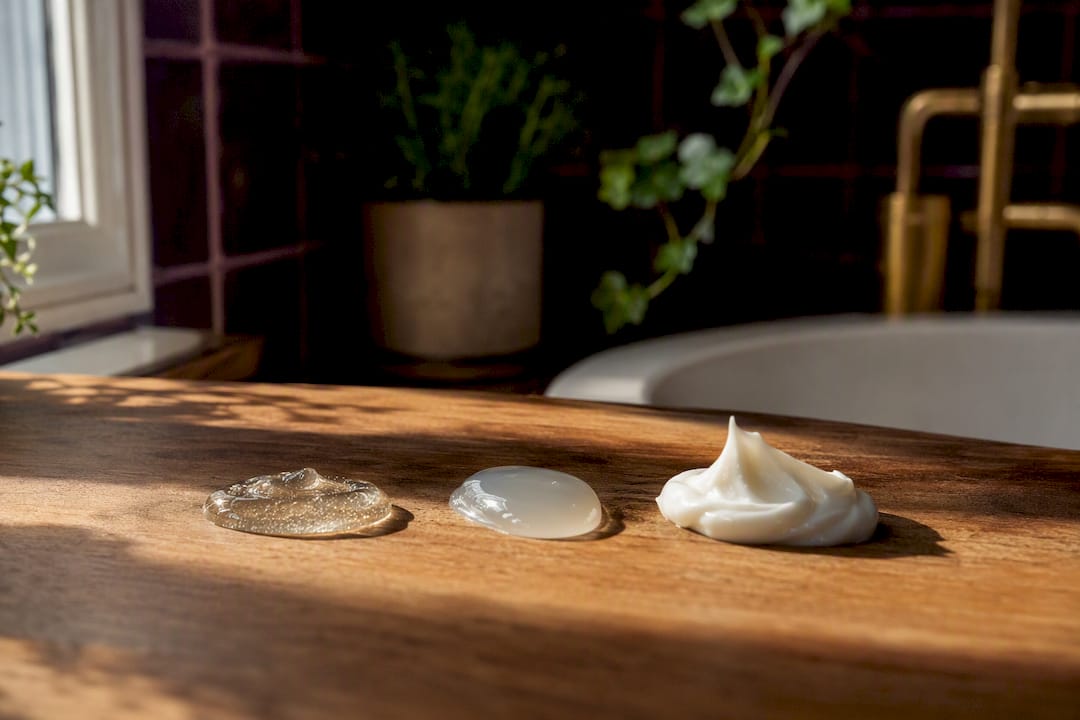
Formulation choices matter here: no topical retinoids, no hydroquinone, and options within the line that skip fragrance entirely for anyone whose skin has turned reactive mid-pregnancy. That's three products, two steps twice a day, and one less thing to research at midnight.
Bring the labels to your next prenatal visit regardless, since your OB-GYN or dermatologist knows your specific history better than any general guide can. If you're ready to simplify what's on your shelf, browse the full skincare line and start with the three-step basics.
Sources
- Dermatologist-approved pregnancy skin care — American Academy of Dermatology
- Safety of skin care products during pregnancy - PMC
- Safety of topical dermatologic medications in pregnancy — JDD Online
- Healthy skincare routines during pregnancy — UVA Health
- Pregnancy-safe skincare routine (2026) — DermApproved
This article is general information, not a substitute for advice from a qualified doctor. Consult a qualified healthcare professional about your own circumstances before acting on anything here.