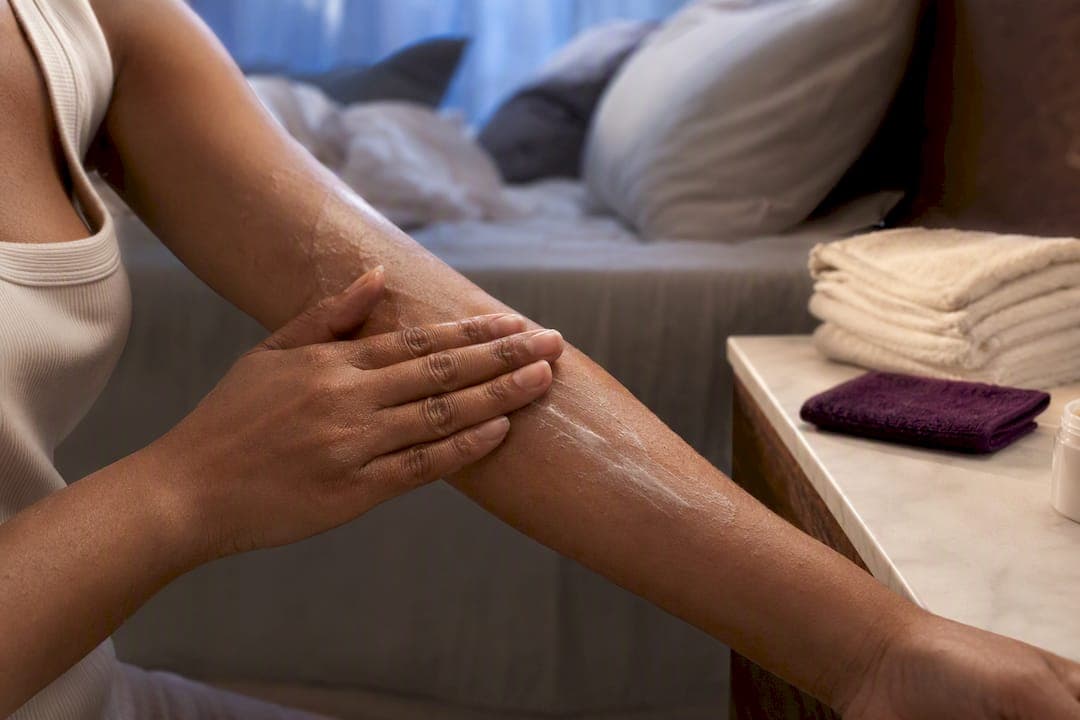
If you have eczema, the priority is simple: choose fragrance-free products built around ceramides and occlusive moisturizers, and apply them within a few minutes of bathing. Look for the NEA Seal of Acceptance when you can find it, follow dermatologist guidance over marketing claims, and call a clinician if redness spreads, weeps, or keeps you up at night.
TL;DR:
- Fragrance-free products with ceramides, colloidal oatmeal, or occlusives are essential; avoid ingredients like sodium lauryl sulfate, fragrances, and essential oils.
- Applying moisturizer within three minutes of bathing while skin is damp helps trap water and prevent dryness, especially with ointments or creams.
- Use gentle, soap-free cleansers and avoid hot showers, since harsh soaps and high temperatures damage the skin barrier, triggering eczema flares.
- Choose natural fibers like cotton over synthetic or wool clothing, and wash new clothes before wearing to reduce irritation from factory residues or dyes.
- Consult a healthcare professional if eczema symptoms worsen, cover large areas, or do not improve after several weeks of consistent care.
Table of Contents
- What Should I Look for in Eczema Safe Skincare?
- Which Ingredients Help the Skin Barrier, and Which Ones Hurt It?
- How Do I Choose Moisturizer Texture and Timing?
- What Cleansers and Bathing Habits Protect Sensitive Skin?
- Do Sunscreen and Household Products Matter for Eczema?
- When Should You See a Clinician Instead of Managing It Yourself?
- How Does The Infinite Bath's Routine Fit Eczema Safe Skincare Rules?
- Which Fabrics and Clothing Choices Reduce Irritation?
- How Do Humidity and Temperature Affect Eczema-Prone Skin?
- Can Diet and Lifestyle Habits Affect Skin Sensitivity?
- How Can You Prevent Cross-Contamination From Everyday Personal Care Items?
- Why Simple, Consistent Routines Beat Chasing New Products
- Where The Infinite Bath Fits Into Your Eczema Routine
- Sources
- FAQ
What Should I Look for in Eczema Safe Skincare?
Think of your skin barrier the way you'd think of a brick wall. Skin cells are the bricks, and lipids like ceramides are the mortar holding everything together. When that mortar breaks down, water escapes and irritants get in. Every product you put on that wall should either rebuild the mortar or, at minimum, not chip away at it further.
Scan labels for these signals before anything lands in your cart:
- Fragrance-free (not just "unscented," which can still hide masking fragrance)
- Ceramides listed among the first several ingredients
- Colloidal oatmeal, a rare botanical with real evidence behind it
- Hypoallergenic claims paired with a short ingredient list
- The NEA Seal of Acceptance, which the National Eczema Association awards to products reviewed for eczema safety
Walk away from anything listing fragrance, sodium lauryl sulfate, denatured alcohol, essential oils, dyes, or a long roster of preservatives you can't pronounce. Buy sealed, unopened containers when possible, since jars exposed to repeated hand contact invite bacteria. And before any new product touches your face, patch test it on your inner forearm for two to three days. If your skin behaves there, it has earned a shot at your cheeks.
Which Ingredients Help the Skin Barrier, and Which Ones Hurt It?
Ceramides are the ingredient dermatologists mention most often for a reason. Cleveland Clinic guidance points to ceramides as a direct way to restore lipids the skin barrier has lost, which is exactly what eczema-prone skin is missing. Pair them with humectants like glycerin or hyaluronic acid, which pull water into the outer skin layer, and occlusives like petrolatum or squalane, which seal that water in like plastic wrap over a bowl.
One ingredient worth remembering: colloidal oatmeal is one of the few plant-derived ingredients with consistent clinical evidence behind it, calming inflammation and itch when most other botanicals can't make that claim.
That "most" matters. "Natural" sounds safe, but lavender oil, tea tree oil, and citrus extracts are common sensitizers that flare eczema rather than soothe it. Treat any essential oil on a label as a yellow flag, not a selling point.
The irritant lineup to avoid:
- Fragrance, natural or synthetic
- Sodium lauryl sulfate (SLS), a harsh detergent
- Denatured alcohol, which dries and stings
- Essential oils and many botanical extracts
How Do I Choose Moisturizer Texture and Timing?
Texture matters more than the brand name on the jar. Ointments are the thickest and most occlusive, creams sit in the middle, and lotions are the thinnest, often loaded with more water, preservatives, and alcohol that can sting broken skin. Clinical guidance consistently favors ointments and creams over lotions for anyone managing active eczema.
Here's the routine that gets the science right:
- Keep showers lukewarm and brief, preferably under about ten minutes.
- Pat skin partially dry, leaving it slightly damp rather than towel-dried completely.
- Apply your moisturizer within about three minutes of stepping out.
That window isn't arbitrary. Moisturizing while skin is still damp traps residual water at the surface and slows the water loss that leaves skin tight and cracked hours later.
Pro Tip: Keep a thicker ointment by the bed for nighttime, when heavier occlusion won't interfere with your day, and switch to a lighter cream in the morning underclothing or makeup.
For isolated patches, spot treat with a thicker product; for widespread dryness, go full body with whatever texture you can tolerate consistently, since a moisturizer you'll actually use beats a perfect one left in the drawer.
What Cleansers and Bathing Habits Protect Sensitive Skin?
Soap is often the real saboteur, not the moisturizer you apply after. Traditional bar soap strips natural oils and disrupts pH, while gentle, soap-free liquid cleansers protect the barrier far better. Look for labels marked "gentle" or "for sensitive skin," and skip anything with SLS anywhere on the ingredient list.
A few habits make a bigger difference than most people expect:
- Keep showers short and lukewarm, never hot
- Bathe every day or every other day, not compulsively more
- Reserve bleach baths for when a clinician specifically recommends them
- Pat hands dry after washing and moisturize immediately, every time
- Consider thin cotton gloves at night if you scratch in your sleep
Handwashing deserves its own mention because it happens so often it becomes invisible. Every wash strips oils, so keeping travel-size moisturizer at every sink in the house closes that gap before it becomes a crack.
Do Sunscreen and Household Products Matter for Eczema?
Sunscreen isn't optional just because your skin is reactive. Choose broad-spectrum mineral formulas built on zinc oxide or titanium dioxide, fragrance-free, at SPF 30 or higher. Mineral actives sit on top of skin rather than absorbing into it, which tends to mean less stinging on compromised barriers.
The rest of your household routine deserves the same scrutiny as your medicine cabinet:
- Switch to fragrance-free, dye-free laundry detergent, and add an extra rinse cycle if residue seems to linger
- Wash new clothing and bedding before first use to strip factory finishes and residual dyes
- Skip fragranced cleaning sprays, plug-in air fresheners, and scented candles in bedrooms
- Choose natural-fiber bedding like cotton over synthetic blends that trap heat and sweat
Dermatology groups back this up directly: the American Academy of Dermatology recommends fragrance-free products across cleansers, moisturizers, detergents, and sunscreens, since these categories account for most everyday exposure to triggers.
When Should You See a Clinician Instead of Managing It Yourself?
Over-the-counter care handles a lot, but not everything. Get evaluated promptly if you notice honey-colored crusting or pus (signs of infection), flares covering large areas of your body, sleep loss from itching, or a routine that simply stops working after a few weeks of consistent effort.
Clinicians generally reach for a few well-studied categories of prescription topicals. Topical corticosteroids come in a range of potencies matched to severity and skin location. Calcineurin inhibitors, like tacrolimus and pimecrolimus, work well on sensitive areas such as the face and eyelids. Newer options include PDE4 inhibitors and topical JAK inhibitors, both used for cases that don't respond to older treatments.
A 2023 review of randomized trials found moderate-potency corticosteroids and calcineurin inhibitors among the strongest overall performers, and noted that once-daily application of certain topicals worked about as well as twice-daily use, which matters if you've ever forgotten a second dose halfway through a busy day.
How Does The Infinite Bath's Routine Fit Eczema Safe Skincare Rules?
The Infinite Bath's three-step routine was built around the same principles this guide covers: strip nothing you don't need to, and rebuild what eczema-prone skin loses.
- Gel cleanser: soap-free by design, so it cleanses without the stripping effect of SLS-based washes.
- Lactic serum: a low-concentration exfoliant that should always start with a patch test and light, infrequent use on active eczema.
- Renewal cream: an occlusive-style moisturizer meant to sit on top of skin and support the barrier the way ointments do.
If you're using a prescribed topical alongside this routine, apply the prescription first and let it absorb before layering the renewal cream over it, and stop any step that stings.
Which Fabrics and Clothing Choices Reduce Irritation?
What touches your skin all day matters as much as what you put on it in the morning. Wool and rough synthetic blends are notorious for triggering itch in eczema-prone skin, because their coarse fibers rub against an already compromised barrier. Cotton and other soft, breathable natural fibers cause far less friction and let skin release heat instead of trapping it.
Loose fit beats tight fit almost every time. Compression fabrics, tight waistbands, and snug seams create friction points that turn into flare zones, especially at elbows, knees, and the neck, exactly where eczema tends to concentrate. Look for tagless garments or cut tags out entirely, since a scratchy tag rubbing against the back of the neck for eight hours can undo a morning of careful moisturizing.
Laundry choices tie directly into clothing selection. New clothes carry factory finishes and residual dyes that can irritate skin straight out of the package, so a wash before first wear isn't optional. Layering also deserves a second thought: a soft cotton undershirt beneath a wool sweater creates a buffer that lets you wear warmer fabrics without direct skin contact.
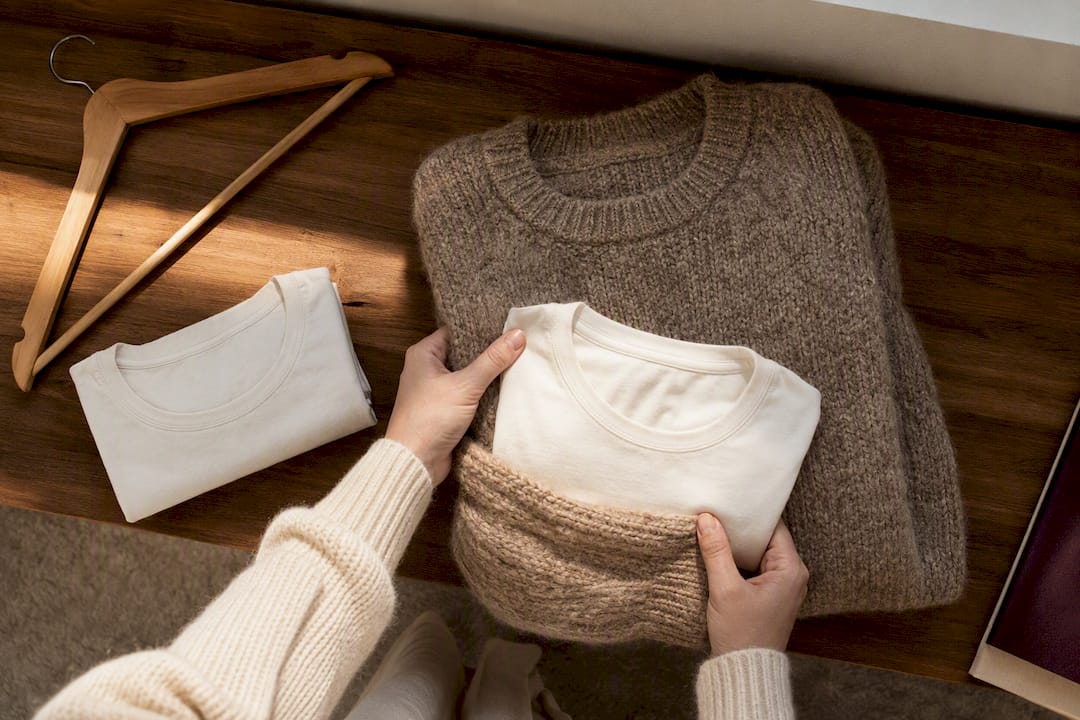
Seasonal wardrobe swaps help too. Heavier fabrics that trap sweat during exercise or hot weather often make itching worse, so moisture-wicking cotton blends during workouts, paired with a prompt post-sweat rinse and reapplication of moisturizer, head off flares before they start.
How Do Humidity and Temperature Affect Eczema-Prone Skin?
Dry air is one of the most underestimated eczema triggers, and it has nothing to do with which product you're using. Indoor heating in winter and air conditioning in summer both strip humidity from the air, and skin loses water to that dry air faster than any moisturizer can replace it.
A humidifier in the bedroom, kept in the 40 to 50 percent humidity range, can meaningfully reduce overnight itching for many people, since dry nighttime air is a common reason eczema feels worse the moment you wake up. Overly humid environments create a different problem: sweat sits on skin longer, and that sweat itself is a known irritant that can trigger flares in warm, humid climates or during heavy exercise.
Temperature swings deserve equal attention. Moving from a heated house into cold outdoor air, then back again, forces skin to react to rapid change, which is why extremities like hands and lips often flare first in winter. Layering clothing so you can adjust before you sweat or shiver gives skin fewer sudden changes to react to.
Seasonal routine changes make sense given all this. Many people need a thicker, more occlusive moisturizer in winter and something lighter in summer humidity, treating the routine as adjustable rather than fixed. Travel adds its own wrinkle: airplane cabin air runs extremely dry, so packing a travel-size occlusive cream for long flights isn't excessive, it's practical.
Can Diet and Lifestyle Habits Affect Skin Sensitivity?
Skincare handles the outside of the barrier, but what happens inside your body still shows up on your skin. Chronic stress raises cortisol, and elevated cortisol has a documented relationship with inflammatory skin flares, which is why eczema often gets worse during exam season, a hard work stretch, or any period of poor sleep.
Sleep deprivation compounds the problem in both directions: itching disrupts sleep, and poor sleep makes skin more reactive to the same triggers that were previously manageable. Breaking that cycle sometimes matters more than any single product swap.
Hydration matters, though its effect is often oversold. Drinking enough water supports overall skin function, but it won't compensate for a leaky, unrepaired barrier the way a good ceramide-rich moisturizer will. Food triggers are real for some people, particularly children with more severe eczema, but they vary enormously from person to person, and eliminating entire food groups without medical guidance can create nutritional gaps without any guaranteed skin benefit. If you suspect a specific food trigger, work with a clinician on a structured elimination approach rather than guessing.
Sweat from exercise is a known irritant for many people with eczema, which doesn't mean skip the workout. It means rinse promptly afterward and reapply moisturizer while skin is still slightly damp, the same timing principle that applies after a shower.
How Can You Prevent Cross-Contamination From Everyday Personal Care Items?
Products aren't the only source of irritation. The objects around your products carry their own risk, and this category gets overlooked constantly.
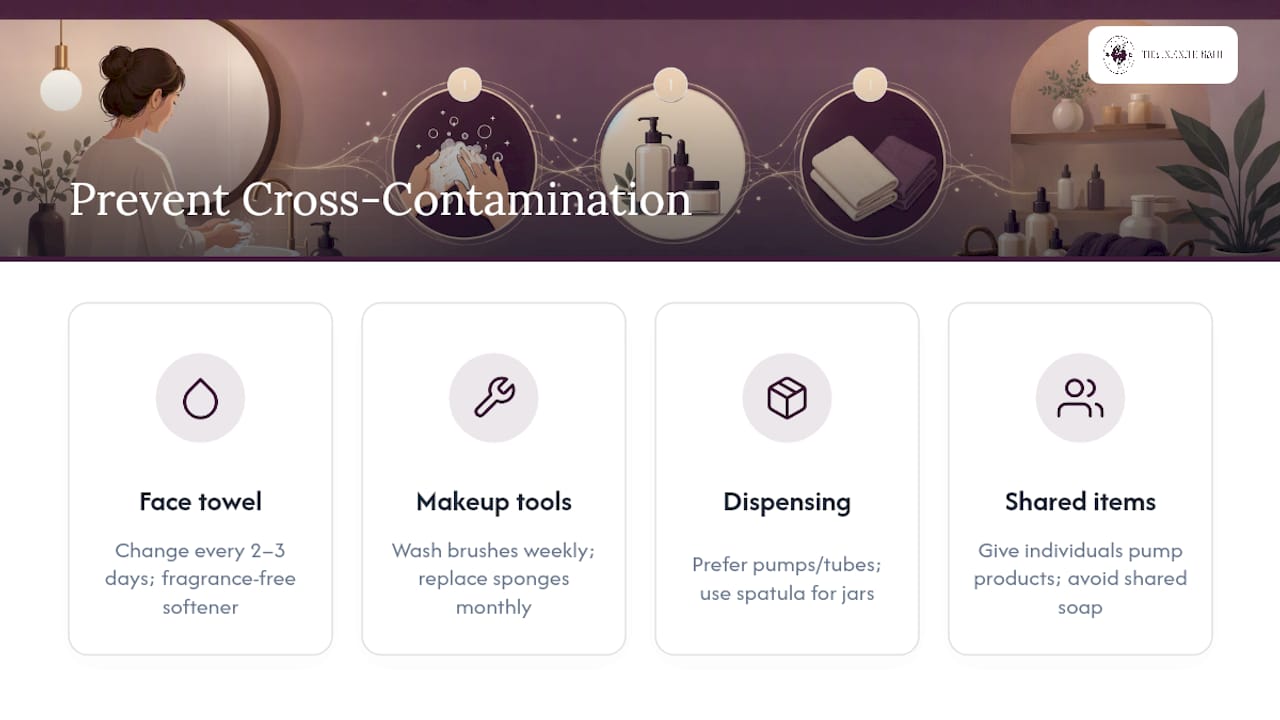
Towels are a common culprit. A towel that dried your face this morning and someone else's later in the day can transfer oils, residue, and bacteria between users, so a dedicated face towel, changed every two to three days, cuts that risk substantially. Fragrance-free fabric softener on towels matters too, since a scented towel undoes a fragrance-free skincare routine the moment it touches your face.
Makeup applicators deserve equal scrutiny. Sponges and brushes that sit damp in a drawer become breeding grounds for bacteria, and reapplying that bacteria to already-compromised skin invites flares that have nothing to do with the makeup formula itself. Wash brushes weekly and sponges every few uses, and replace sponges entirely every month or so.
Jar-packaged products compound this risk every time fingers dip in. A pump or tube limits contact and contamination far better than an open jar that collects whatever was on your hands last. If you already own jarred products, use a small spatula instead of fingers to scoop product out.
Shared items at home, like a single tube of lip balm passed between family members, or a bar of soap everyone touches, spread irritants and bacteria the same way towels do. Individual, pump-dispensed products for anyone managing eczema in the household remove that variable entirely.
Why Simple, Consistent Routines Beat Chasing New Products
The biggest mistake I see people make with eczema isn't picking the wrong product. It's picking a new one every few weeks, hoping the next purchase will be the fix that finally works. Skin needs weeks of consistency to show whether something is helping, and constant switching means you never actually find out.
Prioritize sleep and daily comfort over any single ingredient trend. A routine that lets you sleep through the night without scratching is doing its job, even if it's not the newest thing on your shelf. For a simple template to build from, The Infinite Bath's morning routine guide lays out a barrier-focused structure worth adapting to your own skin.
— Stella
Where The Infinite Bath Fits Into Your Eczema Routine
Everything in this guide points to one thing: fewer ingredients, less friction, more consistency. That's the entire premise behind The Infinite Bath's three-step regimen. The gel cleanser skips the sulfates that strip already-fragile skin, the lactic serum is designed to be introduced slowly with a patch test first, and the renewal cream is built to sit on skin as an occlusive layer, the same texture category dermatologists point to for barrier repair.

If your current shelf is a rotating cast of products you're not sure about, three steps instead of ten is a meaningfully smaller list of things that could go wrong. Start with the cleanser and renewal cream alone for the first two weeks, patch test the lactic serum on your forearm before it ever touches your face, and introduce it only once your skin has settled. When you're ready to simplify, the skincare shop is the place to start building that routine.
This article is general information, not a substitute for advice from a qualified doctor. Consult a qualified healthcare professional about your own circumstances before acting on anything here.
Sources
FAQ
What Skincare Should I Use if I Have Eczema?
Choose fragrance-free cleansers and moisturizers built around ceramides, colloidal oatmeal, and occlusive ingredients like petrolatum, and look for the NEA Seal of Acceptance when comparing options.
Is Eczema Linked to Lymphoma?
Eczema itself is not a known cause of lymphoma; severe, longstanding cases occasionally get misdiagnosed for a rare skin lymphoma that mimics eczema symptoms, which is one more reason to see a clinician if a rash doesn't respond to standard treatment.
What Is the 3-Minute Rule for Eczema?
It means applying moisturizer within about three minutes of finishing a bath or shower, while skin is still damp, to trap residual water and reduce water loss through the skin.
What Should You Not Put on Eczema Skin?
Avoid products containing fragrance, sodium lauryl sulfate, denatured alcohol, essential oils, and harsh dyes, since all of these commonly irritate an already compromised skin barrier.