If speed and proven potency top your list, retinol wins. If your priority is comfort, consistency, or a routine that works during pregnancy or breastfeeding, bakuchiol is the smarter pick. Both ingredients can measurably improve fine lines and pigmentation, and a well-known 12-week trial found their results nearly identical. The real difference isn't in the destination. It's in how bumpy the road gets.
TL;DR:
- Bakuchiol offers a gentler alternative to retinol, with comparable anti-aging effects in 12-week studies but less initial irritation.
- Retinol produces faster results but requires a slow start, careful pairing with other actives, and daily sun protection due to increased photosensitivity.
- For sensitive skin, pregnancy, or busy schedules, bakuchiol's milder profile makes adherence easier and reduces the risk of irritation or sun sensitivity.
- The only well-known head-to-head trial shows similar wrinkle and pigmentation improvements for both ingredients, with retinol causing more stinging and scaling.
- Long-term effectiveness and safety of bakuchiol remain less proven, but it is widely considered safe and effective for general photoaging and pigmentation.
Table of Contents
- Bakuchiol vs Retinol: What Retinol Actually Does to Your Skin
- Bakuchiol vs Retinol: Why This Plant Extract Feels So Different
- Retinol or Bakuchiol: What the Clinical Evidence Actually Shows
- How to Choose (and Actually Use) Bakuchiol or Retinol
- What the Research Still Doesn't Tell Us
- Why We Think Adherence Beats Potency
- A Gentler Way to Get These Benefits, Without the Guesswork
- Sources
- FAQ
Bakuchiol vs Retinol: What Retinol Actually Does to Your Skin
Retinol is a form of vitamin A that your skin converts into retinoic acid, the active compound that binds to retinoid receptors in your cells. Think of it as a key that fits a very specific lock. Once it's in, it tells your skin to speed up cell turnover and produce more collagen, which is why dermatologists have leaned on it for decades as the most researched anti-aging ingredient available.
That track record is retinol's biggest strength. It has the deepest body of evidence for treating photoaging, acne, rough texture, and uneven pigment, and the American Academy of Dermatology points to consistent results with regular use over several months. Most people need eight to twelve weeks before they notice visible smoothing, longer for pigment fading.
The catch is the adjustment period, often called retinization:
- Dryness, peeling, and redness in the first two to six weeks
- A stinging or tight sensation, especially with stronger formulas
- Increased sensitivity to sunlight, making daily SPF non negotiable
- A need to start low (often twice a week) and build slowly
Bakuchiol vs Retinol: Why This Plant Extract Feels So Different
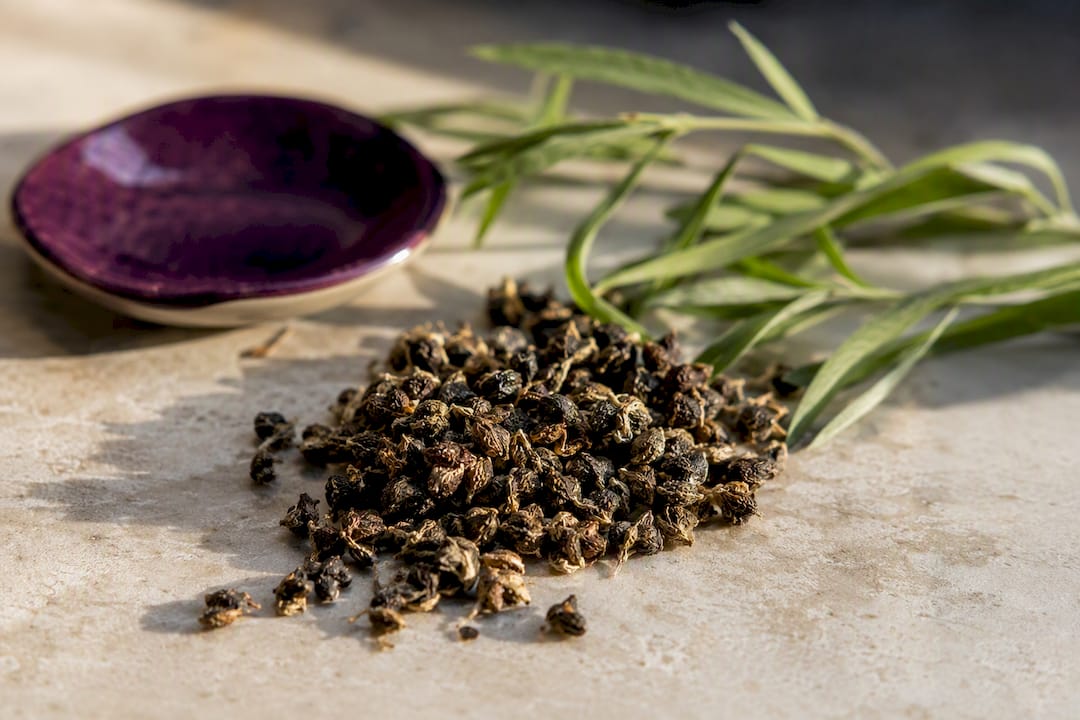
Bakuchiol comes from the seeds and leaves of Psoralea corylifolia, a plant used for centuries in Ayurvedic and Chinese medicine. Chemically, it looks nothing like vitamin A. It's a meroterpene, a completely different class of molecule, which is exactly why it doesn't trigger the same irritation cascade.
What makes bakuchiol interesting is that it still gets the job done. Research shows it can switch on many of the same retinoid-responsive genes that control collagen production and skin repair, without ever docking onto the retinoic acid receptor itself. It's less like a key in a lock and more like a skeleton key that nudges the same doors open, gently.
That mechanism translates into real-world tolerability:
- Comparable smoothing and brightening effects to low-strength retinol
- No documented link to increased sun sensitivity
- Suitable for once or twice daily use, morning or night
- Common formulations sit at concentrations that vary, typically found in moderate amounts.
Because it doesn't carry the same photosensitivity warning, bakuchiol works well layered into a morning routine, something you'd never do with a strong retinoid.
Retinol or Bakuchiol: What the Clinical Evidence Actually Shows
The most-cited comparison is a randomized, double-blind trial over several weeks with a modest number of participants. Half used bakuchiol twice daily; the other half used retinol once daily.
Clinical Snapshot: After 12 weeks, both groups saw statistically similar reductions in wrinkle surface area and hyperpigmentation, according to the randomized trial published in the British Journal of Dermatology. The retinol group, however, reported significantly more facial scaling and stinging.
That single study carries a lot of weight in this debate because it's the rare head-to-head test rather than two ingredients evaluated in separate trials. A broader mechanistic review adds another layer: combining bakuchiol with retinal (a retinoid one step removed from retinoic acid) actually potentiated anti-aging effects in some formulations, improving firmness and reducing wrinkles within 28 days without a matching spike in irritation.
Here's how the two stack up across the factors that matter most in daily use:
| Factor | Retinol | Bakuchiol |
|---|---|---|
| Efficacy (photoaging/pigmentation) | Strong, well-documented | Comparable in the 12-week RCT |
| Tolerability | Higher irritation, especially early on | Notably milder, less stinging/scaling |
| Onset speed | Faster for acne and texture | Similar timeline, gentler ramp |
| Photosensitivity | Increased; daily SPF required | Not linked to photosensitivity |
| Pregnancy/breastfeeding | Avoid | Generally preferred alternative |
| Typical concentration/frequency | 0.01% to 1%, start 2x/week | 0.5% to 2%, often 1 to 2x/day |
Acne treatment is where retinol still pulls ahead. Retinoids have decades of dermatology-backed use for clearing breakouts, and bakuchiol simply doesn't have the same acne-specific evidence. For pigmentation and general photoaging, though, the gap narrows considerably. And for pregnancy or breastfeeding, retinoids are off the table entirely, which makes pregnancy-safe routine planning one of the clearest reasons to reach for bakuchiol instead.
How to Choose (and Actually Use) Bakuchiol or Retinol
Start with your priority, not the ingredient's reputation. If you want the fastest, most aggressive results for acne or deep photoaging and you can tolerate a rough few weeks, retinol is the better-studied choice. If you have sensitive or reactive skin, you're pregnant or breastfeeding, or you simply want a product you can use every single day without babying your skin around it, bakuchiol fits better.
- Pick your entry point. Beginners with retinol should start at 0.25% to 0.5%, two to three nights a week. Bakuchiol users can typically start at their product's full strength, once or twice daily, since the irritation risk is lower from day one.
- Ramp slowly with retinol. Increase frequency only after your skin tolerates the current schedule without flaking for at least a week.
- Never stack strong actives the same night. Skip pairing high-strength retinol with exfoliating acids like glycolic or salicylic on the same evening. A lactic acid serum on alternating nights, with your retinoid on the others, is a safer split.
- Lock in SPF, every morning, no exceptions. This matters more with retinol, but it's smart practice regardless of which active you use.
- See a dermatologist if irritation persists past four weeks, if you're managing moderate to severe acne, or if you're considering prescription-strength tretinoin.
Pro Tip: If you're nervous about starting a retinoid, try bakuchiol for four to six weeks first to build your skin's tolerance to gentle exfoliation before introducing anything stronger.
What the Research Still Doesn't Tell Us
The 44-person trial comparing bakuchiol and retinol is genuinely useful, but it's also small and short. Twelve weeks shows initial results; it doesn't tell you what either ingredient does to skin over a year or two, and nobody has run a rigorous head-to-head against prescription-strength tretinoin.
- The landmark RCT (44 participants, 12 weeks) remains the primary direct comparison available.
- Reviews of gene expression data support the mechanism but rely heavily on in vitro and short-term in vivo work.
- Major health institutions, including Cleveland Clinic, still call bakuchiol "promising" while noting retinoids carry decades more research behind them.
That gap doesn't undercut bakuchiol's value. It just means the confidence level is different: retinol's benefits are proven over a long track record, bakuchiol's are supported by a smaller but consistent body of evidence.
Why We Think Adherence Beats Potency
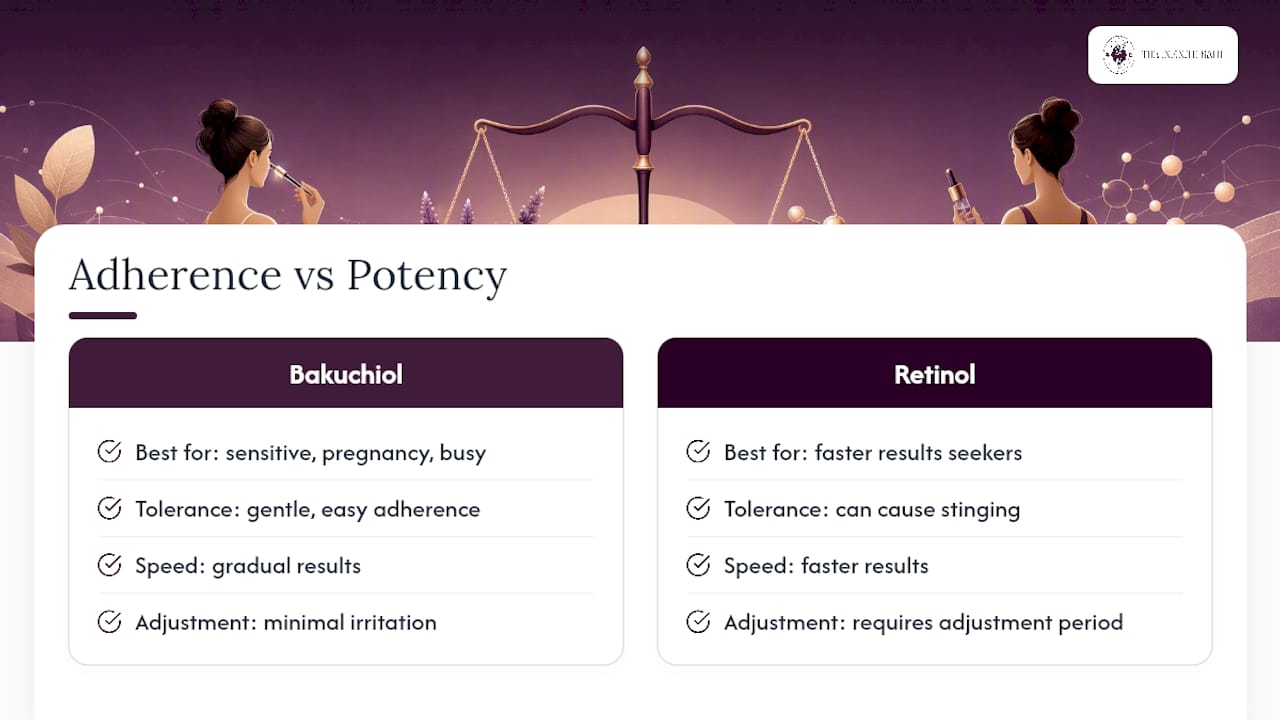
The ingredient that wins isn't always the strongest one on paper. It's the one you'll actually put on your face every night for the next year. A retinoid that sits unused in your medicine cabinet after two weeks of stinging does nothing for your skin.
If you have sensitive skin, a busy schedule, or you're navigating pregnancy, bakuchiol is worth building your routine around. If you're chasing faster results and can manage the adjustment period, retinol still earns its reputation. Either way, patch-test anything new and never skip sunscreen.
— Stella
A Gentler Way to Get These Benefits, Without the Guesswork
A certain skincare brand offers a three-step regimen designed for people who want fewer decisions and fewer flare-ups, not more products to research. The regimen includes a gentle gel cleanser with a lactic acid serum for steady exfoliation, finishing with a renewal cream to support texture and tone without the retinization curve retinol demands.

If you read this comparison and landed on "I want the bakuchiol path," that's exactly who this routine was built for: sensitive skin types, pregnant or breastfeeding readers avoiding retinoids, and anyone tired of juggling five products to get one result. The Renewal Cream is designed to work alongside your skin's barrier rather than against it, and the full skincare lineup is available now if you're ready to simplify.
Sources
- Prospective, randomized, double‐blind assessment of topical bakuchiol and retinol for facial photoageing
- Natural retinol analogs potentiate the effects of retinal on aged and photodamaged skin: in vitro to clinical studies
FAQ
What Should You Not Mix Bakuchiol With?
Bakuchiol is generally considered flexible enough to pair with most actives, including vitamin C and other antioxidants, but layering it with strong exfoliating acids on the same night can still overwhelm sensitive skin. When in doubt, alternate nights rather than stacking everything at once.
Does Bakuchiol Actually Work?
Yes. A 12-week randomized trial found bakuchiol produced comparable reductions in wrinkles and hyperpigmentation to retinol, with notably less scaling and stinging.
What Works Faster Than Retinol?
No well-designed study supports a claim that any single ingredient works measurably faster than retinol across the board. Retinol remains one of the faster-acting options for texture and acne, while combination formulas pairing retinal with plant-based analogs like bakuchiol have shown potentiated results in as little as 28 days in some clinical testing.
Do People Use Bakuchiol as a Retinol Alternative in Their Routines?
Bakuchiol has become a popular choice worldwide, especially among people with sensitive skin or those avoiding retinoids during pregnancy, largely because it delivers similar benefits without the same irritation profile.
Can I Use Both Bakuchiol and Retinol Together?
Some people alternate nights, using retinol a few times a week and bakuchiol on the others, though there's limited formal research on combining them directly rather than using retinal-bakuchiol formulations tested in clinical studies.