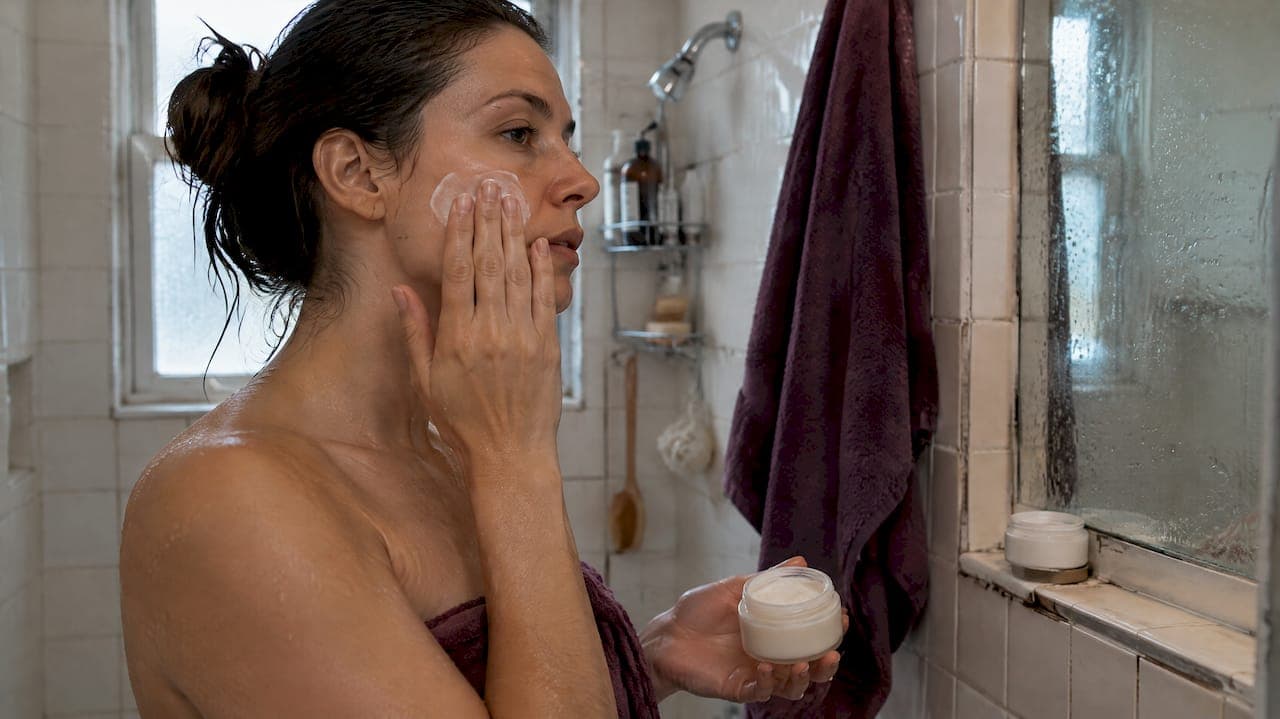
Yes, we always moisturize after exfoliating, though exactly when depends on what kind of exfoliant we just used. Rinse-off scrubs and masks call for immediate moisturizing on damp skin, leave-on acids ask for a short wait, and professional peels follow a clinician's timeline. The goal is always the same: stop water from escaping through the skin and give the barrier what it needs to rebuild.
TL;DR:
- For rinse off scrubs, moisturize immediately on damp skin; let leave on acids dry first, and follow product labels or a clinician’s peel schedule.
- Choose a moisturizer combining humectants, emollients, and occlusives; research favors ceramide rich formulas, especially those paired with cholesterol or fatty acids, for reducing water loss.
- After exfoliation, avoid fragrance, alcohol based toners, and another active; use lightweight lotions for oilier skin and richer creams for dry or reactive skin.
- If skin remains red or raw, or stings, pause actives and use a ceramide cream; seek care if leg itching persists beyond a few days.
Table of Contents
- Timing by exfoliant type: rinse-off scrubs, leave-on acids, and professional peels
- What moisturizer to choose after exfoliating: ingredients and textures that rebuild the barrier
- How to apply moisturizer post-exfoliation: a short step-by-step routine
- Special cases: professional peels, over-exfoliation, and itchy legs
- Evidence and brand context: what the research and our own routine say about barrier care
- Keep it simple and barrier-first
- A simple next step for post-exfoliation care
- FAQ
- Sources
Timing by exfoliant type: rinse-off scrubs, leave-on acids, and professional peels
Think of your skin's outer layer as a brick wall, with skin cells as the bricks and lipids as the mortar holding everything together. Exfoliation, whether physical or chemical, loosens some of that mortar on purpose. That is how it smooths texture, but it also means moisture has a more direct path out. The American Academy of Dermatology advises moisturizing right after exfoliation because the process can be drying and strips away part of the skin's protective barrier.
The right moment to apply depends on the method:
- After a rinse-off scrub or enzyme mask, pat your skin so it stays slightly damp, then moisturize right away to seal in that surface water, following advice on body scrub frequency to optimize your routine.
- After a leave-on chemical exfoliant like an AHA or BHA serum, wait until it is fully dry to the touch, often several minutes, before layering on moisturizer. This reduces stinging and keeps the acid working as intended rather than diluting it.
- Always check your product label. Higher-concentration actives sometimes call for a longer wait, and the brand's own instructions should outrank general advice.
- After a professional peel, your provider will give you a specific start time for moisturizing, which can range from the same day to several days later depending on depth. Follow those directions exactly rather than guessing.
None of this means moisturizer cancels out exfoliation. They are partners, not opposites. Exfoliation clears the way, moisturizer creates the conditions for healthy new cells to settle in, and together they keep transepidermal water loss in check.
What moisturizer to choose after exfoliating: ingredients and textures that rebuild the barrier
Not every moisturizer earns its place after exfoliation. We want a formula built from three functional ingredient types, each doing a different job. Humectants like hyaluronic acid and glycerin pull water into the skin. Emollients soften and smooth. Occlusives sit on top and physically slow moisture loss. A post-exfoliation moisturizer ideally includes all three, because freshly exfoliated skin needs both an influx of water and a reason to keep it.

Ceramides deserve particular attention here. A 2026 review in the Journal of Cosmetic Dermatology found that ceramide-dominant, barrier-repair moisturizers provide more sustained hydration and greater reduction in transepidermal water loss than traditional hydrating creams. Separate clinical research on physiological lipids showed that formulas combining ceramides, cholesterol, and fatty acids in the skin's own natural ratio significantly reduced water loss and improved barrier integrity in adults with compromised skin.
Pro Tip: Look for "ceramide" paired with cholesterol or fatty acids on the ingredient list rather than ceramide alone. The combination is what mimics the skin's natural lipid mortar.
Texture matters too. Oilier or combination skin often does better with a lightweight gel or lotion that will not trap heat or feel heavy after exfoliation. Drier or more reactive skin usually benefits from a richer cream with occlusive ingredients like shea butter or squalane.
Right after exfoliating, skip:
- Fragranced products, which can sting on freshly exposed skin.
- Alcohol-based toners or astringents, which strip moisture further.
- A second active ingredient, like a retinoid layered on top of a fresh acid exfoliation.
How to apply moisturizer post-exfoliation: a short step-by-step routine
Good technique matters as much as good ingredients. Here is the sequence we recommend for face and body alike:
- Pat skin so it is damp, not dripping, right after rinsing off an exfoliant or stepping out of the shower.
- Dispense a small amount, roughly a dime-sized portion for the face or a palmful for the body.
- Spread it gently with fingertips, working outward rather than rubbing or tugging.
- Pat lightly to help the product settle rather than massaging it in for long stretches.
Layering order matters if you use more than one product. A hyaluronic acid serum or mist goes first to add water, then a ceramide-rich cream seals it in. For body skin after a shower, a lotion absorbs faster for daytime use, while a body oil applied within minutes of stepping out can lock in more moisture for very dry patches.
Watch your skin for cues that it is time to reapply: tightness, flaking, or a dull look all signal it wants more. If you notice stinging or redness after moisturizing, stop any additional actives for a day or two and switch to a simpler, fragrance-free cream until things calm down.
Special cases: professional peels, over-exfoliation, and itchy legs
Deeper interventions and irritated skin call for a bit more care. After a light chemical peel, most people apply a bland, fragrance-free moisturizer once tightness or flaking starts. Medium-depth peels usually need earlier and more frequent moisturizing, and your provider's instructions should always take priority over general guidance.
Over-exfoliation shows up as persistent redness, a tight or raw feeling, or skin that stings when you apply anything at all. If that sounds familiar, the fix is to pull back, not push through:
- Pause any additional actives, including retinoids and new acids.
- Switch to a plain, ceramide-rich cream until the stinging stops.
- Cut back exfoliation frequency once your skin has calmed down.
Itchy legs after exfoliating are a common version of the same story. Body skin tends to have fewer oil glands than facial skin, so scrubbing away dead cells there removes a thinner protective layer to begin with. A rich emollient with soothing ingredients like colloidal oatmeal or ceramides usually settles the itch within a day. If redness, swelling, or itching persists beyond a few days, that is worth a visit to a dermatologist rather than more moisturizer.
Evidence and brand context: what the research and our own routine say about barrier care
Dermatology guidance and clinical research point in the same direction. The AAD recommends moisturizing after exfoliation specifically because the process can strip the barrier and increase water loss. Clinical work on physiological lipids backs that up with measurable TEWL reductions, and the 2026 cosmetic dermatology review reinforces that ceramide-dominant creams outperform simpler hydrators for sustained repair.
The skin barrier behaves like a wall freshly repainted: it needs time, the right materials, and a gentle hand to set properly.
We recommend a simple three-step regimen with a cleanser, serum, and moisturizer based on this logic. If you want to go deeper on recognizing when you have gone too far, our guide on signs of over-exfoliation and our piece on barrier repair cream results both walk through the repair process step by step.
Keep it simple and barrier-first
If there is one thing worth remembering, it is that your skin does not need a complicated routine to recover well. It needs consistency: a gentle exfoliant used at a sensible pace, followed by a moisturizer that actually rebuilds rather than just coats. We would rather see you use three good products reliably than ten products occasionally. Simple, repeated care is what barrier repair actually rewards.
— Stella
A simple next step for post-exfoliation care
There are skincare collections that follow this barrier-first thinking: gentle actives, real hydrating ingredients, and routines short enough to actually stick with. If you are looking for a moisturizing step that pairs naturally with exfoliation instead of fighting against it, this is where we would point you.

Take a look at the Lustral Flood Collection and see whether it fits the simple, sensitive-skin-friendly routine your skin has been asking for.
FAQ
What is a good moisturizer to use after exfoliating?
A good post-exfoliation moisturizer combines humectants like hyaluronic acid or glycerin with ceramides and an occlusive ingredient to seal moisture in. Ceramide-dominant formulas are supported by clinical research showing reduced transepidermal water loss compared with simpler hydrating creams. Fragrance-free options are safer immediately after exfoliating since skin is more reactive.
Should you put moisturizer on after exfoliating?
Yes, moisturizing after exfoliating is recommended because exfoliation can strip part of the skin's protective barrier and increase water loss. The American Academy of Dermatology advises following exfoliation with a moisturizer to keep skin hydrated and healthy. Timing varies slightly depending on whether you used a rinse-off scrub or a leave-on acid.
What should you put on your skin after exfoliating?
Apply a moisturizer with ceramides, humectants, and occlusive ingredients, ideally on slightly damp skin for rinse-off exfoliants or on fully dry skin for leave-on acids. Avoid fragranced products, alcohol-based toners, and additional strong actives right after exfoliating. A simple, barrier-focused cream is usually the safest choice.
Why are my legs itchy after exfoliating?
Itchy legs after exfoliating usually mean the skin's barrier has been temporarily disrupted, since body skin has fewer natural oils than facial skin to begin with. A rich, fragrance-free emollient with soothing ingredients like colloidal oatmeal or ceramides typically resolves the itch within a day or two. Persistent itching or redness beyond a few days is worth checking with a dermatologist.
Sources
- How to safely exfoliate at home — American Academy of Dermatology
- Topical supplementation with physiological lipids rebalances the stratum corneum ceramide profile and strengthens skin barrier function in adults predisposed to atopic dermatitis — White Rose Research
- Revitalizing the skin: Exploring the role of barrier repair moisturizers — Journal of Cosmetic Dermatology (2026)