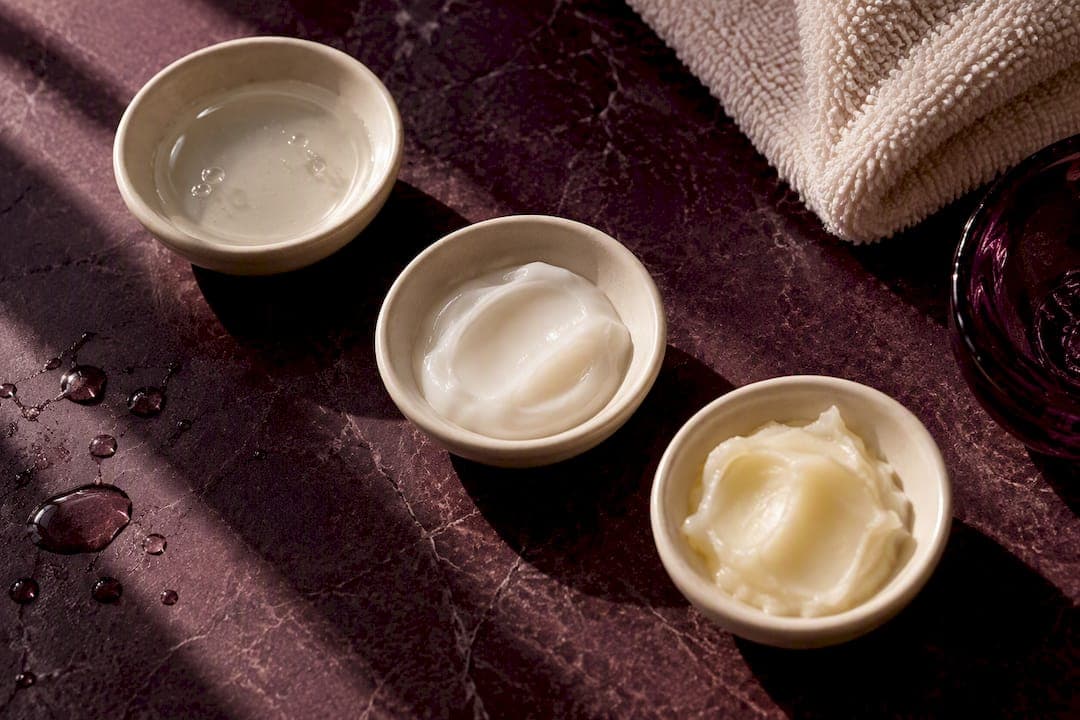
Moisture sandwiching means applying a humectant to damp skin, sealing it with a moisturizer, then finishing with an occlusive to trap hydration where you need it. It works because it addresses two separate jobs skin has to do: attract water and then keep it there. Dry, dehydrated, or sensitive skin tends to benefit most, especially through the colder, drier months when the air itself pulls moisture away from you.
TL;DR:
- Applying humectants to damp skin helps draw water from underlying layers instead of the air, improving hydration especially in dry environments.
- Using a small amount of moisturizer immediately after showering enhances skin water content and supports the effectiveness of the moisture sandwich.
- Thinner to thicker layering ensures each product absorbs properly before sealing in hydration with an occlusive, which varies seasonally and by skin type.
- Dry and dehydrated skin benefit from full layering, while oily or sensitive skin may need lighter approaches or targeted application in drier areas.
- Proper product selection involves choosing humectants like hyaluronic acid, non-comedogenic occlusives, and ingredients that repair skin barrier, avoiding irritants like fragrance and denatured alcohol.
Table of Contents
- What the moisture sandwich is and why it works
- How to layer your moisture sandwich, step by step
- Who benefits most, and when to adjust the method
- What to look for in each product layer
- Common mistakes and how to fix them
- How The Infinite Bath's three-step regimen fits the sandwich method
- Why I tell clients to start slow
- Try the Lustral Flood Collection as your starter sandwich
- Sources
- FAQ
What the moisture sandwich is and why it works
Think of your skin's outer layer as a brick wall. The cells are the bricks, and the lipids between them, ceramides, fatty acids, cholesterol, are the mortar holding everything together. Humectants like hyaluronic acid and glycerin act like little sponges, pulling water toward the surface. Emollients and moisturizers smooth and soften that mortar. Occlusives sit on top like a coat of paint, slowing the water's escape.
Here's the part people miss: apply humectants to damp skin, not dry skin. In a low-humidity room, a humectant applied to bone-dry skin can actually pull water from deeper layers instead of the air, leaving you more parched than before. Applying to damp skin gives it a nearby source to draw from instead. The American Academy of Dermatology recommends applying moisturizer while skin is still damp and choosing fragrance-free, non-irritating formulas, a small habit that changes how well the whole method performs.

How to layer your moisture sandwich, step by step
You don't need ten products for this, just the right three in the right order, applied at the right moment.
- Cleanse gently with a formula that will not strip your skin, then pat (don't rub) dry with a towel.
- Within five minutes of stepping out of the shower or bath, apply a humectant serum, such as one built around hyaluronic acid or glycerin, while your skin is still damp.
- Layer a moisturizer or cream suited to your skin's texture needs. Richer creams for very dry skin, lighter lotions for combination or oily skin.
- Finish with an occlusive appropriate to your skin type: a heavier balm at night, something lighter like a silicone-based cream during the day under sunscreen.
Timing matters more than people realize. A clinical study on moisturizer application found that applying moisturizer immediately after bathing, in sufficient doses applied twice daily, produced measurable increases in skin water content over several weeks in people with dry skin. That is not a vague "apply generously" instruction. It is a real, testable amount, roughly a generous fingertip's worth spread evenly, not a thin swipe.
For the order of application, thinnest to thickest is the rule that keeps every layer able to absorb before the next one seals it in. In the morning, keep your occlusive light so it plays well under sunscreen. At night, you can afford something richer since there is no makeup or SPF competing for space.
Pro Tip: Keep a small spray bottle of water by your skincare shelf. A quick mist before your humectant serum recreates that "just out of the shower" dampness even hours later.

Who benefits most, and when to adjust the method
Dry and dehydrated skin are not the same thing, and the sandwich helps both, just differently. Dry skin lacks oil and needs richer emollients throughout. Dehydrated skin lacks water and responds especially well to humectants on damp skin. Sensitive skin benefits from the buffering effect, since a moisturizer layer can cushion the skin from more active ingredients.
- Dry or sensitive skin often needs the full three layers, both morning and night, especially in winter or heated indoor air.
- Oily or acne-prone skin can use a lighter humectant and swap heavy occlusives for something non-comedogenic.
- Combination skin might sandwich only in drier areas, like cheeks, while going lighter across the T-zone.
- Anyone introducing a retinoid alternative or an acid exfoliant can use the sandwich as a buffer, moisturizing before and after the active to soften irritation.
Cold, dry climates and post-exfoliation skin both call for a slightly heavier hand with your occlusive step, while humid summer months usually call for less.
What to look for in each product layer
Picking compatible products stops you from guessing your way through a shelf of serums. Each layer has ingredients that do a specific, provable job.
- Humectants: hyaluronic acid holds many times its weight in water, glycerin is a reliable, inexpensive water-binder, and lactic acid hydrates while gently exfoliating.
- Emollients and barrier-repair ingredients: ceramides rebuild the "mortar" between skin cells, fatty acids soften rough texture, and dimethicone smooths without heaviness.
- Occlusives: petrolatum is the most effective at reducing water loss, silicones offer a lighter feel with similar sealing power, and natural oils like squalane sit somewhere in between.
Watch for fragrance and high concentrations of denatured alcohol, both common triggers for sensitive skin. If you are prone to breakouts, skip heavy, pore-clogging oils like coconut oil and reach for lighter, non-comedogenic options instead.
Common mistakes and how to fix them
The most frequent error is applying products in the wrong order, usually occlusive first, which blocks everything layered on top of it from absorbing at all. If that's you, simply reverse the order tonight and give your skin a few days to show the difference.
Too-heavy occlusives on acne-prone skin cause congestion fast. Swap petrolatum for a lightweight silicone or oil-free lotion, and patch-test any new product on your inner arm for a few nights first.
If your skin feels tight and flaky, that's usually dryness; if it feels tight but looks fine, that's often dehydration calling for more humectant, not more cream. When irritation shows up, stop all actives, strip back to a gentle cleanser, moisturizer, and occlusive, and see a dermatologist if redness or discomfort doesn't settle within a few days.
Pro Tip: When in doubt, simplify. Three calm products beat six irritating ones every time.
How The Infinite Bath's three-step regimen fits the sandwich method
Our own three-step regimen was built around this same logic, even before we had a name for it. The gel cleanser preps skin gently, the lactic serum acts as your humectant and gentle exfoliant in one. The renewal cream closes the routine by sealing hydration in. It's designed as a natural alternative to retinol, so you get exfoliation without the dryness that often comes with it, keeping the whole routine simple enough to actually stick with.
Why I tell clients to start slow
Years of watching people layer five new products at once taught me one thing: skin rewards patience, not enthusiasm. Start with your sandwich at night only, track how your skin feels for two weeks, and patch-test anything new before it touches your whole face. A moisturizer that keeps skin calm and consistent will always outperform a routine built on hope.
— Stella
Try the Lustral Flood Collection as your starter sandwich
If three products already sounds easier than what's currently crowding your bathroom shelf, the Lustral Flood Collection follows this exact sequence: cleanser, lactic serum, renewal cream, no extra steps to second-guess.

- Start at night, since that's when your skin has the most time to absorb each layer undisturbed.
- Patch-test the lactic serum first, especially if your skin tends to react to new actives.
- Add the renewal cream once your skin has adjusted, to complete the sandwich without overwhelming your barrier.
You can browse the full skincare shop if you want to build your own combination instead.
Sources
The dermatological and clinical guidance here comes from a small set of sources worth knowing by name. The American Academy of Dermatology is the primary professional body for dermatology guidance in the country, and its recommendations on damp-skin application and fragrance-free products anchor this method. The Journal of Cosmetic Dermatology study provides the clinical dosing data behind the "how much and how often" question. DermNet rounds things out with formulation science explaining how humectants, emollients, and occlusives behave differently on skin. For readers curious about the broader link between hydration and skin health, Rao Dermatology's explainer offers useful clinical background.
- Optimal application method of a moisturizer on the basis of skin physiological functions — Journal of Cosmetic Dermatology (PMC)
- How to pick the right moisturizer for your skin — American Academy of Dermatology (AAD)
FAQ
What is the moisture sandwich method in skincare?
The moisture sandwich method layers a humectant on damp skin, followed by a moisturizer, then an occlusive to seal everything in. DermNet notes this thinnest-to-thickest order helps each layer absorb before the next one locks it in place.
How do you actually do the sandwich method in skincare?
Cleanse, pat skin damp rather than fully dry, apply a humectant serum within a few minutes, follow with a moisturizer suited to your skin type, then finish with an occlusive. The AAD recommends applying moisturizer while skin is still damp for the best result.
What is the 3 minute moisturizer rule?
This refers to applying moisturizer within a few minutes of bathing, while skin is still damp, so humectants have water nearby to bind instead of pulling it from deeper layers. The moisturizer application study found measurable hydration improvements when product was applied immediately after bathing, twice daily.
What is the Korean 7 skin method?
Definitions vary, but it generally describes applying a hydrating toner in several thin layers rather than one thick application, aiming for gradual absorption. It shares the same underlying idea as moisture sandwiching: give skin water in stages rather than all at once.
Which two ingredients should not be layered together?
Combining two strong exfoliating acids, or an exfoliating acid with a strong retinoid alternative, in the same routine can overwhelm your barrier and cause irritation. If you want to introduce an active gently, buffering it with moisturizer before and after is a more comfortable approach than layering two actives at once.