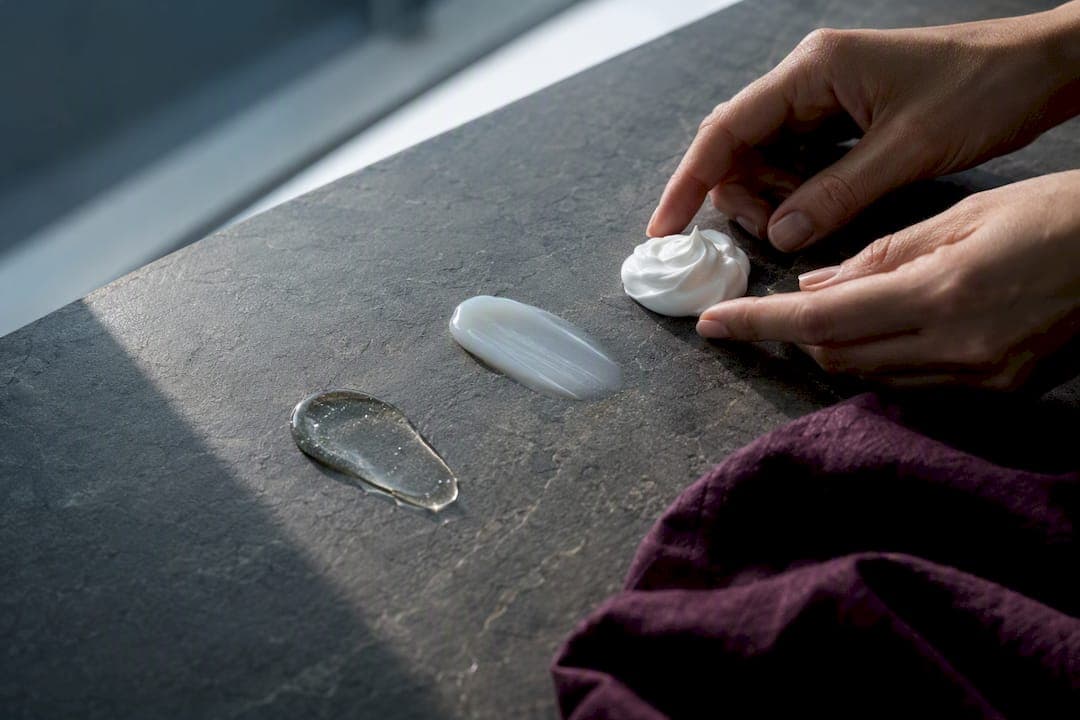
The correct order is cleanser, treatment or serum, moisturizer, with sunscreen as the last step in the morning. Two rules govern everything in between: apply products thinnest to thickest, and water-based formulas go before oil-based ones. Mornings lean toward protection with antioxidants and SPF; nights lean toward repair with acids and retinoids.
TL;DR:
- Applying skincare from thinnest to thickest ensures proper absorption and prevents products from sliding off or balling up on the skin.
- Active ingredients like retinoids should be used on designated nights and applied before moisturizing to maximize effectiveness without damaging the skin barrier.
- Sunscreen must always be the final step in the morning routine and be positioned at least two minutes after moisturizer to maintain full protection.
- A minimal routine of cleansing, moisturizing, and applying SPF is sufficient for most people, especially on busy days or with sensitive skin.
- Combining multiple active ingredients in one session increases irritation risk; stagger their use to support skin recovery and effectiveness.
Table of Contents
- What Is the Right Order for a Morning Skincare Routine?
- How Should You Order Your Nighttime Skincare Steps?
- Why Do You Layer Skincare From Thinnest to Thickest?
- Where Do Active Ingredients Fit Into the Order?
- How Long Should You Wait Between Skincare Layers?
- What Are the Most Common Skincare Ordering Mistakes?
- How The Infinite Bath's Three-Step Regimen Follows This Order
- Why Simplicity Beats Complexity in Skincare
- Get a Ready-Ordered Routine Without Building One From Scratch
- Where to Read More on Skincare Order and Layering
- Sources
What Is the Right Order for a Morning Skincare Routine?
I think of a morning routine like getting dressed for weather you can't control. You layer light pieces first, then armor up before you walk out the door. Skincare works the same way, and the sequence isn't arbitrary. It's built around absorption and protection.
Here's the full morning sequence, in order:
- Remove makeup or overnight residue if you didn't wash your face before bed.
- Cleanse with a gentle formula. This resets your skin's surface so nothing else has to fight through oil or sweat.
- Toner or essence (optional). Some people use this to rebalance pH after cleansing.
- Antioxidant serum, usually vitamin C. This is where a lot of people get the order wrong.
- Eye cream or spot treatment, applied while the skin is still slightly damp.
- Moisturizer, to seal in hydration and give your skin a buffer.
- Face oil (optional), for anyone whose skin needs extra richness.
- Sunscreen, always last.
Antioxidants go before sunscreen for a specific reason: vitamin C neutralizes free radicals at the skin's surface, and sunscreen needs to sit undisturbed on top to do its job as a physical or chemical shield. Flip that order and you weaken both. Dermatology guidance is consistent on this point: sunscreen must always be the final step during the day so it stays intact as a protective layer rather than getting buried under something else.
If eight steps sounds like a part-time job, you don't need all of them. Clinical guidance backs a minimum of three: cleanse, moisturize, and apply SPF, with cleansing always first. That's the whole routine on a rushed Tuesday. And if your skin is dry or you didn't sweat overnight, some dermatologists say you can skip the AM cleanse entirely and go straight to a splash of water before your other products. For a more detailed take on this minimal setup, our 3 to 5 minute morning routine breaks down exactly what a fast version looks like without cutting corners on protection.
Pro Tip: Apply sunscreen a full two minutes after your moisturizer has settled in, not immediately after. Layering it too fast can dilute the SPF and reduce how evenly it sits on your skin.
How Should You Order Your Nighttime Skincare Steps?
Night is repair time, not protection time, which changes the whole logic of the routine. Your skin isn't fighting UV exposure while you sleep. It's rebuilding, and your product order should support that instead of getting in its way.
The nightly sequence:
- Remove makeup and sunscreen with an oil-based cleanser or micellar water.
- Double cleanse with a water-based formula if you wore heavy makeup or SPF that day.
- Exfoliate (chemical or physical) only on scheduled nights, not every night.
- Targeted treatment or retinoid, applied to dry skin for better absorption.
- Hydrating serum, if your skin needs an extra dose of moisture.
- Moisturizer, slightly heavier than your daytime one.
- Face oil, as the final seal, if you use one.
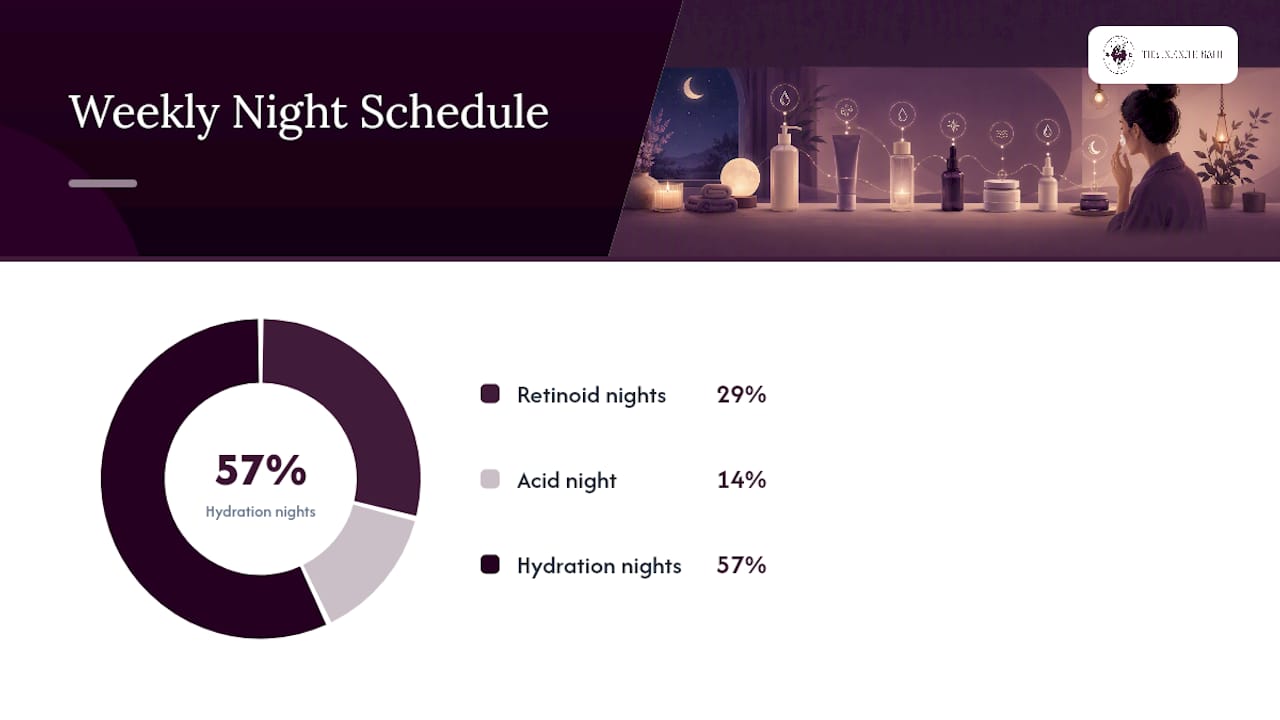
Retinoids and acids don't play well together on the same night. Dermatology sources recommend using one strong active per session rather than stacking a retinoid on top of an AHA, because both increase cell turnover and combining them raises your risk of redness, flaking, and a compromised barrier. A workable weekly pattern looks like this: retinoid on Monday and Thursday, an AHA like glycolic or lactic acid on Tuesday, and a plain hydrating night on Wednesday, Friday, and the weekend. That gives your skin recovery time between actives instead of hitting it with something new every single night.
Retinoids specifically go before your moisturizer, not after, so the active can penetrate before it's diluted by a heavier cream. If your skin is new to retinoids, some people "buffer" by applying moisturizer first, then the retinoid, then moisturizer again. It's slower but gentler, and it's a reasonable place to start if you've never used one before.
Pro Tip: If you wake up with any redness or tightness after starting a new active, that's your skin telling you to slow down, not push through. Cut back to twice a week before you decide the product doesn't work for you.
Why Do You Layer Skincare From Thinnest to Thickest?
Picture pouring water onto a layer of Vaseline. It just beads up and rolls off. That's what happens when you apply a lightweight serum after a heavy cream. The core rule for layering skincare products is to go from thinnest consistency to thickest, which allows each layer to actually absorb instead of sliding on top of something that's already sealed the skin.
In practical terms, that order looks like:
- Watery toners and essences
- Liquid or gel serums
- Lotions and light creams
- Rich creams and balms
- Face oils and other occlusives
The "water before oil" principle is the same idea from a different angle. Water-based products need direct contact with skin to hydrate it; oil-based products create a seal on top. Apply the oil first and the water-based product underneath it has nowhere to go.
There's one deliberate exception: double cleansing. You apply the oil cleanser first specifically to break down makeup, sunscreen, and sebum, then follow with a water-based cleanser to clean the skin underneath without stripping it.
Sunscreen breaks the thin-to-thick rule on purpose. It goes last regardless of its texture because its job is to sit on the surface, not sink in. If you wear makeup, apply it after sunscreen has set for a minute or two, and plan to reapply SPF every two hours if you're outdoors, since foundation alone won't extend its coverage.
Where Do Active Ingredients Fit Into the Order?
Actives are where most people either see real results or accidentally wreck their skin barrier, and the difference usually comes down to timing rather than the ingredient itself.
Here's how the main categories sort by time of day:
- Antioxidants (vitamin C, niacinamide): morning, applied before sunscreen.
- AHAs/BHAs (glycolic, lactic, salicylic acid): evening, on designated exfoliation nights only.
- Retinoids: night only, applied before moisturizer.
- Benzoyl peroxide or salicylic acid spot treatments: applied directly after cleansing, before anything else.
Dermatologists frame morning and night around two different goals: protection during the day and repair at night, which is why antioxidants and retinoids rarely belong in the same slot. One neutralizes damage as it happens; the other works while your skin regenerates overnight.
The professional consensus on scheduling strong actives is to alternate them rather than combine them. Try retinoid nights on Monday and Thursday, an exfoliating acid on Tuesday, and plain hydration the rest of the week. This staggered approach, sometimes called "buffering," lets your barrier recover between active applications while still getting the benefit of each ingredient over time.
One caution that gets skipped too often: AHAs and BHAs increase sun sensitivity for days after use. If you exfoliate at night, your morning sunscreen isn't optional. It's the thing standing between fresh, freshly-exfoliated skin and a sunburn you didn't see coming.
How Long Should You Wait Between Skincare Layers?
Not every product needs the same waiting period, and rushing the process is usually what causes that greasy, ball-up-and-flake mess called pilling.
Rough timing guide:
- Quick absorbers (toners, essences): 10 to 30 seconds
- Serums: 30 to 60 seconds
- Heavy creams and sunscreen: 1 to 3 minutes
These ranges track with general skincare application guidance on absorption times, and the signal to watch for is simple: skin should feel dry to the touch, not tacky or wet, before you add the next layer.
Pilling usually means two textures don't mix well, often a silicone-based product meeting a heavy cream underneath it. Fix it by using smaller amounts, waiting longer between layers, or swapping one product for a lighter-textured version.
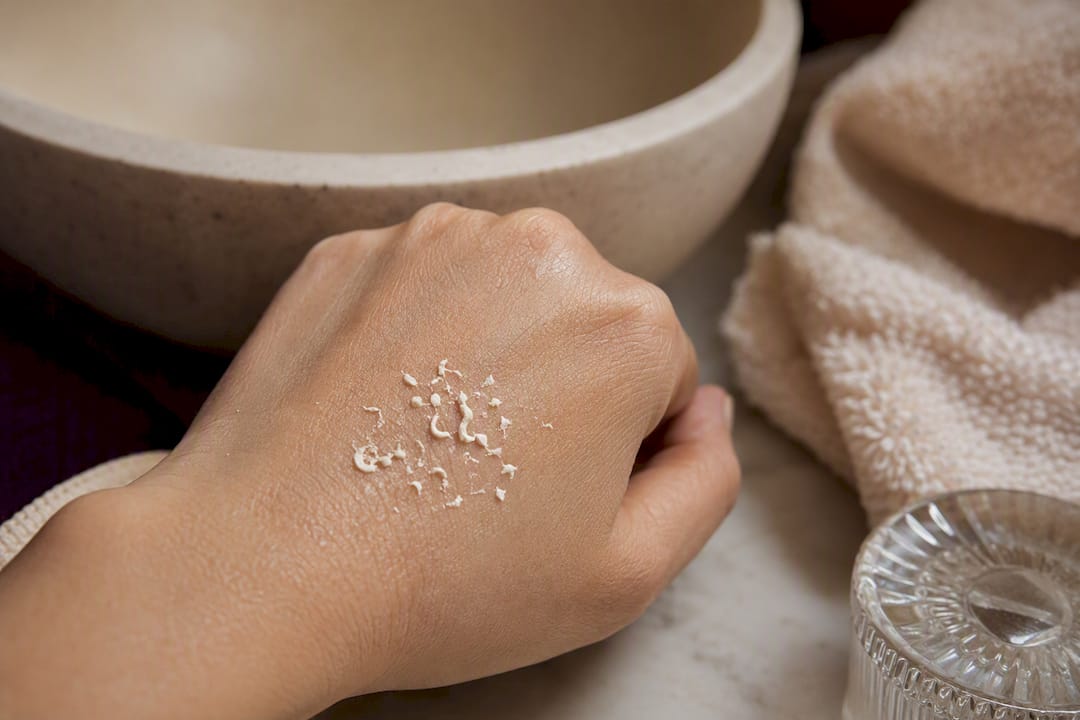
Pro Tip: Apply serums and creams in small dots across your face rather than one big glob in your palm. Patting product in gently works it into skin faster than rubbing, which tends to push product around instead of into.
What Are the Most Common Skincare Ordering Mistakes?
Most skin barrier problems I hear about trace back to one of three habits, and all three are fixable within a couple of weeks.
- Stacking too many actives at once. If your skin is stinging, peeling, or red, stop every active immediately and use only a gentle, ceramide-based moisturizer until it calms down.
- Under-applying sunscreen or layering it beneath heavier products. SPF needs to sit on top, in a full amount (roughly a nickel-sized dollop for the face), and gets reapplied every two hours in direct sun.
- Over-exfoliating with harsh scrubs. Physical exfoliants used too often can create micro-tears in the skin. If your skin feels raw or looks shiny and irritated, switch to a gentle cleanser and skip actives entirely for a week.
Barrier repair isn't complicated, but it does require patience. Simplify back to a cleanser, a plain moisturizer, and SPF until the redness and tightness fully resolve.
How The Infinite Bath's Three-Step Regimen Follows This Order
The Infinite Bath built its regimen around the exact sequence this article lays out: gel cleanser, lactic acid serum, renewal cream. Nothing skipped, nothing extra.
The gel cleanser removes the day's buildup without stripping the skin. The lactic acid serum comes next as the treatment step, using a milder AHA that exfoliates and brightens without the intensity of glycolic acid, which matters if your skin has ever reacted to stronger acids. The renewal cream seals the routine, delivering hydration and barrier support as the final, thickest layer.
That's the thin-to-thick rule and the one-active-per-session principle, built directly into three products instead of eight. It meets the dermatologist-recommended minimum of cleanse, treat, moisturize while keeping active overload risk low, which is exactly the point for anyone managing sensitive skin or a schedule with no room for a ten-step routine.
Why Simplicity Beats Complexity in Skincare
The order matters more than the number of products, which is the part most routines get backward. A five-minute ritual you actually repeat every day beats a ten-step routine you abandon by Thursday.
Simplicity also lowers your irritation risk. Fewer products means fewer chances for two ingredients to clash, and fewer decisions means you're more likely to stick with it. Someone with an elaborate ten-step routine can usually cut it down to cleanser, one treatment serum, and moisturizer without losing much benefit at all. Consistency, not complexity, is what changes skin over months.
— Stella
Get a Ready-Ordered Routine Without Building One From Scratch
Following the correct order matters, but assembling eight products that actually layer well together, without pilling, clashing, or irritating sensitive skin, takes trial and error most people don't have time for. The Infinite Bath solves that by building the order into the product line itself.

The three-step kit follows this article's sequence exactly: the gel cleanser opens the routine, the lactic acid serum handles gentle exfoliation and brightening as the treatment step, and the renewal cream locks in hydration as the final layer. Each product is formulated to work with the others, so you're not guessing whether your serum will pill under your moisturizer or whether your acid is too strong to pair with anything else that day.
This isn't the only way to build a correctly ordered routine. It's simply one that removes the guesswork for anyone who wants the order handled for them. Browse the full skincare shop to see the three-step regimen and find the version that fits your skin.
Where to Read More on Skincare Order and Layering
The American Academy of Dermatology confirms why sequence affects product performance. The Cleveland Clinic covers active-ingredient scheduling and barrier safety. PMC's peer-reviewed guidance outlines the clinical case for a minimal three-step baseline.
Sources
- Peer-reviewed clinical guidance on skincare essentials (PMC11735236)
- Cleveland Clinic: What products do I actually need for a simple everyday skin care routine
- Real Simple: How to layer skin care products
- Good Housekeeping: This is the order you should apply your skincare