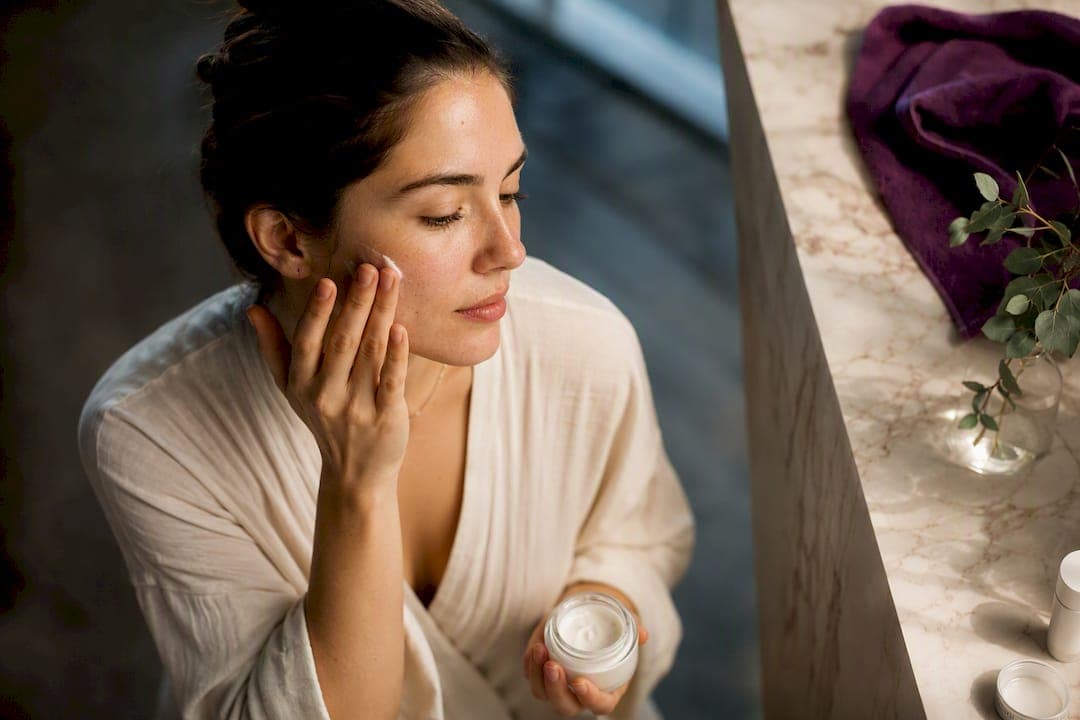
The most effective routine is also the shortest one: cleanse, moisturize, and apply broad-spectrum SPF 30+ every morning, then cleanse and moisturize again at night, adding a treatment only if your skin needs it. Sunscreen is the step that carries the most weight, since UVA rays reach your skin through windows and clouds just as easily as on a sunny beach day. For anyone who wants that whole system in three products, The Infinite Bath builds a gentle cleanser, serum, and cream around exactly this logic.
TL;DR:
- Applying broad-spectrum SPF 30+ daily is non-negotiable, but most people underestimate the amount needed and forget to reapply regularly indoors near windows.
- Morning cleansing should be minimal, using water if skin appears clean, and avoiding over-cleansing to prevent unnecessary dryness, especially if skin was never oily.
- Nighttime routines benefit from double cleansing if makeup or sunscreen were worn, and introducing actives like retinoids or acids should be gradual to prevent irritation.
- Skin type determines the formula of cleansers and moisturizers, with dry skin needing richer products and sensitive skin favoring fragrance-free, mineral-based sunscreens.
- A simple skincare routine of three to four products, used consistently over six to twelve weeks, often yields better long-term results than complex, multi-step regimens.
Table of Contents
- What Should Your Morning Skincare Routine Include?
- What Does a Simple Nighttime Skincare Routine Look Like?
- How Do You Pick the Right Products for Your Skin Type?
- What Order Should You Apply Skincare Products?
- What Are Some Copy-Paste Skincare Routine Templates?
- Why Minimalism Wins in the Real World
- Try a Ready-Made Three-Step Routine
- Sources
- FAQ
What Should Your Morning Skincare Routine Include?
Think of your morning routine as putting up scaffolding before the day gets to your skin. You're not fixing anything yet. You're protecting what you already have.
Start with a cleanse, but only if you need one. If your skin looks clean and isn't oily when you wake up, splashing with water is fine. If you slept in a moisturizer-heavy night routine or you wake up with any shine, a gentle cleanser removes the residue without disrupting your skin's acid mantle, which is the thin, slightly acidic film that keeps bacteria out and moisture in. Over-cleansing in the morning is one of the more common ways people accidentally dry out skin that was never oily to begin with.
An antioxidant serum, usually vitamin C, is optional. It helps neutralize free radical damage from UV and pollution, and it can brighten uneven tone over time. Skip it if your routine already feels like too much. It's a nice-to-have, not a requirement.
Your moisturizer choice depends on your skin type:
- Dry or normal skin: a richer cream that locks in water and reinforces the skin barrier.
- Oily or acne-prone skin: a lightweight gel or lotion that hydrates without adding shine.
- Combination skin: a gel-cream hybrid, or a gel on the oilier zones and cream where you run dry.
Then comes sunscreen, and this step doesn't get to be casual. Dermatologists identify broad-spectrum SPF 30+ as the one truly non-negotiable step in any routine, because it's the only product actively preventing damage rather than just treating what's already happened. Most people apply far too little. The standard guidance is to apply sufficient sunscreen for full coverage, reapplying it regularly when outdoors and touching up if you're indoors near windows for extended periods.
If mornings feel rushed, combining functions helps. A moisturizer with SPF built in, or a tinted sunscreen that replaces both step three and light coverage, can simplify things without cutting corners on protection. Just check that the SPF listed is 30 or higher and that it says "broad-spectrum" somewhere on the label.
Pro Tip: Keep your sunscreen next to your toothbrush. Habits attach to other habits, and you're far more likely to remember SPF if it lives where you already look every morning.
What Does a Simple Nighttime Skincare Routine Look Like?
Nighttime is when your skin repairs itself, so the goal shifts from protection to recovery. If you wore makeup or sunscreen, a single cleanse often isn't enough to fully lift it. Double cleansing, an oil or balm first, followed by your regular gentle cleanser, removes stubborn residue without you having to scrub, which is the part that actually causes irritation.
After cleansing, moisturize the same way you would in the morning. That's your baseline, and on plenty of nights, that's also your finish line. Nothing wrong with a two-step evening routine most days of the week.
Where treatments come in is entirely dependent on what your skin is asking for. If you're dealing with fine lines, texture, or dullness, a retinoid or a gentler acid alternative can help, but the introduction has to be slow. Add one new active at a time, and give it two to four weeks before adding anything else, so if redness or flaking shows up, you know exactly what caused it.
A few rules for adding actives without wrecking your barrier:
- Patch test on your inner arm for a few days before applying to your face.
- Start with two nights a week, not every night.
- Apply after your skin is fully dry, since damp skin absorbs actives faster and can overreact.
- Always follow with moisturizer to buffer the effect.
Give any new active six to twelve weeks before deciding whether it's working. Skin cell turnover takes time, and quitting at week two because you don't see a difference yet means you never actually gave it a fair shot. If you notice persistent burning, swelling, or breakouts that don't calm down after stopping the product, that's a signal to talk to a dermatologist rather than push through on your own.
Pro Tip: If your skin feels tight, tingly, or bright red after a new product, that's not "purging," that's irritation. Purging causes small breakouts in areas you normally break out; irritation causes redness and discomfort almost everywhere the product touched.
How Do You Pick the Right Products for Your Skin Type?
Your skin type decides texture and formula more than it decides which steps you follow. Everyone needs a cleanser, a moisturizer, and sunscreen. The difference is in what those three products are made of.
Dry skin does best with cream cleansers and rich, ceramide-based moisturizers, since ceramides act like the mortar between the bricks of your skin cells, filling gaps and slowing water loss. Oily and acne-prone skin generally responds better to gel cleansers and oil-free, non-comedogenic moisturizers that won't clog pores. Combination skin often needs a foaming or gel-based cleanser paired with a lightweight lotion. Sensitive skin benefits most from fragrance-free formulas with minimal ingredient lists and mineral sunscreens using zinc oxide or titanium dioxide, since chemical sunscreens and added fragrance are common irritation triggers for reactive skin.
A few ingredient names are worth recognizing on labels:
- Ceramides rebuild and reinforce the skin barrier.
- Hyaluronic acid pulls water into the skin and holds it there.
- Niacinamide calms redness and helps even out tone.
- Fragrance and harsh physical scrubs are the two most common irritants for sensitive or reactive skin.
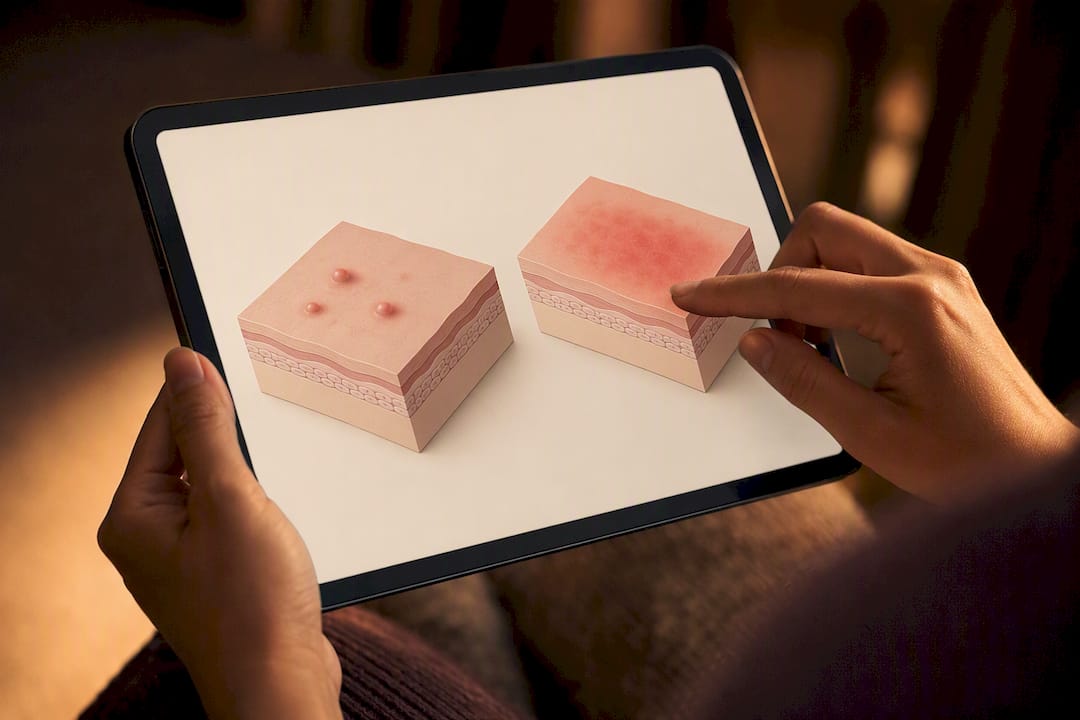
When you introduce something new, add it alone and wait two to four weeks before layering in anything else. That waiting period is what tells you, clearly, whether a breakout or a flush of redness came from the new product or from something else entirely. If irritation doesn't resolve within a few days of stopping a product, or if you're dealing with persistent acne, unexplained rashes, or signs of an allergic reaction, that's a conversation for a dermatologist, not a guessing game with your bathroom cabinet.
What Order Should You Apply Skincare Products?
Layering follows one rule: thinnest to thickest. Applying a heavy cream before a water-based serum blocks the serum from absorbing at all, since the thicker product seals the skin before the thinner one gets a chance to sink in.
- Cleanser
- Toner or essence (optional)
- Water-based serums
- Spot treatments
- Retinoid (PM only)
- Moisturizer
- Facial oil (optional)
- Sunscreen (AM only, applied last)
The most common mistake is applying sunscreen before moisturizer, which dilutes the SPF and reduces protection. The second most common mistake, detailed in this breakdown of layering errors, is piling on five new products in the same week, which makes it nearly impossible to trace a reaction back to its source.
A minimal 3 to 4 product routine covers most of the topical benefit dermatologists talk about. Adding step after step past that point brings diminishing returns and usually just increases the odds you'll skip the routine altogether.
What Are Some Copy-Paste Skincare Routine Templates?
Here's how a minimalist regimen actually plays out, hour by hour, skin type by skin type.
Minimal daily template (about 3 minutes each session): AM: cleanse (30 seconds), moisturize, SPF 30+. PM: cleanse, moisturize.
Sensitive skin, 3-step template (about 4 minutes): A gentle gel cleanser, followed by a lactic acid serum in place of retinol, then a renewal cream to lock in hydration and calm the skin overnight. This sequence mirrors The Infinite Bath's sensitive-skin approach, which leans on lactic acid instead of retinoids specifically because it exfoliates gently while still supporting the skin's moisture barrier.

Acne-prone variant (about 4 minutes): Gel cleanser with salicylic acid, oil-free moisturizer, and a targeted spot treatment applied only where breakouts show up, not across the whole face.
Busy mornings, 3-minute version: Water rinse or micellar water, moisturizer with SPF built in, done.
Adjust week to week based on how your skin responds, not on a fixed calendar. If your skin looks calm and even, keep the routine exactly as is. If you notice dryness creeping in during colder months, add a richer moisturizer at night. The goal is a routine flexible enough to survive a busy week without falling apart.
Pro Tip: Write your routine on a sticky note and put it inside your medicine cabinet. It sounds unnecessary until the third week, when you're tired and your brain wants to skip a step.
Why Minimalism Wins in the Real World
The gap between a "perfect" ten-step routine and one that actually happens every single day is where most skincare advice falls apart. People don't fail because they picked the wrong serum. They fail because the routine they built required more time, money, and mental energy than their actual life could sustain.
A simple routine wins because it survives contact with a Tuesday morning when you're running late, a Thursday night when you're exhausted, and a random Saturday when you forgot your bag at a friend's place. That's not a compromise. That's the whole point. The Infinite Bath's three-step approach exists because complexity is often the actual barrier between people and the skin they want, not a lack of good products.
Give any new routine six to twelve weeks before judging it. Skin doesn't turn over overnight, and neither do habits.
— Stella
Try a Ready-Made Three-Step Routine
If you've read this far and you're still not sure which cleanser, serum, and cream to combine, The Infinite Bath already solved that decision for you. The regimen is a gel cleanser, a lactic serum, and a renewal cream, three products designed to simplify skincare routines.

The gel cleanser handles cleansing steps. The lactic serum serves as a gentle alternative to retinoids at night, aiming to improve texture and tone without typical irritation. The renewal cream is used as a moisturizer to support hydration throughout the routine. This regimen is suitable for individuals seeking simplicity and gentle care in their skincare routine. Visit the skincare shop to see the full three-step set and get started tonight.
Sources
- Easy Steps for a Simple Skin Care Routine — Cleveland Clinic
- How to Build a Skincare Routine for Beginners — Geisinger
- Kseniya Kobets, MD — Einstein Health faculty
- The Minimal Effective Routine: 4 Products, Maximum Results — Glowstice
- Fast and Effective Skin-Care Routine, According to Dermatologists — Allure
FAQ
How many steps does a simple skincare routine actually need?
Three steps cover most of what dermatologists recommend: a gentle cleanser, a moisturizer, and broad-spectrum SPF 30+ in the morning, with the same cleanser and moisturizer at night.
Can I skip moisturizer if my skin is oily?
No. Even oily skin needs hydration, just in a lighter, oil-free or gel formula rather than a heavy cream.
How long before I see results from a new skincare routine?
Give any new routine or active ingredient six to twelve weeks before judging results, since skin cell turnover takes time.
Do I need a separate day and night moisturizer?
Not necessarily. The main difference is what surrounds the moisturizer, sunscreen in the morning and treatments like retinoids or lactic acid at night, not the moisturizer itself.
What's the safest way to introduce a new active ingredient?
Add one new product at a time, patch test first, and wait two to four weeks before introducing anything else so you can tell what's causing any reaction.