Consistent broad-spectrum photoprotection paired with a small set of proven actives, vitamin C in the morning and a retinoid, lactic acid, or azelaic acid at night, is the single most reliable uneven skin tone treatment available without a prescription pad. Most people notice a brighter, more even surface within several weeks. Deeper pigment, like melasma or old sun damage, often needs several months of that same routine, sometimes paired with an in-office procedure, before it truly levels out.
TL;DR:
- Consistent use of broad-spectrum sunscreen and one proven active, such as vitamin C or a retinoid, is essential for gradual skin tone improvement over several months.
- Proper diagnosis of the skin condition, whether PIH, melasma, or sun damage, guides appropriate treatment, with melasma requiring stricter photoprotection and milder procedures.
- Topical treatments like vitamin C, niacinamide, and azelaic acid typically show subtle results within 4 weeks and significant changes after 8 to 12 weeks.
- In-office procedures such as chemical peels and microneedling can accelerate fading when topical therapy stalls or for stubborn, deep pigmentation.
- A gentle routine built around one active, with slow introduction, outperforms aggressive stacking of multiple actives, especially for sensitive or reactive skin types.
Table of Contents
- What Causes Uneven Skin Tone and How Do You Identify Your Type?
- First-Line Topical Treatments and Ingredients That Actually Work
- When Do You Need In-Office Procedures Instead of Topicals?
- How Do You Build a Routine That Actually Evens Skin Tone?
- The Infinite Bath's Three-Step Approach: Who It Fits
- A Note on Patience Versus Speed
- Where to Start With The Infinite Bath
- Sources
- FAQ
What Causes Uneven Skin Tone and How Do You Identify Your Type?
Before you buy another serum, figure out what you're actually looking at. Uneven tone isn't one condition. It's a handful of different problems that happen to look similar from three feet away, and treating the wrong one can waste months.
Here's how to tell them apart:
- Post-inflammatory hyperpigmentation (PIH): Flat brown or reddish marks left behind after a pimple, cut, or bug bite heals. It shows up wherever the injury was, no pattern, and fades slowly on its own.
- Melasma: Symmetrical brown or gray-brown patches, usually across the cheeks, forehead, or upper lip. It's driven by hormones and sun exposure, which is why it often appears during pregnancy or after starting birth control.
- Sun damage (solar lentigines): Small, defined brown spots on chronically exposed areas like the backs of the hands, chest, and face. These accumulate over years, not weeks.
- Texture-related dullness: Not pigment at all. A buildup of dead skin cells scatters light unevenly, making skin look gray or tired even without a single dark spot.
The diagnosis matters because the treatment changes with it. Melasma, for instance, responds poorly to aggressive exfoliation and can actually worsen with heat or friction, so it demands stricter photoprotection and often a combination of topicals rather than one heroic ingredient.
First-Line Topical Treatments and Ingredients That Actually Work
Once you know what you're treating, the ingredient list gets a lot shorter. A handful of actives carry real evidence behind them, and the rest is mostly marketing.
Vitamin C, used in the morning, interrupts the pigment-production pathway and adds antioxidant protection against UV-driven damage. Give it 8 to 12 weeks before judging results; it's a slow brightener, not a spot eraser.
Niacinamide works differently. It blocks the transfer of melanin from pigment-producing cells to surface skin cells, which makes it useful for people dealing with both redness and blotchy pigment at once. It also happens to be one of the gentler options on this list.
Retinoids speed up cell turnover and fade discoloration over time, but they need to be introduced slowly, every third night for the first two weeks, then nightly as tolerance builds. Prescription tretinoin is typically reserved for stubborn cases that don't respond to over-the-counter retinol.
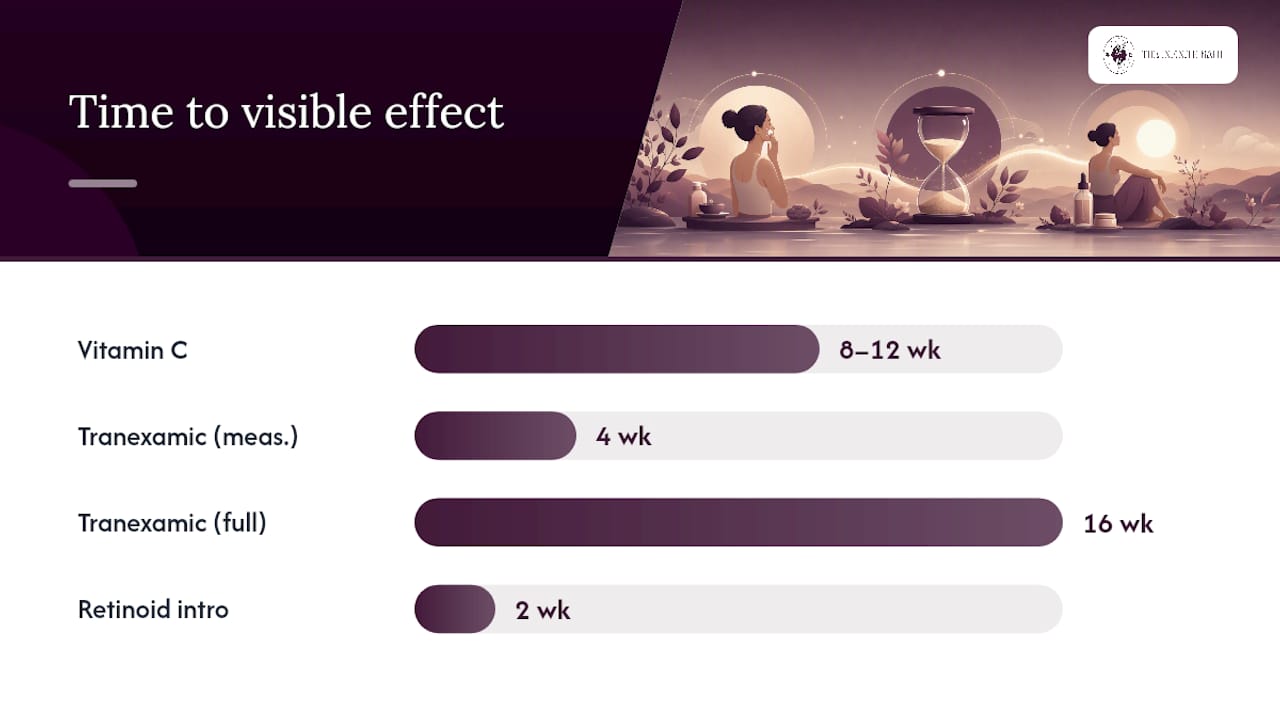
AHAs (glycolic, lactic, mandelic), azelaic acid, and tranexamic acid round out the toolkit. Azelaic acid suits sensitive and acne-prone skin particularly well, since it treats pigment and breakouts simultaneously. A 16-week trial of a serum combining tranexamic acid and niacinamide found measurable reductions in melasma and PIH scores by week four, with improvement continuing through the full 16 weeks.
Hydroquinone, where legal and available, is genuinely effective but should be used short-term and under a clinician's supervision. Long-term unsupervised use carries its own risks.
- Don't layer vitamin C and a retinoid in the same application; they can destabilize each other.
- Skip pairing a strong AHA with a retinoid when you're just starting out. Your barrier needs time to adjust first.
- Introduce one new active at a time, patch test on your inner arm, and wait a week before adding the next.
Pro Tip: If your skin flushes or stings within the first ten minutes of a new active, stop. That's your barrier telling you the concentration or frequency is too aggressive, not a sign you need to push through it.
When Do You Need In-Office Procedures Instead of Topicals?
Topicals plateau eventually. When pigment is deep, stubborn, or the result of years of accumulated sun damage, procedural treatments can move things along faster than any cream on the shelf.
- Chemical peels use acids at higher concentrations than at-home products to remove the outer layers of skin, accelerating fade for surface-level pigment and dullness. Most people need a series of four to six sessions spaced weeks apart.
- Microneedling creates controlled micro-injuries that stimulate collagen and can improve texture alongside pigment, particularly for PIH from acne scarring. Expect three to four sessions before seeing a real shift.
- IPL (intense pulsed light) targets sun spots and broken capillaries with light energy, often producing visible fading after just one or two treatments on lighter skin.
- Fractional and ablative lasers go deeper for longstanding sun damage or treatment-resistant discoloration, though they require more downtime and a longer recovery.
Deep melasma, years-old sun damage, and PIH that hasn't budged after months of topical care are the usual reasons to escalate. The catch is that these procedures carry real risk of triggering new PIH, especially in darker skin tones, if the heat or intensity is miscalculated. Providers routinely recommend a test spot before full-face treatment and stress finding someone experienced with your specific skin tone, not just any provider with a laser.
How Do You Build a Routine That Actually Evens Skin Tone?
Structure beats intensity here. A simple, repeatable routine will outperform an aggressive one you abandon after two weeks of irritation.
Morning: Gentle cleanser, vitamin C serum, moisturizer, then broad-spectrum SPF 50 as the final and most important step. The global guideline consensus on hyperpigmentation calls for sunscreens that also protect against UVA1 and high-energy visible light (HEVL), the wavelengths that trigger relapse in melasma and PIH. Tinted sunscreens or iron-oxide-based makeup add a physical layer of HEVL defense that clear formulas can't offer.
Evening: Cleanser, then your targeted active (retinoid, AHA, or azelaic acid, rotating nights if you're using more than one), followed by a barrier-supporting moisturizer.
Ramp up slowly:
- Weeks 1 to 2: Introduce lactic acid or a low-strength retinoid two to three nights a week.
- Weeks 3 to 6: Increase frequency as tolerated; add vitamin C in the morning if you haven't already.
- Weeks 8 to 12: Layer in a second active, like azelaic acid, if pigment hasn't responded enough.
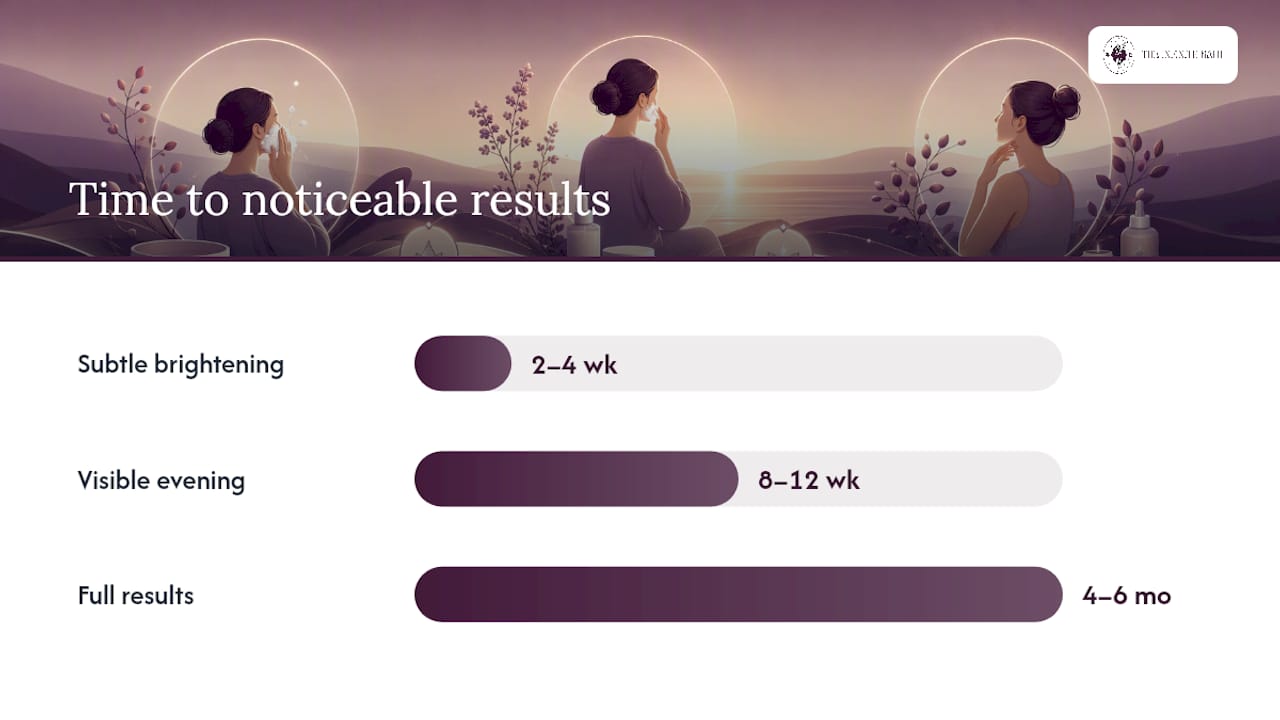
Expect subtle brightening at 2 to 4 weeks, more visible evening-out by 8 to 12 weeks, and full results, especially for melasma or deep sun spots, at the 4 to 6 month mark. Combination topical therapy remains the first-line approach the American Academy of Dermatology recommends before considering procedures. If you notice sudden asymmetry, rapid darkening, bleeding, or a new mole-like spot changing shape, stop self-treating and see a dermatologist.
The Infinite Bath's Three-Step Approach: Who It Fits
For anyone whose skin reacts to retinoids or who simply doesn't have the bandwidth for a six-step regimen, The Infinite Bath built a three-step alternative around lactic acid instead of retinol.
- Gel cleanser: Clears the surface without stripping the skin barrier before treatment.
- Lactic Serum: A gentler exfoliation than glycolic acid, since lactic acid also draws in moisture as it works, which matters because irritation is what causes new PIH in reactive skin.
- Renewal Cream: Replaces hydration lost during exfoliation and supports the barrier while pigment fades.
This fits naturally into the PM routine described above, particularly for sensitive skin types who've tried retinol and given up after week two. If pigment is deep or long-standing, this regimen pairs well with daily SPF and can still lead to escalation with a clinician when needed.
A Note on Patience Versus Speed
Uneven tone rarely fixes itself overnight, and rushing the process with three new actives at once usually backfires into more redness, not less. Consistent photoprotection and one or two well-chosen actives, given real time to work, beat any aggressive stack. Gradual, visible progress over months is the normal path, not a sign something's wrong.
— Stella
Where to Start With The Infinite Bath
If your skin has punished you for trying retinol, or your routine collapsed the first busy week you had, This three-step regimen skips the guesswork of stacking multiple separate actives that may not play well together.

The Lactic Serum delivers gentle exfoliation without the dryness that sends people back to their old habits, and The Renewal Cream replaces the hydration that exfoliation pulls out, so your barrier stays intact while pigment fades. Both are part of the brand's three-step skincare shop, and if you're ready for a fuller ritual, the Lustral Flood Collection bundles the regimen together. Start with the two-product core, follow the ramp-up schedule above, and give it eight weeks before deciding whether to add a stronger active or bring in a dermatologist.
Sources
This guide draws on the Medscape guideline summary, AAD melasma guidance, a 16-week serum trial, and the global hyperpigmentation consensus.
This article is general information, not a substitute for advice from a qualified doctor. Consult a qualified healthcare professional about your own circumstances before acting on anything here.
- Melanin Hyperpigmentation Disorders, Management: Global 2025 Guideline Summary
- Melasma treatment — AAD patient guidance
FAQ
How Do I Fix My Uneven Skin Tone?
Start with daily broad-spectrum SPF and add one proven active, vitamin C in the morning or a retinoid/lactic acid at night, rather than several at once. Give the routine 8 to 12 weeks before adding anything stronger or escalating to a professional treatment.
What Is the Best Treatment for Uneven Skin Tone?
There's no single best treatment since the right approach depends on whether you're dealing with PIH, melasma, sun damage, or texture. Photoprotection combined with vitamin C, niacinamide, or a retinoid covers most cases, while The Infinite Bath's lactic-based regimen offers a lower-irritation option for sensitive skin.
What Is the Best Facial Treatment for Uneven Skin Tone?
For pigment that hasn't responded to months of topicals, chemical peels, microneedling, and IPL are the most commonly used in-office options, each suited to different depths and types of discoloration. A qualified provider should assess your skin tone first, since darker phototypes carry a higher risk of post-procedure pigmentation.
How Long Does It Take to Fix Uneven Skin Tone?
Subtle brightening often shows up within 2 to 4 weeks of consistent treatment, with more visible evening-out by 8 to 12 weeks. Deeper pigment like melasma or long-standing sun spots can take 4 to 6 months of steady topical care, sometimes longer if procedures are involved.