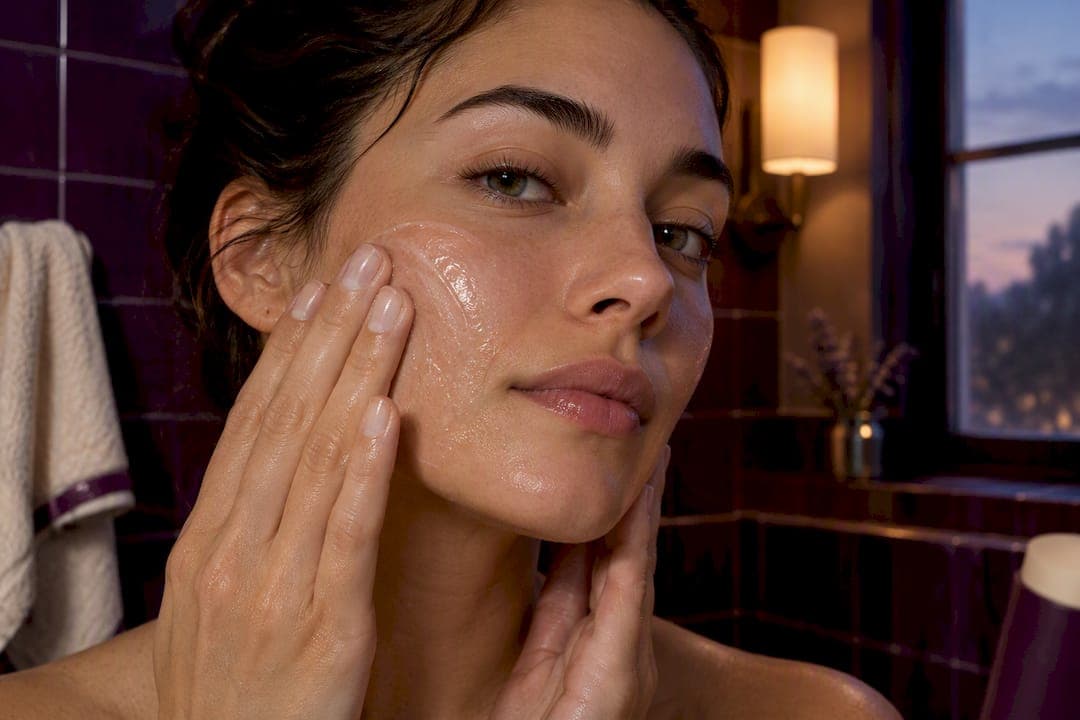
Most sensitive skin can tolerate lactic acid, and often more comfortably than other exfoliating acids, as long as you start low and treat your skin barrier as the priority, not an afterthought. The condition for success is simple: begin with a rinse off or low percentage leave on formula, let your barrier settle before you push further, and never skip sun protection. Patch test first. Those three habits decide whether lactic acid feels like relief or like regret.
TL;DR:
- Using a low-percentage, buffered lactic acid product with hydrating ingredients and a patch test can make exfoliation safe for sensitive skin.
- Lactic acid moves more gradually into the skin than glycolic acid, reducing irritation and providing hydration alongside exfoliation.
- Avoid lactic acid if you have active dermatitis, open wounds, severe rosacea, or are on photosensitizing medications until your skin heals and medical advice is obtained.
- Always start with rinse-off formats and introduce leave-on products slowly, monitoring for redness, burning, or swelling before increasing frequency.
- Protect your skin with SPF 30 or higher for at least one week after stopping lactic acid to prevent increased sun sensitivity.
Table of Contents
- Is lactic acid actually gentler? Evidence and its limits
- How lactic acid compares with other exfoliants
- Who should avoid lactic acid or check with a clinician first
- How to introduce lactic acid to sensitive skin: a step-by-step routine
- Barrier-first: calm and rebuild the skin before and while using acids
- Choosing gentle lactic acid products: what to look for
- Sun safety, photosensitivity, and medication interactions
- Troubleshooting: common reactions and what to do
- An esthetician's take on keeping exfoliation simple
- A gentle, three-step option worth considering
- Sources
- FAQ
Is lactic acid actually gentler? Evidence and its limits
I hear this question in almost every consultation with reactive skin clients: is lactic acid really gentler, or is that just something the bottle tells us? The honest answer has some nuance to it.
Lactic acid has a larger molecular structure than glycolic acid, which tends to slow how deeply and how fast it penetrates the skin. Picture your skin's outer layer as a brick and mortar wall, with skin cells as the bricks and lipids like ceramides holding everything together as the mortar. A smaller acid molecule slips between the bricks quickly and can disturb more mortar at once. Lactic acid moves in more gradually, which is part of why it often reads as calmer on reactive skin. It is also a humectant, meaning it draws in water as it works, so you get exfoliation and hydration happening at the same time instead of one canceling out the other.
The clinical picture backs this up, with real limits attached. A 14-day controlled trial of a 15% lactic acid and ceramide lotion, tested on the dry shins of older women, found measurable improvements in moisturization and skin shedding by day two, with no adverse reactions reported through the full two weeks. That is a meaningful result, but it was body skin, under controlled conditions, paired with ceramides from the start.
That distinction matters more than most product descriptions let on. A review of lactic acid peeling agents in dermatology literature describes it as generally well tolerated with genuine hydrating properties, but the same review is careful to note that tolerability depends on formulation, concentration, and the clinical context it is used in. In plain terms: the acid itself has a gentler profile, but the cream or serum built around it, and the condition of your skin barrier when you apply it, decide what actually happens on your face. pH matters here too. A poorly buffered lactic product at a low pH can sting even a healthy barrier, while a thoughtfully formulated one at a higher pH might do the intended job with barely a whisper of a reaction.
How lactic acid compares with other exfoliants
If lactic acid still feels wrong for your skin, or you are simply weighing your options, it helps to understand where it sits next to its relatives.
Glycolic acid is the smallest AHA molecule, and that smaller size lets it penetrate faster and deeper, which is exactly why it tends to cause more irritation on reactive skin than lactic acid does. You get more visible resurfacing, but you also get a narrower margin for error. Lactic acid trades some of that intensity for a gentler, more forgiving experience, which is why I steer sensitive skin clients toward lactic first and glycolic later, if ever. For a closer look at how the two behave side by side, this comparison of lactic and glycolic acid walks through the pH differences that matter more than the percentage on the label.
Mandelic acid is the other AHA I bring up often, mostly because its molecule is even larger than lactic acid's. That size makes it one of the slowest, gentlest AHAs available, and it has a particular reputation for helping with post-inflammatory pigmentation, the dark marks left behind after a blemish or irritation heals. If your main concern is pigmented spots rather than texture or fine lines, mandelic acid is worth researching as a parallel option.
Salicylic acid works differently. As a BHA, it is oil-soluble rather than water-soluble, which lets it travel into pores and calm the kind of congestion that shows up as blackheads or breakouts. For acne-prone but reactive skin, a low-strength salicylic product sometimes suits the skin's needs better than any AHA. Azelaic acid takes yet another route: it is well known for reducing redness and calming inflammatory skin conditions like rosacea and acne, which makes it a common recommendation for skin that reacts to almost everything else. Between the two, azelaic tends to be the calmer choice for visibly reactive or rosacea-prone skin, while salicylic fits congested, oilier skin better.

Who should avoid lactic acid or check with a clinician first
Lactic acid is not the right first move for every kind of sensitive skin, and knowing when to pause matters as much as knowing how to start.
Active dermatitis, widespread eczema flares, or any patch of open or broken skin needs healing first, full stop. Introducing an acid onto compromised skin only adds insult to an already irritated barrier. Severe rosacea flares deserve the same caution: wait until the flare calms before testing any new active. If you take photosensitizing medications, including certain antibiotics, retinoid prescriptions, or some acne treatments, check with your prescriber or pharmacist before adding lactic acid, since combining photosensitizing drugs with an ingredient that already raises sun sensitivity can compound the risk, and if a patch test produces real burning, swelling, or lasting redness rather than mild, brief tingling, that is your skin telling you to see a dermatologist before going further, not to push through it.
How to introduce lactic acid to sensitive skin: a step-by-step routine
Rushing an acid into a reactive routine is the single most common mistake I see, so treat this as a slow build rather than a race.
- Patch test first. Apply a small amount of your chosen lactic product to your inner forearm or behind your ear, then wait 24 to 48 hours to check for redness, swelling, or persistent stinging before it ever touches your face.
- Start with a rinse off format. A lactic acid cleanser has limited contact time compared with a leave on serum, which gives your skin a lower-risk way to meet the ingredient for the first one to two weeks.
- Move to a low percentage leave on product. Once the rinse off step feels comfortable, introduce a leave on serum at a modest concentration, applied two to three nights a week rather than nightly.
- Watch your skin's response for at least a week before increasing frequency, since delayed irritation sometimes shows up several days into use rather than immediately.
- Increase gradually if all is well, moving toward more frequent use only when your skin shows no more than mild, brief tingling on application.
- Pause immediately if you see real redness, swelling, or burning that lasts beyond a few minutes, and give your skin a full break before trying again at a lower frequency.
Apply lactic acid after cleansing and before your moisturizer, and keep the rest of the routine simple while you are testing tolerance. This safe routine guide for sensitive skin walks through a comparable three-step build if you want a second reference point. If you are also curious about layering in other actives later, a 12-week plan for combining lactic acid and vitamin C covers sequencing once your skin has proven it can handle the basics.
Barrier-first: calm and rebuild the skin before and while using acids
Here is the piece that gets skipped in most advice about exfoliation: your barrier's condition before you start decides almost everything about how the acid feels once you do.
A randomized four-week study in 39 women with sensitive skin found that a ceramide-complex cream measurably reduced the stinging and tingling sensations associated with lactic acid, compared with placebo, and that the improvement tracked with rising ceramide levels in the skin's outer layer alongside reduced water loss through the skin. In other words, when the mortar between the bricks is intact, the acid has less room to cause trouble.
In practice, that means treating barrier support as a genuine first step, not a footnote. Reach for pH-aware, ceramide-rich moisturizers in the weeks before you introduce any acid, choose cleansers that do not strip the skin, and set aside anything with fragrance, denatured alcohol, or other known irritants while your skin settles.
Pro Tip: If your skin feels tight, flaky, or reactive to nearly everything right now, spend two to three weeks rebuilding with a ceramide-rich moisturizer alone before you add any acid to the mix.
This approach uses a gentle gel cleanser to avoid stripping, a lactic serum kept at a considered strength, and a ceramide-rich renewal cream to support the barrier work happening underneath the exfoliation, so hydration and resurfacing happen together instead of one undoing the other.

Choosing gentle lactic acid products: what to look for
The percentage on a label tells you far less than most shoppers assume. Formulation, pH, and how the product is delivered to your skin matter just as much, sometimes more.
- Check the pH range, since a lactic product buffered closer to a moderate pH tends to be gentler than one formulated at a very low pH, even at the same percentage.
- Favor hydrating co-ingredients like ceramides, glycerin, or hyaluronic acid, which help offset any dryness the acid might otherwise cause.
- Avoid added fragrance and denatured alcohol, both common irritants that can undo an otherwise well-formulated product.
- Consider the format, since a cleanser offers brief contact time and lower risk, a leave on serum offers more consistent results with more responsibility on your part, and a professional peel belongs in a clinician's hands, not a home routine.
- Read the label for sun-sensitivity warnings and clear directions, since a product that spells out how and when to use it is usually one that has thought through the safety side, not just the marketing.
If you want a deeper look at how lactic acid stacks up against a retinol-based approach for reactive skin, this comparison of lactic acid and retinol is worth a read before you commit to either direction.
Sun safety, photosensitivity, and medication interactions
This is the step people skip most often, and it is the one with the clearest official warning behind it. FDA guidance on AHA labeling states that topical alpha hydroxy acid products, lactic acid included, can increase skin sensitivity to the sun while you are using them and for up to one week after you stop.
One week. That is the window the FDA specifically calls out, and it means your sun protection habit needs to outlast your last application, not end the moment you stop the serum.
Wear a mineral, broad-spectrum sunscreen rated SPF 30 or higher whenever you are using lactic acid, and reapply roughly every two hours if you are outdoors. Dermatology guidance on sunscreen tends to favor zinc oxide or titanium dioxide formulas for sensitive skin specifically, since these physical filters are generally less irritating than some chemical sunscreen ingredients.
Certain medications raise the stakes further. Some antibiotics, diuretics, and other common drug classes can increase photosensitivity on their own, and combining them with an already sun-sensitizing acid compounds the risk. FDA guidance on sun and medicine recommends checking with a pharmacist or prescriber if you are unsure whether something you take falls into that category.
Troubleshooting: common reactions and what to do
A little tingling in the first few uses is normal and usually fades as your skin adjusts. The line between that and a genuine problem is worth knowing clearly.
- Mild, brief tingling that fades within minutes is a typical adjustment response and no reason to stop.
- Redness, burning, itching, or visible peeling that lingers signals irritation beyond normal adjustment, and it is time to stop and simplify your routine.
- Immediate response to a reaction: rinse the product off, apply a plain, fragrance-free moisturizer, and stay out of direct sun until your skin calms.
- Persistent swelling, blistering, or symptoms that do not improve within a day or two call for a dermatologist rather than more waiting.
If a reaction happens and you are unsure whether it was the acid or something else in your routine, a fresh patch test on unaffected skin can help isolate the cause before you try again.
An esthetician's take on keeping exfoliation simple
In years of working with reactive skin, the pattern I see most is not that people choose the wrong acid. It is that they stack too much, too fast, before their skin has had a chance to tell them what it can handle. A single well-chosen lactic product, introduced slowly and backed by real barrier support, outperforms a five-step acid routine nearly every time I have watched it play out with a client.
You do not need to add complexity to get results. Follow the steps in this guide as they stand: patch test, start low, protect your barrier, wear sunscreen. That is the whole plan, and it works because it respects how your skin actually adjusts.
— Stella
A gentle, three-step option worth considering
If you are ready to put this approach into practice without piecing together five separate products, there are skincare routines built around exactly this logic. 
The three-step set pairs a gentle gel cleanser with a lactic serum kept at a considered strength and a ceramide-rich renewal cream, following the same order this guide recommends: cleanse without stripping, exfoliate gently, then rebuild the barrier right after.
- Start with the gel cleanser to introduce lactic acid through brief, rinse off contact before moving to anything left on skin.
- Layer in the lactic serum a few nights a week once your patch test and early trial period go smoothly.
- Follow every application with the renewal cream to support the ceramide barrier work this guide has walked through, and always finish daytime routines with sunscreen.
You can explore the full Lustral Flood Collection or start with the lactic serum and the renewal cream on their own if you would rather build up gradually.
This article is general information, not a substitute for advice from a qualified doctor. Consult a qualified healthcare professional about your own circumstances before acting on anything here.
Sources
- Guidance for Industry: Labeling for Cosmetics Containing Alpha Hydroxy Acids | FDA
- Amelioration of lactic acid sensations in sensitive skin by stimulating the barrier function and improving the ceramide profile
- A 14-day Controlled Study Assessing Qualitative Improvement with 15% Lactic Acid and Ceramides in Skin Moisturization and Desquamation
FAQ
Who should not use lactic acid?
People with active dermatitis, widespread eczema flares, open or broken skin, or a severe rosacea flare should hold off on lactic acid until their skin has healed. Anyone taking photosensitizing medications should check with a prescriber or pharmacist first, since FDA guidance notes these drugs can heighten sun sensitivity on their own.
Can lactic acid get rid of blackheads?
Lactic acid is an AHA that works on the skin's surface, so it is not the most direct tool for blackheads, which form deeper inside pores. Salicylic acid, a BHA that can travel into the pore itself, tends to be the better-suited option for that specific concern.
What is the best lactic acid exfoliator for sensitive skin?
The best choice for sensitive skin is a low-percentage, well-buffered lactic product paired with hydrating ingredients like ceramides, introduced through a rinse off format before moving to a leave on serum. Formulation and pH matter more than the percentage printed on the bottle, according to dermatology review literature on lactic acid tolerability.
Which is better for my skin, azelaic acid or lactic acid?
Azelaic acid tends to suit visibly reactive, rosacea-prone, or acne-inflamed skin better, since it is known for calming redness and inflammation rather than resurfacing texture. Lactic acid is generally the stronger pick when the main goal is gentle exfoliation and hydration rather than calming active redness.