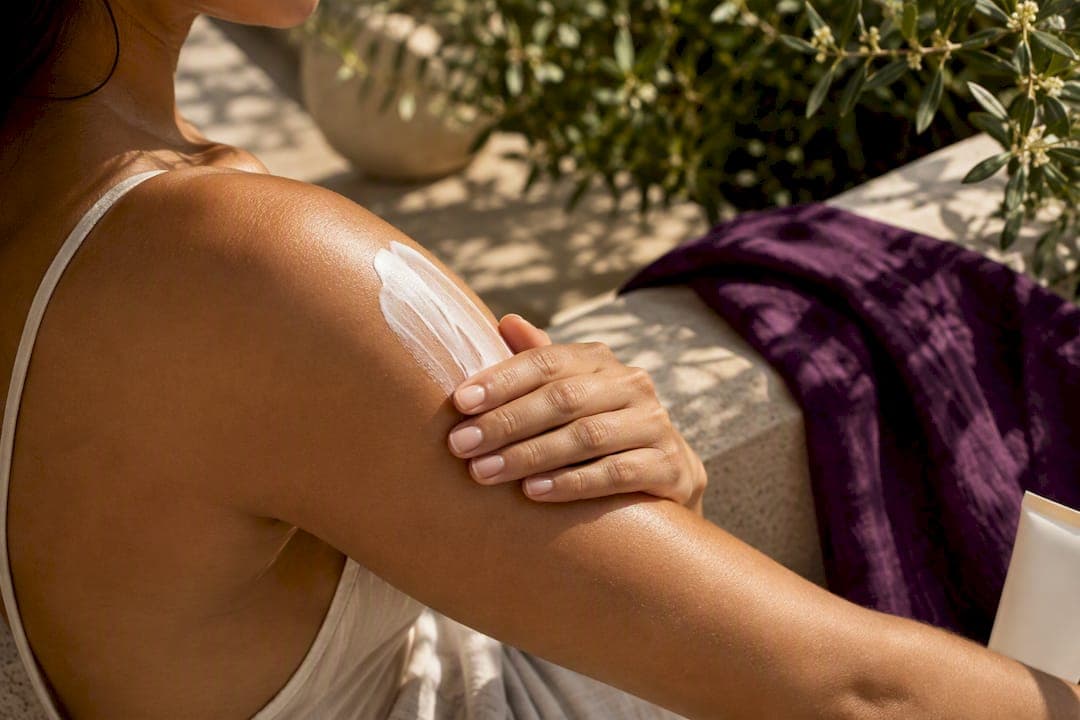
The simplest effective summer skincare routine is four steps: cleanse, treat with an optional antioxidant, apply a lightweight moisturizer, and finish with broad-spectrum sunscreen you actually reapply. Swap heavy creams for gel textures, keep exfoliation light, and let SPF 30 or higher do the heavy lifting. The American Academy of Dermatology backs this reapplication habit, and it's the same logic The Infinite Bath builds its three-step regimen around.
TL;DR:
- Using a broad-spectrum SPF 30 or higher is essential, and reapplying every two hours outdoors, especially after swimming or sweating, is non-negotiable.
- Incorporate antioxidant serums like vitamin C after cleansing and before sunscreen to reinforce UV protection against free radical damage.
- Even oily or acne-prone skin requires lightweight moisturizers such as gels or hyaluronic acid-based products to prevent rebound oil production.
- Limiting chemical exfoliation to once a week and avoiding harsh physical scrubs helps maintain skin barrier integrity during intense sun exposure.
- A simplified three-step routine of cleansing, applying a lactic acid serum, and sealing with a renewal cream improves adherence and overall summer skincare results.
Table of Contents
- Cleanse: Pick the Right Cleanser and When to Rinse
- Treat: Antioxidants, Exfoliation, and Active-Use Rules for Summer
- Moisturize: Textures, Ingredients, and Why Oily Skin Still Needs Hydration
- How Much Sunscreen Should You Use, and How Often Should You Reapply?
- Midday Reset: Cooling Down Without Undoing Your Sunscreen
- The Three-Step Summer Routine That Actually Fits Your Day
- Hydration Beyond Topical Products: Why Drinking Water Still Matters
- Choosing Makeup That Won't Fight Your Summer Skin
- Common Summer Skin Problems and How to Handle Them
- Nighttime Adjustments: Repairing Skin After a Day in the Sun
- Why a Simplified Summer Routine Improves Outcomes
- Get Started With The Infinite Bath's Three-Step Routine
- Sources
- FAQ
Cleanse: Pick the Right Cleanser and When to Rinse
Your skin barrier is a bit like a brick wall. Ceramides are the mortar holding everything together, and the wrong cleanser strips that mortar right out, leaving you tight, red, and more sensitive to heat than you were an hour ago. Summer sweat and sunscreen residue make cleansing choice matter more, not less.
- Oily or combination skin does well with a gentle gel or foaming cleanser that lifts sebum without stinging.
- Dry or sensitive skin fares better with a hydrating, non-foaming cleanser that never leaves that squeaky, stripped feeling.
- In the evening, double cleanse if you've worn sunscreen or makeup all day. An oil or balm cleanser breaks down SPF filters first, then a water-based cleanser finishes the job.
- After heavy sweating or a swim, rinse as soon as you reasonably can. Salt residue irritates eczema-prone skin, and lingering moisture on skin creates the exact environment bacteria and yeast love, which is one reason dermatologists push prompt rinsing during hot months.
Morning cleansing can stay simple. A quick splash with your regular cleanser is usually enough since you haven't built up the day's grime yet.
Treat: Antioxidants, Exfoliation, and Active-Use Rules for Summer
This is where most routines go wrong in summer. People either quit their actives entirely out of fear, or they keep exfoliating at the same winter pace and end up with a barrier that can't handle the sun. Both mistakes are avoidable once you know the order of operations.
- Antioxidant serums, particularly vitamin C, go on after cleansing and before sunscreen. Think of it as adding a second coat of paint under your SPF topcoat: it doesn't replace sun protection, it reinforces it against UV-induced free radical damage.
- Dermatologists often favor fat-soluble vitamin C derivatives like THD ascorbate in summer, since they sit well on the skin's surface and work at lower concentrations than the traditional L-ascorbic acid.
- Chemical exfoliants stay on the schedule, just less often. Once a week on the face and body is a reasonable ceiling in heat. Skip harsh physical scrubs entirely; they create micro-tears that sun exposure then aggravates.
- Retinoids can continue at night if your skin tolerates them well. If you can't reliably reapply sunscreen, or you're spending a lot of time in water, consider bakuchiol or a lower retinoid strength instead.
- Fungal acne and tinea versicolor flare up in heat and humidity. An antifungal wash, the kind found in dandruff shampoo, used occasionally as a body wash can clear it up fast.
Pro Tip: Apply your antioxidant serum while your skin is still slightly damp from cleansing. It absorbs faster and you waste less product to evaporation in humid air.
Moisturize: Textures, Ingredients, and Why Oily Skin Still Needs Hydration
Skipping moisturizer because your skin already feels oily is one of the most common summer mistakes, and it usually backfires. When you strip hydration away, skin reads that as a threat and produces more oil to compensate, a rebound effect dermatologists see constantly once patients switch to heavier creams or nothing at all.
- Gel creams and lightweight lotions with hyaluronic acid pull water into the skin without adding weight or clogging pores.
- Ceramides matter just as much in summer as winter for barrier support, they just come in lighter delivery systems now.
- Niacinamide is worth looking for if you run oily or acne-prone. It helps regulate sebum production and calms redness at the same time.
- Sensitive skin benefits from a barrier-first approach: an essence or serum with soothing actives like centella, followed by a cooling gel-cream, reduces reactivity over a few weeks better than jumping straight to heavier creams.
The goal isn't less hydration in summer. It's the same hydration in a lighter package.
How Much Sunscreen Should You Use, and How Often Should You Reapply?
Wear a broad-spectrum sunscreen of SPF 30 or higher every day, and step up to SPF 50 or higher for prolonged outdoor time, swimming, or intense sweating. The American Academy of Dermatology recommends reapplying every two hours during extended sun exposure, and immediately after swimming or heavy sweating, regardless of the "water resistant" claim on the bottle.
UVA rays penetrate deeper into skin and drive premature aging and pigmentation, while UVB rays are the ones responsible for sunburn. Broad-spectrum protection covers both wavelengths, which is why "broad-spectrum" on the label isn't marketing fluff, it's the whole point.
Applying sunscreen correctly matters as much as choosing it:
- Use roughly a nickel-sized amount for the face alone, more if you're covering neck, ears, and chest too.
- Cover commonly missed spots: ears, hairline, back of the neck, tops of feet, and lips (use an SPF balm).
- Apply sunscreen as the last step of your morning routine, after moisturizer and any antioxidant serum, and let it set for a few minutes before dressing or applying makeup.
- Reapply every two hours outdoors, and right after any swim or sweat session, even with a water-resistant formula.
Water resistance has a real limit. "Water resistant" on a label means the SPF holds for either 40 or 80 minutes of swimming or sweating, not all day, which is why reapplication after time in the pool or ocean isn't optional.
If you're prone to melasma or post-inflammatory pigmentation, a tinted mineral sunscreen with iron oxides is worth the switch. Iron oxides block visible light, which regular UV filters don't touch, and reflected light off pavement, water, or your phone screen adds up over a summer day.
Midday Reset: Cooling Down Without Undoing Your Sunscreen
By early afternoon, your skin has usually had enough. A flushed, overheated face doesn't need a full skincare reset, it needs a quick, targeted fix.
- Mist a cool thermal water or plain cooling spray over your face to calm redness before you reapply sunscreen on top.
- If you've been sweating heavily, rinse off rather than just toweling dry. Sweat trapped under clothing or a sports bra strap is a common trigger for folliculitis, those small irritated bumps that look like acne but aren't.
- Change out of damp clothing as soon as you can. Fabric sitting against wet skin creates friction and traps heat, both of which irritate already-stressed skin.
- If a stubborn, scaly, or itchy rash shows up on the chest or back, an antifungal dandruff shampoo used as a body wash a couple of times a week often clears it without a prescription.
Small resets like these keep your morning sunscreen effort from being wasted by an afternoon of sweat and friction.
The Three-Step Summer Routine That Actually Fits Your Day
This is where all of the above collapses into something you'll actually do. The Infinite Bath's regimen follows the same logic dermatologists recommend, just condensed into three products instead of eight.
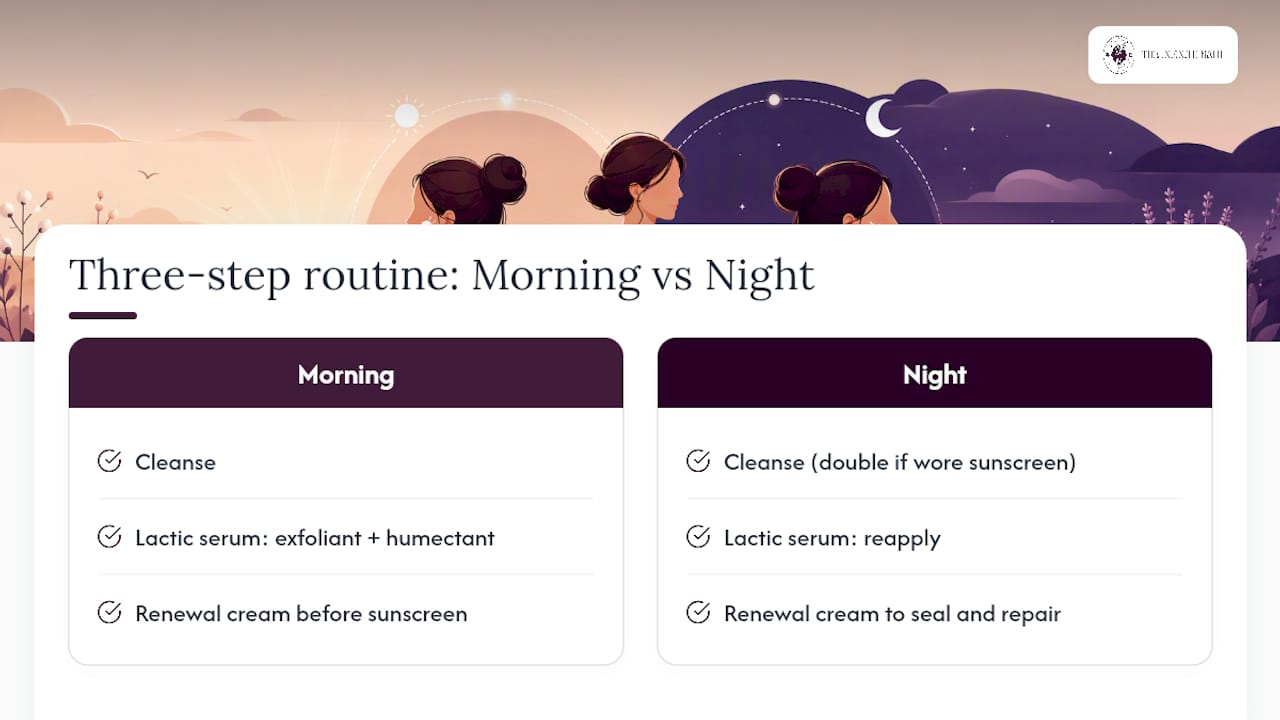
In the morning: cleanse, apply the lactic serum to gently exfoliate while locking in moisture, then finish with the renewal cream before your sunscreen. At night: cleanse again (double cleanse if you wore sunscreen all day), reapply the lactic serum, then seal with the renewal cream to support repair while you sleep.
The lactic serum works differently than a typical exfoliating acid. Lactic acid is a humectant as well as an exfoliant, so it sloughs off dead skin while pulling moisture in at the same time, instead of leaving skin feeling tight the way many acids do. For sensitive or heat-stressed summer skin, that combination matters more than most routines admit.
A three-minute routine you'll actually finish beats an eight-step routine you abandon by July. That's the entire argument for simplicity, and it's borne out by how morning and evening routines should differ without becoming complicated.
Hydration Beyond Topical Products: Why Drinking Water Still Matters
Topical hydration only does half the job. Skin cells need water delivered from the inside to stay plump and function well, and that water comes from what you drink, not just what you apply.
Heat and sweat accelerate fluid loss in ways that are easy to underestimate. You lose water through sweat glands all day in summer, whether or not you notice yourself sweating, and skin is often one of the last organs to get replenished when the body prioritizes its water supply elsewhere. Chronic mild dehydration shows up as a duller complexion, more visible fine lines by late afternoon, and skin that looks less "bouncy" even when your topical routine hasn't changed at all.
Think of your skin barrier like a sponge sitting on a countertop. A dry sponge can be misted with water on top, and for a moment it looks refreshed, but it dries out again fast because there's nothing feeding it from within. A sponge that's already saturated holds that surface water far longer. Your skin works the same way. Hyaluronic acid and gel moisturizers do real work, but they perform better on skin that's already adequately hydrated from within.
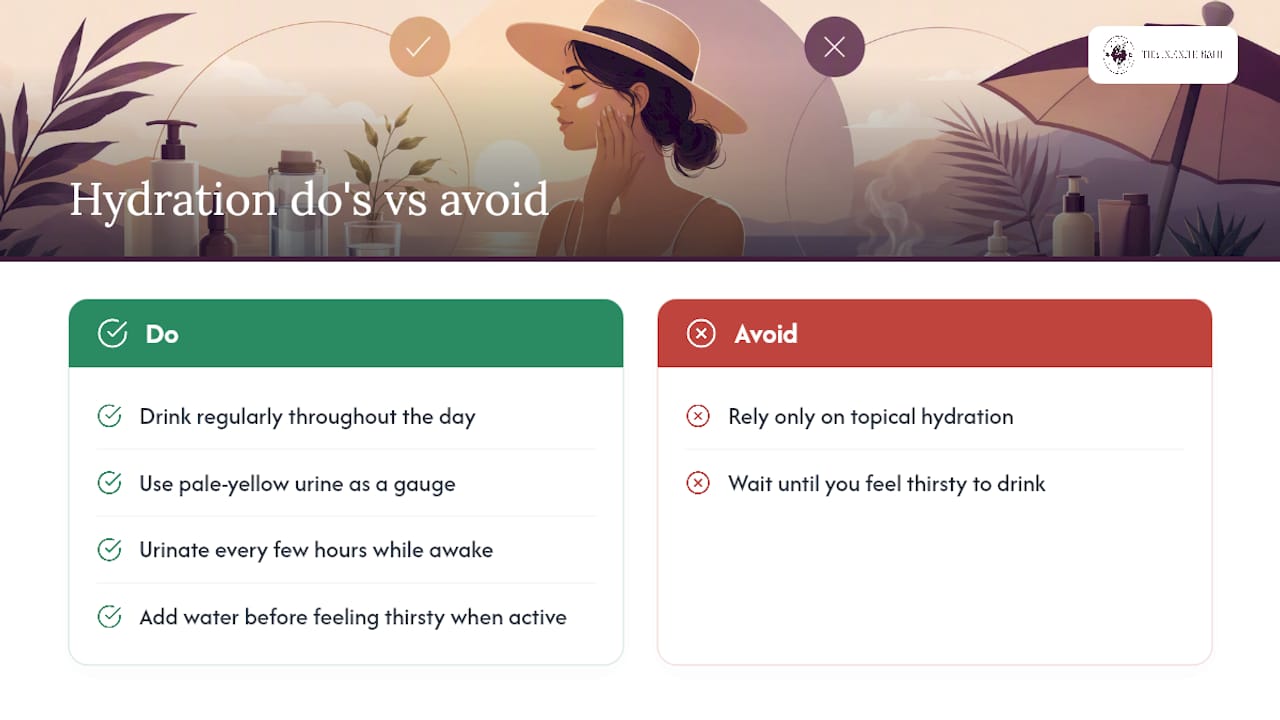
There's no single magic number that fits every body size and activity level, so instead of fixating on ounces, use color and frequency as your gauge: pale yellow urine and needing a bathroom break every few hours during waking hours are reasonable signs you're keeping up. If you're active outdoors, add water before you feel thirsty, since thirst tends to lag behind actual fluid loss in heat.
Choosing Makeup That Won't Fight Your Summer Skin
Heavy, matte, long-wear formulas are built for climate control and air conditioning, not for humidity and sweat, and summer is exactly when they tend to slide, cake, or clog pores the most.
Look for lightweight, non-comedogenic formulas labeled as such on the packaging. Tinted moisturizers, BB creams, and skin tints let some texture show through instead of sitting on top of it like a mask, which matters when heat is already making your skin work harder.
A mineral sunscreen with tint built in can double as light coverage and sun protection in one step, particularly useful for pigmentation-prone skin that benefits from the visible-light defense iron oxides provide. If you prefer a separate foundation, apply it over your sunscreen once the SPF has set for a few minutes, and consider a powder or setting spray with SPF for touch-ups rather than layering more liquid foundation midday.
Cream blush and lip products melt less predictably than powder in heat, but they also blend more naturally into flushed summer skin, so it's a fair trade for most people. Whatever you choose, the fewer heavy layers between your skin and the air, the better it breathes, and the less likely you are to trap sweat and oil underneath.
Common Summer Skin Problems and How to Handle Them
Heat rash shows up as tiny, itchy bumps, usually where skin folds or where clothing traps sweat: the chest, lower back, or underarms. Cool showers, breathable cotton fabric, and staying out of the heat until it clears usually resolve it within a day or two. Resist the urge to apply heavy ointments, which trap more heat against the skin.
Sunburn needs cool compresses, a fragrance-free moisturizer, and time. Aloe vera gel helps with the sting, but the real repair happens through hydration and simply waiting it out. Avoid exfoliating or using active ingredients like retinoids on sunburned skin until it has fully healed, since burned skin has a compromised barrier that active ingredients will irritate further.
Folliculitis, those small irritated bumps around hair follicles, often follows sweaty workouts or tight clothing. Rinsing promptly and switching to breathable fabric usually prevents it before it starts.
Fungal acne and tinea versicolor thrive in heat and humidity. An antifungal wash used as a body cleanser a few times weekly typically clears mild cases without a prescription visit.
Melasma and sun-triggered pigmentation get worse with every unprotected exposure, including time spent near windows or under bright indoor light. A tinted mineral sunscreen worn daily, indoors and out, is the single most effective habit for keeping existing pigmentation from deepening further.
Nighttime Adjustments: Repairing Skin After a Day in the Sun
Nighttime is when skin does its real repair work, and summer skin has more repairing to do than usual after a day of heat, sweat, and UV exposure, even with diligent sunscreen use.
Double cleansing matters more at night in summer than any other season. Sunscreen, sweat, and any tinted product need to come off completely, or you're sleeping in a film that can clog pores and slow the repair process your skin is trying to do overnight.
After cleansing, this is the window for slightly richer hydration than you'd wear during the day. A gel-cream that felt perfectly light at noon can be layered with a few extra drops of hyaluronic serum before bed, since you're not worried about it sitting under makeup or sunscreen. If you tolerate retinoids, nighttime is when they belong, since they don't interact well with daytime sun exposure and work best when skin is resting.
Ceramide-rich night creams support the barrier repair that happens most actively during sleep. If you've had notable sun exposure that day, even without a burn, treating that night's routine as recovery, rather than just maintenance, helps offset some of the day's cumulative stress on the skin.
Why a Simplified Summer Routine Improves Outcomes
The routines that fail aren't the ones missing a step. They're the ones with too many steps for a hot, tired person to finish at 11 p.m. Adherence is the real variable dermatologists care about, and a three to five minute routine gets finished far more often than an eight-step one, which is the whole argument for simplicity over complexity.
A minimal routine also lowers irritation risk simply by reducing the number of products competing on sensitive summer skin at once. Fewer variables mean fewer chances for something to go wrong.
— Stella
Get Started With The Infinite Bath's Three-Step Routine
This regimen is built around the problem this article has been solving: too many products, too little follow-through, and skin that ends up worse off than if you'd just kept it simple. Instead of stacking many products, the routine uses a gel cleanser, a lactic serum, and a renewal cream, in that order, morning and night.

The Lustral Flood Collection bundles the full routine together, which is the easiest way to start if you're rebuilding your summer regimen from scratch. If you'd rather build it piece by piece, the lactic acid serum handles gentle exfoliation without stripping hydration, and it's a genuinely different approach from harsher exfoliating acids that leave summer skin tight and reactive. Users with sensitive skin may notice a difference within the first couple of weeks.
Browse the full skin care shop to see current pricing and pick your starting point today.
Sources
- Sunscreen FAQs - American Academy of Dermatology
- NCBI review on UV effects and protective strategies
- 13 Summer Skin-Care Tips Dermatologists Swear By - Time
FAQ
What Is the Best Skincare Routine for Summer?
The best summer routine is four steps: a gentle cleanser, an optional antioxidant serum, a lightweight moisturizer, and broad-spectrum SPF 30 or higher reapplied every two hours outdoors. Swapping heavy winter textures for gel-based formulas keeps this routine comfortable in heat and humidity.
What Are the Five Steps of a Skin Care Routine?
A common five-step version adds a toner or hydrating essence between cleansing and treatment, followed by serum, moisturizer, and sunscreen. In summer, many dermatologists simplify this to three or four steps since heavier layering can trap sweat and oil.
How Should You Layer Summer Skincare Products?
Apply products from thinnest to thickest: cleanser first, then any antioxidant serum, followed by a lightweight moisturizer, with sunscreen always last in your morning routine. At night, skip the sunscreen step and let a slightly richer moisturizer or renewal cream close out the routine instead.
Does Oily Skin Still Need Moisturizer in Summer?
Yes. Skipping moisturizer on oily skin often backfires because stripped skin overproduces oil to compensate. A gel-cream with niacinamide or hyaluronic acid hydrates without adding the weight or shine of heavier creams.
How Often Should Sunscreen Be Reapplied in Summer?
Reapply broad-spectrum sunscreen every two hours during outdoor exposure, and immediately after swimming or heavy sweating, regardless of a product's water-resistance rating. The American Academy of Dermatology treats this timing as a baseline, not a maximum.