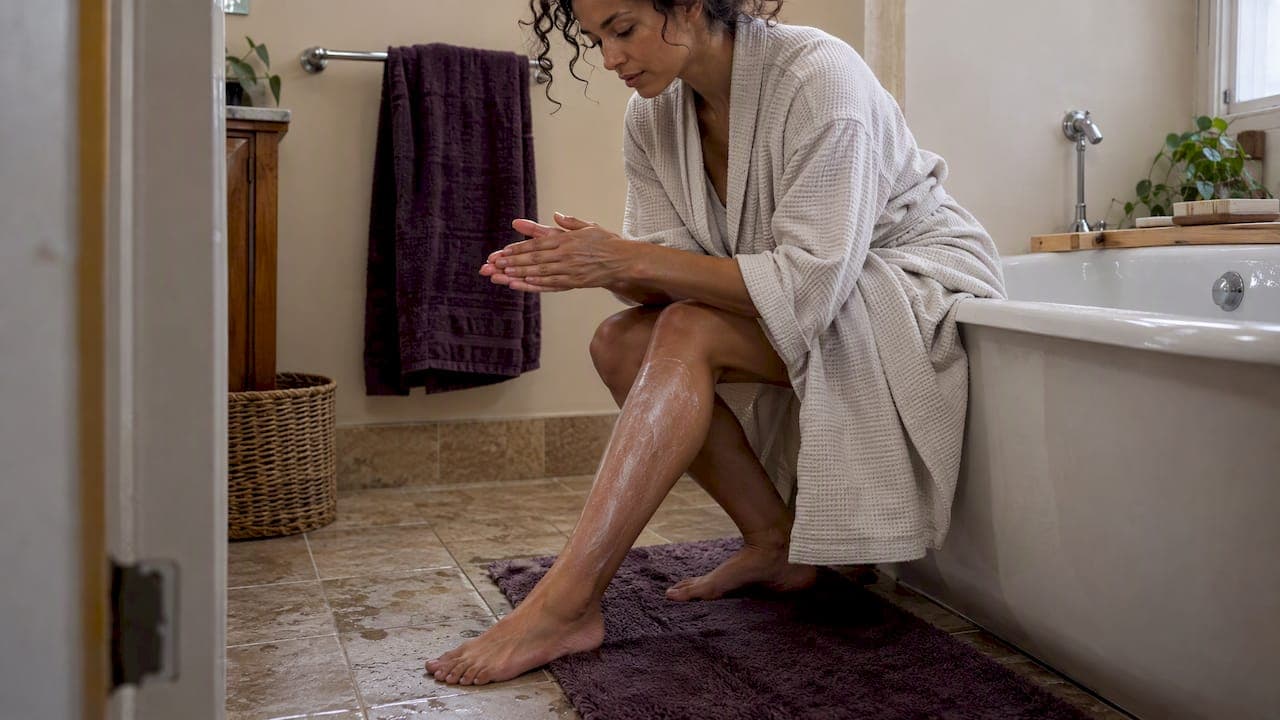
If you use both, apply your lotion or cream first while skin is damp, then add a thin layer of oil to seal that hydration. Oil forms a barrier, so putting it on first can block the lotion underneath from absorbing at all. The one exception is very oily skin or a night when you reach for a heavy ointment instead, where a separate oil layer just isn't necessary.
TL;DR:
- Oily or normal skin needs only lightweight lotion, while dry skin may need cream or ointment instead.
- If skin still feels tight an hour later, increase the lotion or switch to a richer cream; adding more oil cannot replace hydration.
- For sensitive skin, choose fragrance free lotion with a short ingredient list and patch test any new botanical oil before applying it widely.
- If cracking or persistent itching continues after a few weeks of consistent care, consult a dermatologist because an underlying condition may need treatment.
Table of Contents
- Why the order matters: humectants, emollients, and occlusives
- Step-by-step layering routine: timing, quantities, and technique
- How to use body oil without feeling greasy
- Sample routines: quick morning, overnight repair, and winter options
- Choosing lotion and oil for your skin type and sensitivities
- Our approach at The Infinite Bath: simple routines, no guesswork
- Common mistakes to avoid during layering
- Why routine simplicity wins
- Try the layering method with our body care line
- FAQ
- Sources
Why the order matters: humectants, emollients, and occlusives
We like to think of healthy skin the way we think of a brick wall: the skin cells are the bricks, and the lipids between them are the mortar holding everything together. When that mortar dries out, water escapes and the wall gets rough, flaky, and irritated. Layering body products correctly is really about rebuilding that mortar in the right order.
Here is the logic in three pieces:
- Humectants (like glycerin or hyaluronic acid) pull water into the skin and work best on skin that still has moisture to draw from.
- Emollients soften and smooth the surface by filling in the gaps between skin cells, which is what most lotions and creams do.
- Occlusives, including body oils and ointments, sit on top and slow down water loss rather than adding hydration themselves.
Applying a water-based lotion first lets the humectants and emollients sink in while skin is still damp. The oil goes on last and acts like a lid on a pot, trapping that moisture underneath instead of blocking it out. This is why the American Academy of Dermatology recommends applying moisturizer to damp skin right after bathing, before that surface water has a chance to evaporate.
A clinical review on managing dry skin found that frequent, liberal emollient use is the standard recommendation for xerosis, with richer formulas reserved for more severe dryness. That single habit, applying enough product often enough, tends to matter more than any specific ingredient.
Step-by-step layering routine: timing, quantities, and technique
Here is the routine we come back to, in order:
- Towel off gently so skin is damp, not dripping.
- Smooth your lotion or cream evenly over arms, legs, and torso, using a moderate amount per limb and pressing it in rather than rubbing hard.
- Let it absorb for thirty seconds to a minute so it has a chance to settle into the skin.
- Warm a small amount of oil, a few drops, between your palms and press it over the same areas, focusing on elbows, shins, and anywhere that tends to feel tight.
- Pat rather than massage the oil in, which helps it sit on top as a seal instead of working its way underneath the lotion.
Hands and feet often need a little extra: a dab of cream worked into cuticles and heels, followed by a slightly heavier hand with the oil, since those areas lose moisture fastest.
Pro Tip: If your skin still feels tight an hour later, you likely used too little lotion rather than too little oil, since oil seals but doesn't hydrate on its own.
How to use body oil without feeling greasy
The feeling of greasiness almost always comes down to quantity and timing, not the oil itself. A few habits fix most of it:
- Use less than you think you need. A few drops warmed between your palms covers both arms.
- Apply oil only to skin that's still slightly damp, and skip it on areas that don't tend to run dry, like the center of your back.
- Save heavier, richer oils for nighttime when you don't need to get dressed right away, and reach for lighter blends in the morning.
- Give it a minute or two before pulling on clothes, especially anything tight or made of silk, since friction while the oil is still wet is what causes staining.
Pro Tip: If you're short on time, apply oil to just your hands and feet in the morning and save full-body oiling for your nighttime routine.
Sample routines: quick morning, overnight repair, and winter options
Different seasons and schedules call for different versions of the same principle. We find it helps to have three go-to routines rather than improvising each time:
- Quick morning: a lightweight, fast-absorbing lotion all over, followed by a tiny dab of oil on elbows and lower legs, done in under two minutes.
- Overnight repair: a richer cream applied generously, then a thin layer of oil on top, which some dermatologists describe as a moisture sandwich that works while you sleep.
- Winter or very dry skin: swap your lotion for a thicker cream or ointment, apply more often through the day, and consider a seasonal routine adjustment when heated indoor air starts pulling moisture from your skin.
If dryness, cracking, or persistent itching doesn't improve after a few weeks of consistent layering, it's worth checking in with a dermatologist, since that can signal a condition that needs more than a moisturizing routine.
Choosing lotion and oil for your skin type and sensitivities
Not every lotion and oil pairing works the same way for every skin type, and matching your formula to your skin saves you from fighting your own routine.
- Oily or normal skin usually does better with a lightweight, gel-based lotion and either a very light oil or none at all.
- Dry or very dry skin benefits from a cream or ointment base, paired with a richer oil for extra sealing power.
- Sensitive skin does best with fragrance-free, short-ingredient-list lotions, and it's worth patch-testing any new botanical oil first.
Some botanical oils, including sunflower seed oil, can trigger sensitization in susceptible people, which is one reason patch testing matters before applying a new oil across larger areas of skin. When barrier repair is the goal, look for lotions listing glycerin, hyaluronic acid, or ceramides, since those ingredients work with the humectant-then-occlusive layering approach rather than against it. For more on how the two product types actually differ, our breakdown of body oil versus lotion walks through which one solves which problem.
Our approach at The Infinite Bath: simple routines, no guesswork
We built our routine around the same principle: seal, don't block. Our Body Oil is meant to go on last, after your lotion or cream has had a moment to settle, which is why we suggest just a few drops warmed between your palms rather than a heavy pour. It works well as a nightly step for drier skin or as a quick polish on elbows and shins during the day. If you want to see how we think about pairing formulas by season or skin type, our cream versus lotion guide breaks down what to reach for and when.
Common mistakes to avoid during layering
The most common mistake we see is applying oil first out of habit, since it feels luxurious going on but ends up sitting on dry skin with nothing underneath to seal in. The fix is simple: always reach for your lotion or cream first, even if the oil is the product you reach for out of habit.

Another frequent slip is waiting too long after a shower. Once skin air-dries completely, you lose the window where a humectant lotion can pull in that extra surface moisture, so applying everything promptly after toweling off makes a real difference.

Overdoing the oil is another issue. More isn't better here. A thin layer does the sealing job, and piling on more just leaves a greasy film that transfers to clothes and sheets.
Finally, people with very dry skin sometimes stick with a thin lotion when their skin actually needs a thicker cream or ointment underneath the oil. If your lotion disappears in seconds and your skin still feels tight, that's usually a sign to size up to a heavier formula rather than add more oil on top.
Why routine simplicity wins
After years of hearing the same frustration, that a ten-step routine gets abandoned by week two, we've come to believe the best skincare routine is the one you'll actually repeat. A good moisture sandwich done nightly beats a perfect one done occasionally. Give one routine a real try for a few weeks before judging whether it's working, and pay attention to how your skin feels, not just how fast a product absorbs.
— Stella
Try the layering method with our body care line
If you'd rather skip the trial and error, our Lustral Flood Collection pairs a hydrating lotion with our Body Oil, built around the same lotion-first, oil-second order we've described here. The lotion suits daytime use on its own, while the full pairing works best as a nightly ritual for drier skin.

Browse our full body care shop to find the combination that fits your routine, and build the layering habit one night at a time.
FAQ
Should I layer body oil and lotion?
Layering both can help if your skin runs dry, since the lotion hydrates and the oil seals that moisture in. If your skin is oily or normal, a lotion alone is often enough, and adding oil becomes optional rather than necessary.
What order should I put on lotion and body oil?
Apply lotion or cream first while your skin is still damp, then follow with a thin layer of body oil. This order lets the lotion's hydrating ingredients absorb before the oil forms its sealing layer on top, following the same damp-skin guidance dermatologists recommend for moisturizer application generally.
Should I apply body oil or lotion first?
Lotion goes first, always. Oil applied first creates a barrier that can keep the water-based ingredients in your lotion from penetrating the skin at all.
What is the correct order of layering skincare products?
The general rule is thinnest and most water-based to thickest and most oil-based: humectant-rich lotions or serums first, followed by creams, with oils or ointments applied last to seal everything in. This mirrors how emollient therapy for dry skin is typically recommended, with lighter formulas for everyday use and richer ones reserved for very dry patches.
Can you mix body oil and lotion instead of layering them?
Mixing them in your palm before applying is possible, but it dilutes the oil's sealing effect compared to applying it as a distinct final layer. For the best hydration retention, apply them separately in sequence rather than combining them into one step.
Sources
- How to pick the right moisturizer for your skin — American Academy of Dermatology
- Optimization of Basic Emollient Therapy for the Management of Xerosis Cutis — PMC