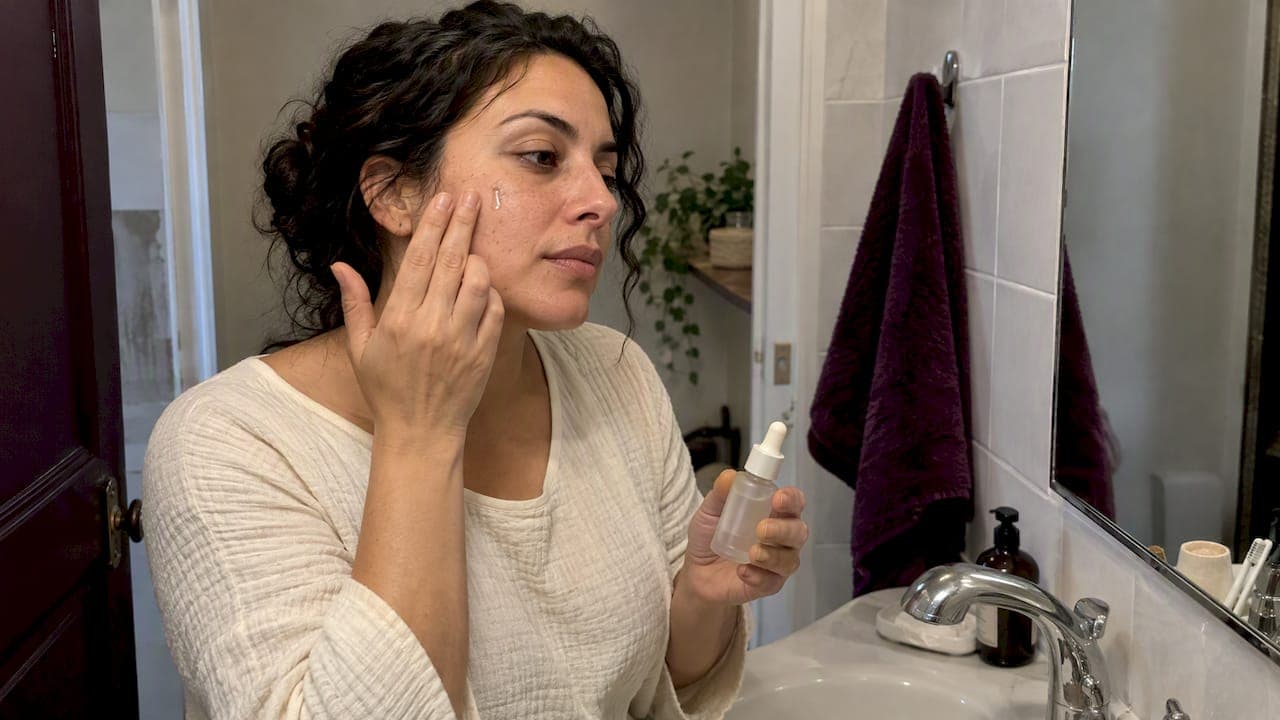
The safest path to non irritating exfoliation is a gentle chemical or enzymatic exfoliant, like a PHA or a low-percentage lactic acid, used once or twice-weekly and always followed by a barrier-supporting moisturizer and sunscreen. Start slowly, patch test first, and give your skin two to four weeks before judging results. Irritation is not a prerequisite for progress, and a cautious routine protects the skin barrier while it works.
TL;DR:
- Gentle chemical exfoliants like PHAs or low-percentage lactic acid are safest for sensitive skin when used once or twice weekly and followed by moisturizer and SPF.
- Mechanical scrubs pose a risk of micro-tears and inflammation, especially on reactive facial skin, making mild chemical or enzymatic options preferable.
- PHAs, such as gluconolactone and lactobionic acid, reduce irritation while providing anti-aging benefits and hydration, unlike deeper-penetrating AHAs like glycolic acid.
- Introduce exfoliants gradually with patch testing, starting with once weekly, then increasing only if no irritation occurs within two to four weeks.
- A barrier-supporting routine with ceramides, glycerin, and sunscreen is essential after exfoliation to reinforce skin health and prevent damage.
Table of Contents
- How exfoliation works and why method choice matters for sensitive skin
- Best exfoliating ingredients and formulation cues for sensitive skin
- How often to exfoliate and a step-by-step introduction plan
- Barrier-supporting aftercare: moisturizers, ceramides, and sunscreen
- When to stop exfoliating and red flags to see a dermatologist
- The Infinite Bath's barrier-first routine mapped to this guide
- Expert perspective on expected timelines and realistic outcomes
- Where to find a ready-made, barrier-first routine
- FAQ
- Sources
How exfoliation works and why method choice matters for sensitive skin
Skin sheds dead cells naturally, but that process slows with age, dryness, and barrier stress, which is where exfoliation steps in. Physical exfoliation relies on friction: scrubs, brushes, and textured cloths manually knock cells loose. Chemical exfoliation uses acids to dissolve the bonds holding dead cells together, working more like a gentle unlocking than a scrape. Enzymatic exfoliation, through ingredients like papain or bromelain, breaks down the same cellular bonds using proteins instead of acids, often in a water-dependent process that is gentler in well-hydrated formulations.
For sensitive skin, the distinction matters because mechanical methods carry real risk. The American Academy of Dermatology recommends mild chemical exfoliation over mechanical methods for dry, sensitive, or acne-prone skin, since scrubbing can cause micro-tears, inflammation, and even post-inflammatory pigmentation, a particular concern for darker skin tones.
- Physical scrubs can suit tougher body skin, like heels or elbows, but rarely belong on a reactive face.
- Chemical exfoliants work well across most skin types when the concentration and pH are matched to sensitivity.
- Enzymatic options suit very reactive or rosacea-prone skin that reacts even to mild acids.
Oil-prone sensitive skin often tolerates a mild salicylic acid formula, while dry, reactive skin usually does better starting with a PHA.
Best exfoliating ingredients and formulation cues for sensitive skin
Polyhydroxy acids, including gluconolactone and lactobionic acid, exfoliate with larger molecules that penetrate more slowly than their alpha-hydroxy cousins. A 12-week clinical study found that a PHA regimen produced antiaging results comparable to an AHA regimen while causing significantly less stinging and burning, a meaningful difference for anyone whose skin reacts to standard acids. PHAs also function as humectants and antioxidants, which means they hydrate while they exfoliate rather than stripping moisture away.
Low-percentage lactic acid, generally under 10%, offers a hydrating alternative to glycolic acid. Glycolic acid has the smallest molecular size among common AHAs, so it penetrates deeper and tends to irritate more easily, something DermNet NZ's clinical guidance on chemical peels ties directly to molecule size and concentration.
Pro Tip: Look for exfoliants formulated with glycerin, ceramides, or a buffered pH; these cues signal a product built to soften irritation rather than provoke it.
Formulation details separate a kind exfoliant from a harsh one.
- Avoid added fragrance, high concentrations of drying alcohols, and large abrasive particles like crushed shells or seeds.
- Favor a hydrating base, ceramides, panthenol, and a fragrance-free label.
- Choose enzymatic options like papain or bromelain when even mild acids feel like too much.
A low-percentage lactic acid routine built around these principles gives reactive skin a workable starting point without guesswork.
How often to exfoliate and a step-by-step introduction plan

Before anything touches your face, patch test on your inner arm or jawline and watch for seven to ten days. Redness, persistent itching, or stinging beyond the first few minutes means that product is not ready for wider use.
Once a patch test passes, begin with once-weekly application for two to four weeks. If your skin shows no redness, flaking, or lingering sensitivity, you can move to twice weekly. The American Academy of Dermatology's guidance favors this slow titration over daily use, which it reserves for cases directed by a dermatologist. If irritation appears at any stage, drop back to the previous frequency, and stop entirely if you see open skin or a severe reaction. Avoid pairing a new exfoliant with strong retinoids or benzoyl peroxide until your skin has proven it can handle one active at a time, a sequencing idea explored further in our comparison of lactic acid and retinol.
- Patch test on the arm or jawline and wait seven to ten days.
- Choose a low-percentage PHA or lactic acid formula.
- Apply once weekly for two to four weeks.
- Follow every application with moisturizer and sunscreen the next morning.
- Reassess at the two to four week mark before increasing frequency.
Pro Tip: Keep a one-week gap between introducing a new exfoliant and any other active ingredient, so you know exactly what caused a reaction if one shows up.
Barrier-supporting aftercare: moisturizers, ceramides, and sunscreen
Exfoliation temporarily thins the skin's outer layer, which means moisture escapes faster right after use. Applying a moisturizer immediately afterward helps rehydrate and gives the barrier what it needs to repair itself before the next application.
Certain ingredients do this work especially well.
- Ceramides rebuild the lipid layer that holds moisture in, much like replacing missing bricks in a wall.
- Glycerin draws water into the skin and keeps it there.
- Panthenol calms irritation and supports healing.
- Niacinamide strengthens the barrier over time and reduces redness.
Sunscreen is not optional after acid exfoliation. The AAD's guidance on safe exfoliation notes that acids increase photosensitivity, so broad-spectrum SPF applied every morning, and reapplied as directed on the label, protects newly exposed skin from damage it cannot yet defend against on its own. Our barrier-focused sensitive skin routine walks through this sequencing in more detail.
When to stop exfoliating and red flags to see a dermatologist
Some reactions call for an immediate pause, not just a reduced schedule.
- A spreading rash or hives.
- Stinging or burning that persists well after application.
- Open wounds, new blistering, or severe peeling.
- Signs of infection, such as warmth, swelling, or pus.
Certain skin histories warrant a conversation with a dermatologist before starting any exfoliant at all: recent cosmetic procedures, active rosacea, or severe atopic dermatitis, since a compromised skin barrier reacts unpredictably even to gentle formulas. If a reaction does occur, stop the product immediately, apply a plain, fragrance-free emollient, and contact a dermatologist if symptoms are severe or do not settle within a day or two. For anyone navigating a sensitive condition like pregnancy, where ingredient concentration limits matter, checking with a provider before adding any acid is worth the extra step.
The Infinite Bath's barrier-first routine mapped to this guide
We built our three-step regimen around the exact principles covered above: a gel cleanser to prep skin without stripping it, a lactic serum under 10% to exfoliate gently, and a renewal cream to lock in moisture and support barrier repair. Each step exists because the evidence points the same direction: slow, hydrating exfoliation paired with immediate aftercare outperforms anything harsh or abrasive.
- The gel cleanser removes buildup without disrupting the acid mantle.
- The lactic serum uses a low-percentage formula to exfoliate without the sting.
- The renewal cream delivers the ceramides and humectants your barrier needs after exfoliating.
For readers who want the deeper mechanics behind the serum's concentration choice, our guide to low-percentage lactic acid and our piece on how often to exfoliate by skin type both expand on what is covered here.
Expert perspective on expected timelines and realistic outcomes

Visible improvement from gentle exfoliation typically shows up between two and twelve weeks, and that slower pace is a feature, not a flaw. Rushing the process with stronger acids or higher frequency raises the risk of post-inflammatory pigmentation, which can take far longer to fade than the texture issue you started with.
A lack of stinging does not mean a product is not working. As dermatologists point out, sensation and effectiveness are not the same thing, and treating a sting as proof of progress is one of the more common ways people damage their own barrier. If your skin's response still feels uncertain after a few weeks, a dermatologist can tell you more in one visit than months of guessing.
— Stella
Where to find a ready-made, barrier-first routine
If you would rather skip the trial and error, our Lustral Flood Collection pairs a gel cleanser, a lactic serum, and a renewal cream into one sequence built around everything covered in this guide.

- Each product is formulated to exfoliate gently while supporting the skin barrier at every step.
- Browse our full skin care shop if you want to build a routine piece by piece.
This article is general information, not a substitute for advice from a qualified doctor. Consult a qualified healthcare professional about your own circumstances before acting on anything here.
FAQ
What is the best exfoliant for very sensitive skin?
A 12-week clinical study found PHAs delivered antiaging results comparable to AHAs with significantly less irritation.
Is there a PHA exfoliant that is good for sensitive skin?
Yes, gluconolactone and lactobionic acid are PHAs well suited to sensitive skin because their larger molecular size limits how deeply they penetrate, which DermNet NZ's guidance on chemical peels ties to lower irritation risk. They also act as humectants, so they hydrate while they exfoliate.
What do dermatologists recommend for exfoliation?
The American Academy of Dermatology recommends mild chemical exfoliation over physical scrubs for dry, sensitive, or acne-prone skin, introduced one product at a time starting once or twice weekly. Dermatologists also stress moisturizing after exfoliation and applying sunscreen daily, since acids increase photosensitivity.
What do people use for gentle facial exfoliation besides harsh scrubs?
Many gentle routines favor enzymatic exfoliants like papain or very fine, low-friction formulas instead of coarse physical scrubs, since mechanical friction carries a higher irritation risk on reactive facial skin. Pairing any exfoliating step with hydrating, barrier-supporting ingredients such as ceramides and glycerin helps keep the skin calm throughout the process.
Sources
- How to safely exfoliate at home
- A polyhydroxy acid skin care regimen provides antiaging effects comparable to an alpha-hydroxyacid regimen.
- Chemical peels (face peels)
- Exfoliation tips and dermatologist guidance